
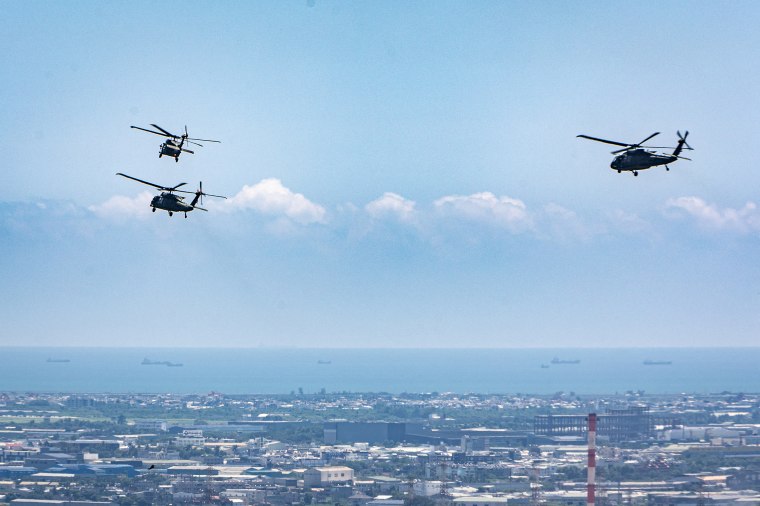
Taiwan initiated extensive military drills on Wednesday to assess its command strategies in unpredictable combat situations. These exercises will temporarily restrict internet access for the first time, aiming to enhance response capabilities.
The Han Kuang exercise, an annual event, began with an order from Taipei’s underground command center. This triggered combat readiness activities, including fighter jet dispersals and emergency naval deployments, as reported by senior Taiwanese officials.
The drill incorporates a ‘backbrief’ approach, inspired by U.S. military practices. Junior officers will reiterate mission details to their superiors, enhancing coordination. This method ensures both commanders and subordinates align on operational objectives.
A significant concern remains China’s potential attempt to disable Taiwanese command centers, ports, and defenses early in a conflict. China claims Taiwan as its own territory, despite Taiwan’s opposition.
A key feature is the slowing of mobile internet speeds, testing civilian communication under limited bandwidth conditions. Additional exercises include relocating a major arsenal, engaging civilian factories, and conducting escort drills off Taiwan’s Pacific coast. These steps address potential threats to Taiwan’s supply lines amidst heightened Chinese military activity.
This initiative reflects Taiwan’s shift towards more realistic exercises. Previous drills faced criticism for being overly staged. The military now emphasizes realistic field conditions and scenarios, testing rapid decision-making by field commanders.
Over 20,000 reservists are participating, engaging in activities like mortar practice and rifle positioning. Taiwan also introduces an ’embedded reporter’ system to evaluate wartime news releases and counter enemy disinformation.
The exercise underscores Taiwan’s preparedness, focusing on how its citizens, under the formal name of the Republic of China, should respond to wartime conditions until the drills conclude on August 14.