
Two Democrats from Michigan’s 7th Congressional District have expressed concerns over the Justice Department’s decision to monitor polling locations in four Michigan cities. William Lawrence shared on NBC News’ “Meet the Press NOW” that the presence of DOJ at polling sites raises questions, although no issues have been reported by his campaign at these locations.
Lawrence speculated that this might be a preliminary step towards more significant federal involvement in the upcoming general election in November. He portrayed the move as a possible signal of broader federal efforts.
Similarly, Democrat Matt Maasdam criticized the initiative, suggesting the Trump administration is attempting to normalize an unusual presence at polling sites.
Assistant Attorney General Harmeet K. Dhillon from the Justice Department’s Civil Rights Division stated that the DOJ aims to ensure free and fair elections through extensive resource allocation for uniform and impartial monitoring.
Dhillon expressed gratitude towards jurisdictions cooperating in fostering trust and transparency.
Polls are closing in Michigan, where Democrats are engaged in a closely contested Senate primary. The winner of this primary will face former GOP Rep. Mike Rogers.
Democratic Rep. Haley Stevens, supported by Sen. Gary Peters, Gov. Gretchen Whitmer, and Senate Minority Leader Chuck Schumer, D-N.Y., is positioned as a moderate running against progressive Abdul El-Sayed, who has endorsements from Sen. Bernie Sanders, I-Vt., and Rep. Alexandria Ocasio-Cortez, D-N.Y.
In Missouri, former Rep. Cori Bush is aiming to regain the seat she lost in a primary to Rep. Wesley Bell in 2024.
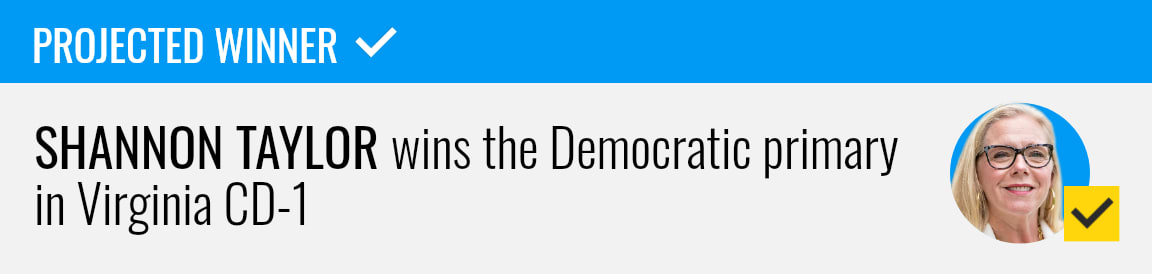
Shannon Taylor has won the Democratic primary for Virginia’s 1st Congressional District, according to NBC News projections. She is set to face GOP Rep. Rob Wittman in the general election.
Results for other races can be viewed for more details.
In Michigan’s Senate Democratic primary, Black turnout is an important factor to consider. Recent public polling reports show Democrat Abdul El-Sayed leading significantly, with the Black voter share estimated at about 20% of the electorate.
A poll from the Glengariff Group for the Detroit News and NBC affiliate WDIV showed Black voters comprising about 30% of the electorate, favoring Democratic Rep. Haley Stevens by 7 percentage points. This shows Stevens performing better than El-Sayed among Black voters.
The differences in demographic weights in polls are commonplace, affecting poll outcomes. If Stevens achieves a close race or victory, it might be attributed to strong Black voter turnout.
The Democratic-controlled legislature in Maryland has voted to place a constitutional amendment on the November ballot designed to eliminate the state’s lone Republican-held congressional district by 2028.
This decision followed disagreements among Democrats regarding whether to redraw the state’s congressional map as a counter-response to GOP redistricting efforts.
Senate President Bill Ferguson originally resisted joining the mid-decade redistricting fight, cautioning that an aggressively redrawn map might backfire in court.
However, under pressure from notable Democratic leaders like Gov. Wes Moore and House Minority Leader Hakeem Jeffries, Ferguson agreed to a special legislative session for the constitutional amendment, appeasing his legal concerns.
Bert Mizusawa has emerged victorious in the Republican Senate primary for Virginia, according to NBC News projections. He will contest Democratic Sen. Mark Warner in November.
Latest election results can be viewed for further insights.
Former Rep. Elaine Luria has captured the Democratic primary victory for Virginia’s 2nd Congressional District, as projected by NBC News. She is set for a rematch against Republican Rep. Jen Kiggans, who previously defeated her in this district.
Explore the latest results for more information.
The polls have closed in Virginia at 7 p.m. ET, where voters will decide the Republican nominee for the Senate, as Democrat Mark Warner seeks re-election. Larger races are occurring at a smaller scale in the state.
Two Republican-held battleground districts may influence House control during this year’s midterms. Democrats are selecting nominees to challenge Rep. Rob Wittman in the 1st District and Rep. Jen Kiggans in the 2nd District. Republicans are strategizing to contest Democratic Rep. Eugene Vindman in the 7th District.
Missouri’s Republican Secretary of State, Denny Hoskins, announced his decision not to certify a referendum aiming to reverse the state’s new GOP-drawn congressional map, claiming that the effort is unconstitutional.
Alleging the referendum’s unconstitutionality, Hoskins argued that the new map, approved 11 months ago, was part of a broader initiative led by Trump to encourage GOP-led states to take up redistricting proposals to reinforce the party’s narrow House majority ahead of the midterm elections.
More information can be found in the full story.
MyPillow head Mike Lindell, Trump’s long-time ally, has refused to pay the fines and accumulating court fees he owes in a defamation lawsuit involving false claims about the 2020 election.
Lindell insisted he would not fulfill any payments, instead choosing to go on the offensive by filing motions with documents related to election security released by Trump.
Despite scant evidence of widespread voter fraud in the 2020 election from Trump’s documents, Lindell claims they validate his statements.
Initially ordered to pay Smartmatic USA Corp., a voting machine company, $56,369 in January for defamation, Lindell faces a daily $500 fine since April for contempt due to unpaid sanctions.
Lindell announced today his resignation as CEO of MyPillow to focus entirely on winning the Minnesota governor role.
His priority is to give this gubernatorial campaign and the state his full attention and resources.
Sen. Susan Collins, R-Maine, is the first Republican to announce a vote against Todd Blanche’s Senate confirmation following the nomination’s progression today.
Collins cited several of Blanche’s actions as compromising the DOJ’s independence, such as the IRS settlement agreement and the creation of the “anti-weaponization” fund.
She further pointed to efforts blocking the mailing of abortion medications and prosecutions against Democratic lawmakers encouraging resistance to unlawful orders.
Collins rebuked Blanche’s leadership accusing it of undermining the institution, as more than 1,200 former DOJ employees opposed the nomination.
Blanche’s confirmation requires at least 47 Democratic votes if he receives three GOP “no” votes due to Sen. Mitch McConnell’s recovery from a fall.
The Supreme Court will commence its next term with significant climate change arguments in Suncor Energy Inc. v. Commissioners of Boulder on October 5 at 10 a.m.
Boulder County, Colorado seeks damages under state law from companies like Suncor for local climate-driven expenses from conditions such as wildfires, extreme heat, and floods. They allege these companies concealed fossil fuel risks.
The case tackles whether federal law obstructs claims under state law for injuries linked to greenhouse-gas emissions globally, and whether the Supreme Court is authorized to hear this case.
Voters in Ferndale, Michigan shared their decisive issues in casting ballots in the state’s closely watched Senate Democratic primary featuring Abdul El-Sayed and Haley Stevens.
Mark Foster endorsed El-Sayed for his defense of Palestine, expressing enthusiasm for voting for a candidate that resonates with him.
Hanna O’Neill prioritized El-Sayed’s call to abolish ICE, describing it as her main focus due to perceptions of anti-American approaches towards immigrant policies.
Aaron Slate, supporting Stevens, emphasized the significance of Democrats regaining Senate control. He regards Stevens’ moderate stance as necessary against El-Sayed’s progressive ideas.
Slate stated confidence in Stevens, preferring practical politics over revolutionary ideologies due to the prevailing political climate under Trump.
Iran is believed to be behind a spate of recent cyberattacks targeting municipal water systems across the U.S., per two sources familiar with the incidents.
Authorities in metro Atlanta confirmed investigating “unauthorized cyber activity” potentially disrupting water operations.
The federal government previously confirmed “malicious cyber actors” attacked water systems in at least seven states, without attribution.
The FBI and EPA have refrained from identifying the affected states, although Minnesota and Michigan acknowledged breaches.
For more details, see the complete story.
As primary day unfolds across multiple states, voters are at the polls with key races influencing party directions ahead of the November midterms. Michigan is witnessing the Democrats’ most expensive Senate primary to date.
Shaquille Brewster from NBC News provides reporting, while Steve Kornacki offers analysis on the “TODAY” show.
Jay Clayton took the role of director of national intelligence today, replacing Bill Pulte, who served in an acting capacity.
The Senate confirmed Clayton reflecting party lines in a 51-47 vote.
White House aide Margo Martin unveiled a video clip of Clayton’s swearing-in ceremony conducted by Treasury Secretary Scott Bessent with Trump present.
Sen. Bernie Moreno, R-Ohio, has further criticized Rep. Max Miller amidst the ongoing scrutiny over abuse allegations made by his daughter Emily Moreno against her former husband. Bernie Moreno expressed the severe emotional toll on his family.
Emily Moreno accused Miller of abusive behavior backed by police reports, including thermal harm and menacing conduct. Injuries to their daughter were also reported.
Miller staunchly denied any misconduct and has not faced charges, describing Moreno’s previous comments as “political” on X. Bernie Moreno maintained indifference to politics, focusing solely on his family’s welfare.
Rep. Max Miller, R-Ohio, intends to request a House Ethics Committee investigation into abuse allegations from his former wife—part of an unusual move for self-exoneration amidst economic disputes made public.
Miller, maintaining innocence, announced his intention to address renewed scrutiny of family matters by filing ethics investigation papers himself via X. Miller is committed to proving he has “nothing to hide.”
Mealot, a New Trump administration rule, has resulted in banning humanoid robots manufactured in China and other nations, inadvertently impacting smart vacuums already prevalent in American households.
Sen. John Cornyn, R-Texas shared details of his meeting with Sen. Susan Collins, R-Maine regarding Blanche’s nomination, emphasizing an ongoing deliberative process among colleagues.
Cornyn described his conversation with Collins as productive and awaited her ultimate viewpoint. He highlighted the diligence of Collins and mentioned further interactions with Sen. Lisa Murkowski, R-Alaska.
Epstein survivor Dani Bensky has commented on the Senate Judiciary Committee vote concerning Blanche’s nomination, expressing significant dismay.
Following the meeting, Bensky conveyed commitment to seeking meetings with Republican senators who could oppose Blanche’s confirmation. She underscored the importance of survivor voices and denounced the potential implications on American democracy.
Bensky’s attempts to meet Senators Thom Tillis, R-N.C., and John Cornyn, R-Texas prior to the vote were unsuccessful. Their support for Blanche followed negotiations over Trump’s IRS settlement.
Bensky emphasized the need to engage with senators like Susan Collins, R-Maine, Lisa Murkowski, R-Alaska, and Bill Cassidy, R-La., hoping they will take decisive action.
Jeanine Pirro’s career faces uncertain prospects following Trump’s criticism of her choice to drop charges on an indicted vandal of the Lincoln Memorial Reflecting Pool. NBC provides coverage for the “TODAY” show.
The full Senate vote on Blanche’s nomination follows an essential timeline: Majority Leader John Thune, R-S.D., cannot process the nomination on the same day it escapes committee. Initially, Thune is expected to file a motion terminating debate over Blanche on “tomorrow,” with subsequent voting concluding within a 30-hour span. Blanche faces potential votes with 53 Republican senators present.
The timeline, while dictated by procedure, can be expedited through unanimous senatorial agreement, facilitating quicker voting.
The Senate Judiciary Committee favored Blanche’s nomination in a 12-10 party-line vote, preparing for subsequent confirmation votes.
Democratic senators provided speeches critiquing Blanche prior to the vote, presenting evidence of political loyalty objecting traditional DOJ roles.
Sen. Richard Blumenthal, D-Conn., voiced plans against using Trump’s tax immunity transaction as precedent, advocating prevention of illegal privileges in future applications.
An ex-federal prosecutor, Blumenthal criticized the unenforceable validity of related contracts, asserting law students would avoid its practice in standard agreements.
Blumenthal maintained skepticism over Blanche’s advocated changes to the Trump settlement agreement amidst DOJ affairs.
Sen. Mazie Hirono, D-Hawaii, warned Blanche’s loyalty seemed to align with the president over constitutional duties when asked about presidential directives on enemy investigations.
Blanche had previously circumvented conclusively answering Hirono’s inquiry during hearings, reflecting presidential command assumptions instead.
Hirono reaffirmed her concerns during today’s hearing, noting Blanche voluntarily left critical commitment questions unanswered. Trust about supporting constitutional values had diminished, she argued.
Sen. Chris Coons, D-Del., highlighted Blanche’s obedience concerns regarding presidential accountability, indicating they wouldn’t defend constitutional integrity during crisis circumstances.
Coons reiterated party expectations for attorneys general prioritizing the constitution rather than loyalty to singular political aims, questioning Blanche’s suitability.
Sen. Sheldon Whitehouse, D-R.I., condemned Blanche’s slush funds arrangements, characterizing the documents proclaiming its cancellation as decorative.
He provocatively described uncertainties surrounding DOJ behaviors following Blanche’s assuming roles, especially involving Jan. 6 tort claims, maintaining doubt about Blanche’s trustworthiness.
Sen. Thom Tillis, R-N.C., addressed the Judiciary Committee on general “weaponization” challenges facing previous administrations, implicating both parties with responsibility.
Tillis reiterated concerns alongside Blanche’s nomination stance, calling attention to political acts manifesting across recent presidencies. His committee support reflects faith in Blanche’s bending towards reduced absurdity.
Sen. John Cornyn, R-Texas, elucidated his position supporting Blanche’s nomination, following agreements on Trump’s IRS settlements addressing concerns for potential litigation.
Cornyn remarked on DOJ steadiness due to permanent appointments over unconfirmed leadership positions.
Sen. Dick Durbin, D-Ill., voiced clear opposition to Blanche’s nomination asserting DOJ’s releasing of Epstein files as problematic and unresolved.
Durbin early lamented Blanche’s document management concerns involving ex-personnel’s security assumptions within Epstein investigations.
Durbin criticized ongoing conditions Blanche subjected Epstein’s survivors to, questioning commitment towards lawfulness.
Sen. Chuck Grassley, R-Iowa, challenged claims alleging Blanche’s apathy towards victims amidst DOJ leadership benefits extended.
A survivor group challenged his suitability, mentioning dismissal of legitimate redaction concerns during Geoffrey Epstein case settlements.
Sen. Chuck Grassley explained his alignment with Sen. John Cornyn, R-Texas, associating their apprehensions over Trump’s settlements addressing IRS immunity funds.
Grassley reflected gratitude for clarity reinstatement processes afforded somewhat ambiguous agreements concerning DOJ management approaches.
Senate Judiciary Committee embarked on Blanche’s formal nomination introduction, facilitating leading committee member remarks during proceedings.
Michigan voters participating in NBC interviews shared insights into insightful Senate Democratic primary perspectives with varying candidate considerations.
Rep. Haley Stevens, D-Mich., reiterated effective public service positions maintained in communicating unconventional Israel stance concerns welcomed among Michigan voters.
Types of Republican nominations for Blanche’s attorney-involved processes discussed within Senate Judiciary committee meetings addressed procedural aspects alongside candidate committee positions.
Final House Ethics Committee encounmemted inappropriate nature of Rep. Chuck Edwards, R-N.C., conduct prompting censure recommendations throughout sanctions debates.
Over 25 states challenged Trump’s latest tariffs enacted as deceptive engagements regarding recent Supreme Court mandates, broadly interpreting enforcement.
Today’s primaries extend observed Democratic divides across multi-state contests amid Michigan’s Senate races analyzed within “TODAY” report shows.
Senate Judiciary committee delayed Blanche nomination haul due to tax-related settlement agreements holds before moving for official advancements.