
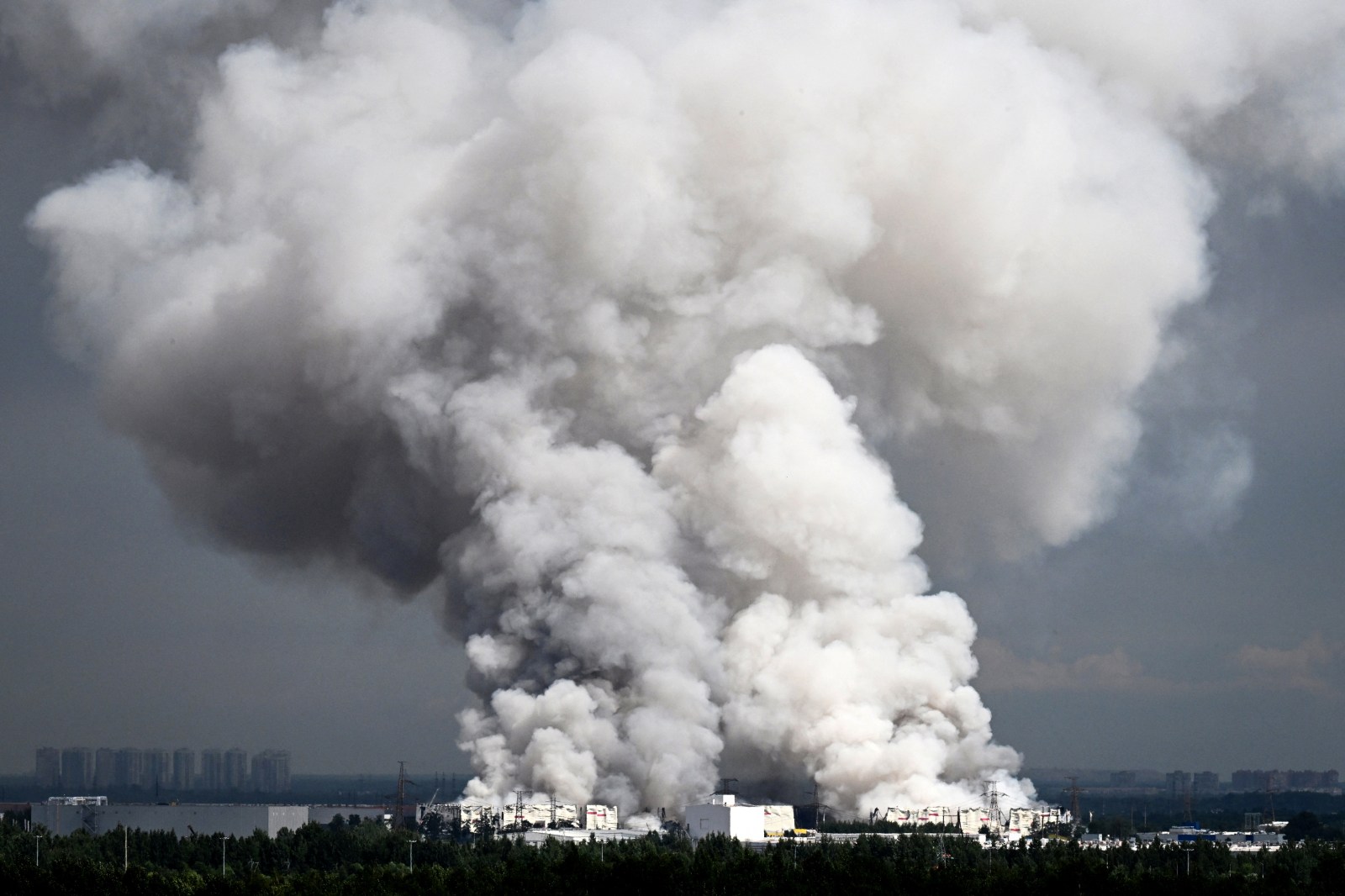
Wildberries, known as Russia’s equivalent to Amazon, is becoming increasingly noteworthy outside the former Soviet region. Recently, Ukrainian drones have targeted and destroyed eight of its logistics hubs, including those near Moscow, St. Petersburg, Krasnodar, and occupied Simferopol. The destruction accounts for over a tenth of Wildberries’ warehouse capacity, incurring rebuilding costs of approximately $460 million. Additionally, the incinerated merchandise, mainly from small Russian sellers, could be worth billions.
Besides this, Ukraine has inflicted damage on a quarter of Russia’s refining capacity, prompting fuel rationing in over half of the country’s regions. Despite being a leading energy exporter, Russia now struggles to meet domestic fuel demands.
The context of these issues involves Donald Trump’s presidency. Critics have labeled him a Russian asset, yet his policies have impacted Russia significantly. Unlike his predecessors, Trump presided over a period when Russia did not annex new territories. Under George W. Bush, Russia took land from Georgia. During Barack Obama’s term, Crimea was annexed, and tensions rose in the Donbas region. Joe Biden’s presidency saw the initiation of a full-scale invasion. In Trump’s era, however, Vladimir Putin made no territorial gains.
This does not mean Trump accurately assessed Putin from the start. American presidents often believe their predecessors mishandled dealings with Moscow. Bush saw a promising partner, Obama sought a reset with a symbolic button in Geneva, and Biden aimed for stability. Trump initially promised rapid solutions but realized the complexities involved.
Trump’s approach shifted quickly. Advisors initially favored policies aligning with Kremlin desires, resulting in a failed meeting with Ukraine’s President Volodymyr Zelensky. Yet Trump quickly realized Russia would accept nothing less than Ukraine’s complete capitulation, leading to a policy shift without years of deliberation that characterized previous administrations.
The new strategy consists of two main components. The first grants Ukraine autonomy in strategic decisions. Europe finances, the U.S. supplies, and Ukraine determines drone targets. Biden’s administration previously believed Russia’s nuclear capability dominated any escalation. Delays in sending ATACMS missiles and allowing attacks on Russian airfields exemplified this cautious approach. In contrast, Trump’s policy enabled initiatives that previously seemed too risky, leading to effective Ukrainian strikes. At a NATO summit, Trump inquired if Zelensky would visit Moscow for peace talks; they jokingly acknowledged Ukrainian drone activity.
The second component extends beyond warfare, involving U.S. influence across post-Soviet regions as Russia remains preoccupied with Ukraine. In the South Caucasus, Trump aided in ending a prolonged conflict, facilitating peace between Armenia and Azerbaijan. Russia had maintained influence over both sides by perpetuating the dispute. The U.S. has now taken prominent diplomatic steps, including support for constitutional reforms in Armenia necessary to finalize a peace treaty.
Efforts in Central Asia have also made progress. Trump hosted leaders from Kazakhstan and Uzbekistan, strengthening ties through substantial investments and strategic alignments like joining the Abraham Accords. Kazakhstan, a past target of Russian expansionist rhetoric, now sees its future aligned with Ukraine’s survival.
Regional leaders express growing opposition to Russian dominance. Aliyev has encouraged Ukrainians to resist occupation, and Kazakhstan’s Tokayev has publicly confronted Putin about the war’s human cost. Russia’s own choices have degraded its standing. Putin’s invasion, coupled with internal corruption, prioritized personal wealth over sustainable economic development, leaving the nation vulnerable.
American presidents typically aim for stability, but Trump chose to capitalize on Russia’s vulnerabilities. Thus, Russia is currently weaker than it has been since the collapse of the Soviet Union, and neighboring countries are increasingly distancing themselves, relying on Western alliances for security.
Joseph Epstein is the director of the Turan Research Center and senior fellow at the Yorktown Institute. These insights reflect his perspective.