
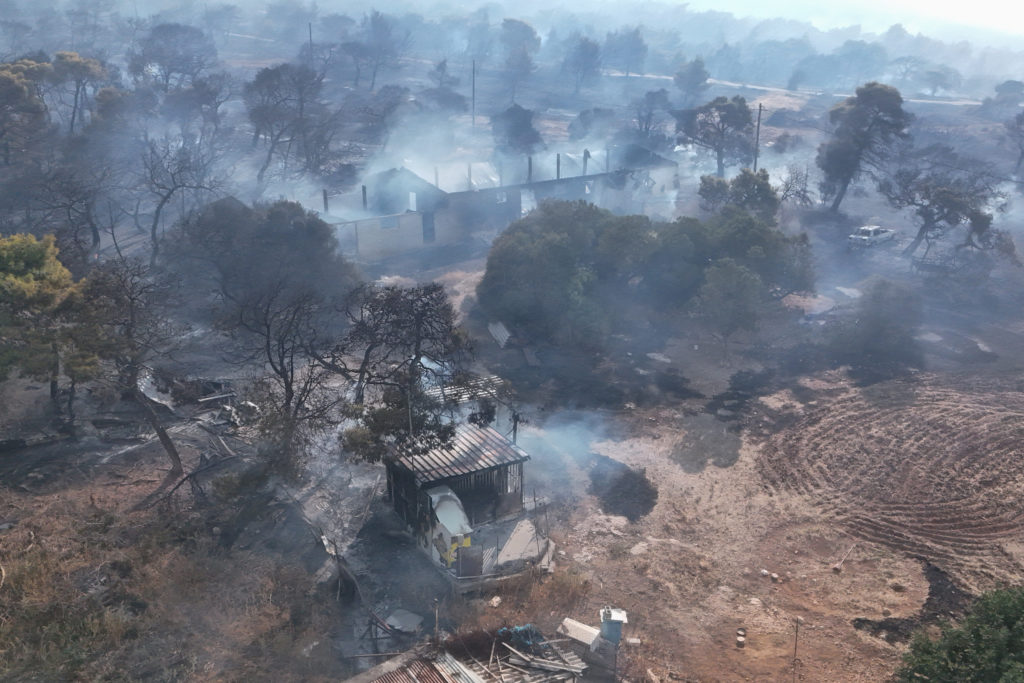
In Greece, two firefighting helicopters collided while battling a wildfire west of Athens. This incident resulted in one helicopter crashing. All four crew members were retrieved; two were unharmed, while the other two were found unconscious, according to the Greek fire department.
The immense challenges faced by firefighters battling the wildfire crisis in Europe were evident, especially as strong winds pushed the flames further into the region surrounding Greece’s capital. These conditions prompted additional evacuations. The threat is reminiscent of the 2018 Mati wildfire, which claimed 104 lives, marking it as Europe’s deadliest wildfire of this century.
Meanwhile, in France, the largest recorded wildfire there has been contained within its boundaries but continues to burn. Nearly 224,000 people were displaced amidst these conditions. In Spain, fires have similarly forced widespread evacuations, impacting communities during Europe’s summer peak.
Europe’s Escalating Wildfire Threat
The wildfire threat in Europe is expanding. The continent experienced its worst fire year in 2025, with over 10,000 square kilometers (3,860 square miles) damaged. Climate conditions in Europe have worsened rapidly since the 1980s, warming twice as fast as the global average, according to the European Union’s Copernicus Climate Change Service. This increased risk has been linked to climate change, making this year’s French fires twice as likely, based on World Weather Attribution’s analysis.
Greece’s Aerial Efforts Hampered
In Greece, approximately 500 firefighters, supplemented by 23 aircraft, encountered difficulties due to gale-force winds. These conditions rendered some aircraft unable to collect water from the sea, complicating firefighting efforts in regions like Kandili and Agia Skepi.
Authorities evacuated hundreds by sea, offering a retreat path when conventional routes were compromised by fire and smoke. Key areas of concern included Porto Germeno on the Gulf of Corinth, while several other locations, including the island of Kefalonia and Halkidiki, faced evacuations due to ongoing fires.
Continued Firefighting in France
In France, efforts focused on maintaining control over the Gironde megafire and a separate significant blaze in Provence. The Gironde fire impacted an area of 420 square kilometers (162 square miles) but was said to be ‘fixed’ within its perimeter, a term meaning advancement has ceased though active burning persists.
Nearby, another blaze in the Var department forced the evacuation of 2,500 people. Across France, fires have ravaged over 1,170 square kilometers (452 square miles) this year.
Spain’s Response and Recovery
Spain’s major fires had stopped spreading by Sunday. In the affected Zamora province, fire crews focused on securing perimeters to prevent flare-ups.
Most evacuees returned home as efforts to stabilize the situation continued. Prime Minister Pedro Sánchez emphasized the need for national cooperation to address the growing wildfire threat exacerbated by climate change.
These coordinated responses across European nations highlight the increasing severity of wildfire threats under changing climate conditions.