
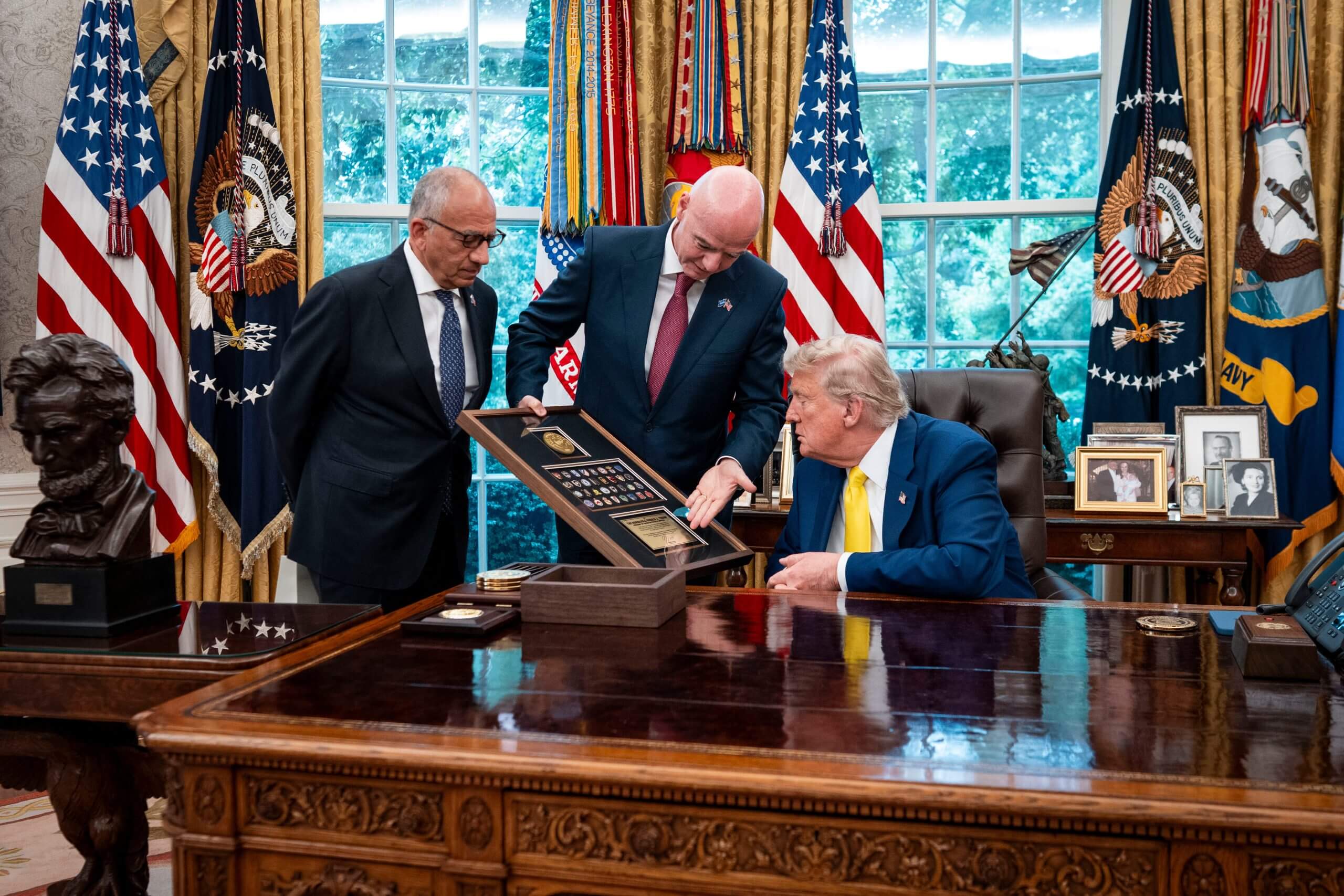
Gianni Infantino, FIFA’s president, faces backlash over plans to sell stakes in the World Cup to private investors, leading to the resignation of his senior advisor, Carlos Cordeiro. Cordeiro, 70, resigned after serving five years in the role, citing the proposal as detrimental to FIFA, its member associations, and the sport’s future.
FIFA plans to sell a significant minority stake in a new entity, FIFA Forward Enterprises (FFE), responsible for organizing major events like the World Cups and Club World Cups. Federations including UEFA, Concacaf, and the Asian Football Confederation opposed the move, with UEFA threatening to boycott the World Cup unless the plans are scrapped.
Cordeiro’s statement expressed concern over the lack of transparency in the proposal process and questioned FIFA’s rationale for selling a part of its most valuable asset. “As a former banker and lifelong football fan, I cannot stand by while FIFA considers selling a stake in the World Cup,” he stated, reinforcing his commitment to the sport.
FIFA aims to sell 20% of FFE to an investor group, led by Thrive Eternal, for $4.2 billion. These funds would be distributed through FIFA’s Fast-Forward Programme. Despite FIFA’s $15 billion revenue during the 2022 to 2026 World Cup cycle, Cordeiro believes that selling a stake lacks sound justification.
The proposal drew additional criticism over its timing and governance. Cordeiro decided to resign, stating, “This proposal has become a defining question for FIFA’s future.” His resignation highlights concerns about FIFA’s decision-making and long-term strategy.
Prime Minister Andy Burnham expressed disapproval, labeling Infantino as unsuitable to lead FIFA. Meanwhile, FIFA emphasized that they were not selling football, stating, “Everyone has the right to express their opposition and to seek further clarification.”
The fallout from this controversy puts FIFA under increased scrutiny, questioning its governance and decision-making as it seeks to navigate these turbulent times.