
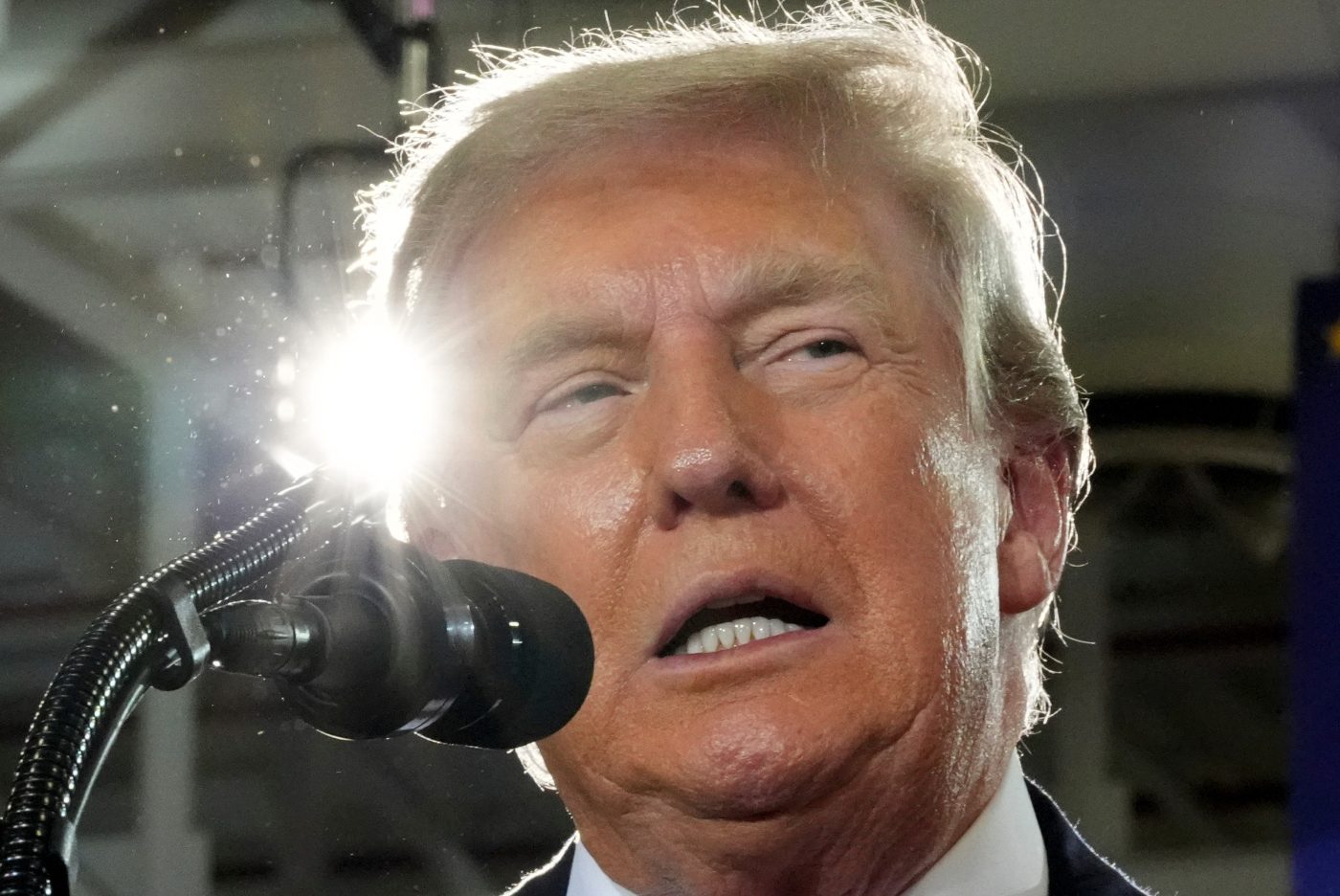
President Donald Trump recently addressed a crowd at the General Motors proving ground in Milford, Michigan. His speech focused on the supposed success of Detroit’s auto industry, a claim tied to Republican efforts in Washington. However, this narrative clashes with the current state of the industry, which has suffered significant job losses due to tariffs. Since 2025, suppliers have seen over 60,000 job cuts and automaker General Motors had to lay off more than 3,300 employees last year.
Earlier this year, Ford executives requested tariff relief from the White House. Tariffs had severely impacted sales of the F-150, America’s top-selling truck for nearly half a century. Following the administration’s decision to reduce tax credits for electric vehicles, the automaker Stellantis reported a substantial $26.3 billion loss, marking their first since 2021.
In his speech, Trump claimed significant contributions to the auto workers’ welfare despite overseeing a 3.5 percent reduction in auto parts manufacturing jobs over the past year. He ignored the Supreme Court’s ruling on the illegality of his tariffs, downplaying their negative impact on an already fragile industry. His unwillingness to acknowledge these setbacks ties into the 2025 Navigator Research survey, where only about 35 percent of voters disapproved of the tariffs. This disapproval has grown since then, with six in ten people now against the tariffs.
Republicans face political challenges due to Trump’s tariff stance as they approach the upcoming elections. Republican strategist Marc Short highlights this issue, which is increasingly affecting their electoral base. The Navigator data shows that 52 percent of non-MAGA Republican and independent voters disagree with Trump’s tariffs, and they are responsive to Democrat messages on affordability. Sixty-four percent agree with Democratic perspectives on how tariffs have increased costs for ordinary people.
Trump’s focus on tariffs in Detroit is seen as politically risky, considering the damage these policies inflicted on the auto industry. For many, it demonstrates a disconnect between the administration and the wider public sentiment. Trump’s decision to promote his tariffs amidst notable industry hardships raises questions about the administration’s decision-making processes. The upcoming November elections present an opportunity for voters to express their dissatisfaction with the current trade policies and their economic impact.