
Former FBI Director James Comey’s legal team is challenging a prosecution case that could affect protections for free speech. On Tuesday, Comey’s lawyers requested a judge in North Carolina to dismiss the case, labeling it as unfounded and part of a campaign by the President to penalize Comey for his protected speech. The motion argues that the case reflects a personal vendetta from the President.
The legal team insists the case should be disregarded based on two fundamental legal principles. These principles assert the case depends on Comey’s protected speech and that there has been selective prosecution. They argued that the Department of Justice (DOJ) historically avoided using criminal processes for political reasons, and prosecuting Comey would represent a significant departure from this tradition.
In addition to seeking dismissal, Comey’s team requested access to grand jury records, citing irregularities in the case’s indictment process. Traditionally, grand jury proceedings are assumed regular, but the defense suggests anomalies in this instance disprove that assumption.
Previously, Comey’s lawyers argued that his Instagram post, labeled as threatening, was not a legitimate threat. They stated that language definitions, situational context, and judicial precedents undermined claims about the supposed threat contained in the numbers ‘8647.’
An unnamed Justice Department official, previously speaking to NBC News, labeled the case as meritless and resource-wasting, predicting its dismissal prior to trial. The official expressed disappointment in the DOJ’s handling of the case.
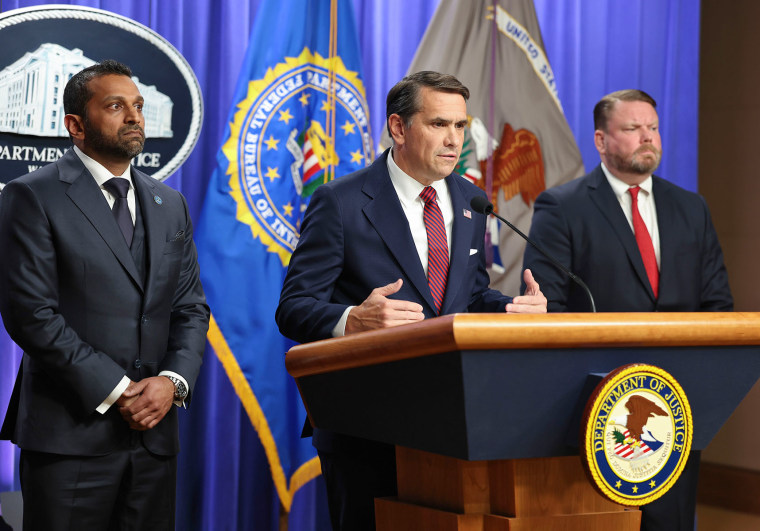
The case charges, announced on April 28, involve Acting Attorney General Todd Blanche and other officials. Should it advance to trial, Comey would be arraigned on September 30, with the trial set for October 21 in New Bern, North Carolina.
The case, initially led by rookie prosecutor Matthew Petracca, reflects discrepancies. Petracca, holding little federal criminal experience, withdrew from the case and transferred within the U.S. Attorney’s Office. Now, Assistant U.S. Attorney Timothy Severo oversees the prosecution.
Previously, Comey’s team raised claims of bias and selective prosecution in a separate case fueled by past testimony, with references to Trump’s statements about Comey from 2017 to 2025. However, the judge dismissed this case after finding procedural faults unrelated to the allegations of bias.