
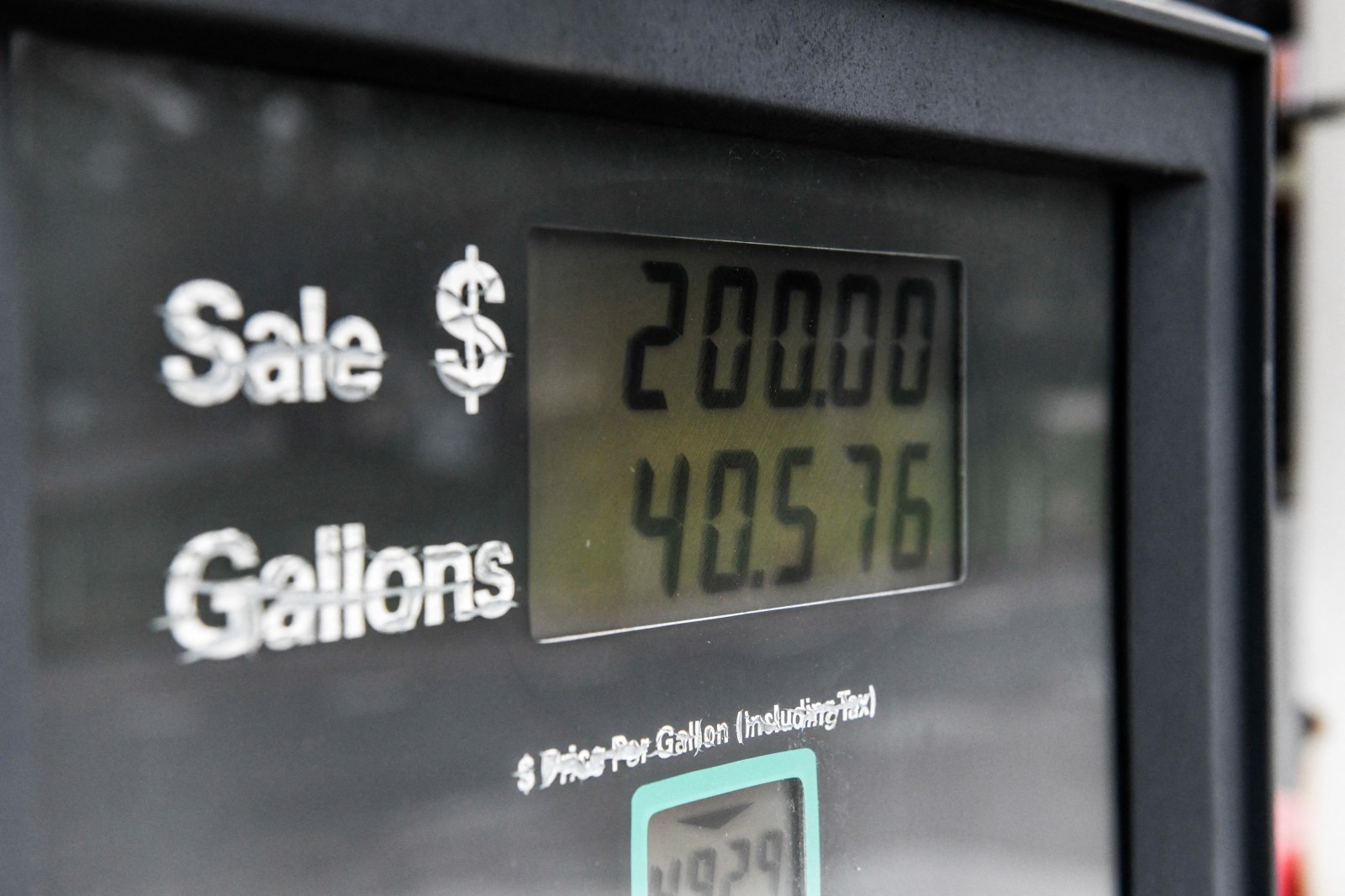
Gas prices have risen above $4 per gallon in 28 states due to increased hostilities between the United States and Iran. This hike presents challenges for President Donald Trump ahead of the upcoming midterm elections, scheduled for 100 days from Sunday.
Research by AAA indicates that 60 percent of American drivers will find it difficult to afford gas if prices reach $4 per gallon. This figure is significant for consumer sentiment, presenting a dilemma for the Trump administration as voters head to the polls on November 3.
Gas Prices in Battleground States
According to a Newsweek map, 28 states have gas prices exceeding the $4 benchmark. Important midterm battleground states such as Michigan, Maine, and New Hampshire are experiencing high prices with gas costing $4.23, $4.10, and $4.06 per gallon, respectively. AAA reported a national average price of $4.11 on Sunday.
Michigan faces a competitive race as Senator Gary Peters, a Democrat, is retiring. In Maine, the Democratic Senate nominee Troy Jackson is in a critical race for his party. New Hampshire features an open Senate race following the retirement of Democratic Senator Jeanne Shaheen. President Trump narrowly lost this state in the 2024 election.
In contrast, prices in Georgia and Ohio remain below $4, recorded at $3.92 and $3.89 per gallon, respectively. Georgia’s Democratic Senator Jon Ossoff runs for reelection in a state Trump won in 2024, making it significant for Senate control. Democrats aim to capture Ohio, currently held by the GOP.
California has the nation’s highest average gas price at $5.64, while Indiana offers the lowest at $3.51 per gallon.
Why Gas Prices Are High
The U.S. and Israel initiated airstrikes against Iran on February 28, targeting Iran’s military and nuclear capabilities. On Iran’s side, the Strait of Hormuz, a vital passage for global oil and gas, was blockaded. This turmoil led Brent crude, the global benchmark, to surpass $100 per barrel. Before the war, gasoline averaged $2.98 per gallon, breaching the $4 mark by March 31. Prices peaked at $4.56 in early May, driven by hopes for a U.S.-Iran agreement to reopen the waterway and release Gulf-bound oil tankers.
Prices fell after a June 17 memorandum of understanding, yet climbed again as Tehran resumed ship attacks in the Strait, prompting U.S. retaliation. Meanwhile, rising threats of Houthi attacks on vessels in the Bab el-Mandeb Strait, another vital oil route, add to the volatility.
According to Taylor Rogers, a White House spokesperson, as the U.S. military counters Iran’s disruptions, energy prices are expected to return to pre-conflict levels. Newsweek editors Daniel Orton and Tony Phillips have been contacted for further comments.