
Recent remarks by President Donald Trump about alleged Chinese interference in American elections have heightened attention on China’s influence in the U.S. Federal records document multiple Chinese government entities, state-controlled media, and firms using the Foreign Agents Registration Act (FARA) to disclose politically inclined operations in the U.S. Meanwhile, some Chinese companies have reported lobbying activities under the Lobbying Disclosure Act, focusing on their commercial interests.
These disclosures offer a glimpse into how Chinese entities seek to mold U.S. policies, public perceptions, and business decisions. Yet, they only capture part of Beijing’s activities and do not substantiate Trump’s election-related claims. Chinese and Hong Kong-based entities, often linked to the Chinese Communist Party, have invested substantial sums in influencing the U.S., with the Department of Justice recording over $20 million in FARA-related costs for 2025. Additional millions appear in lobbying disclosures, while Chinese government sources contributed nearly $80 million to FARA expenses during the same period.
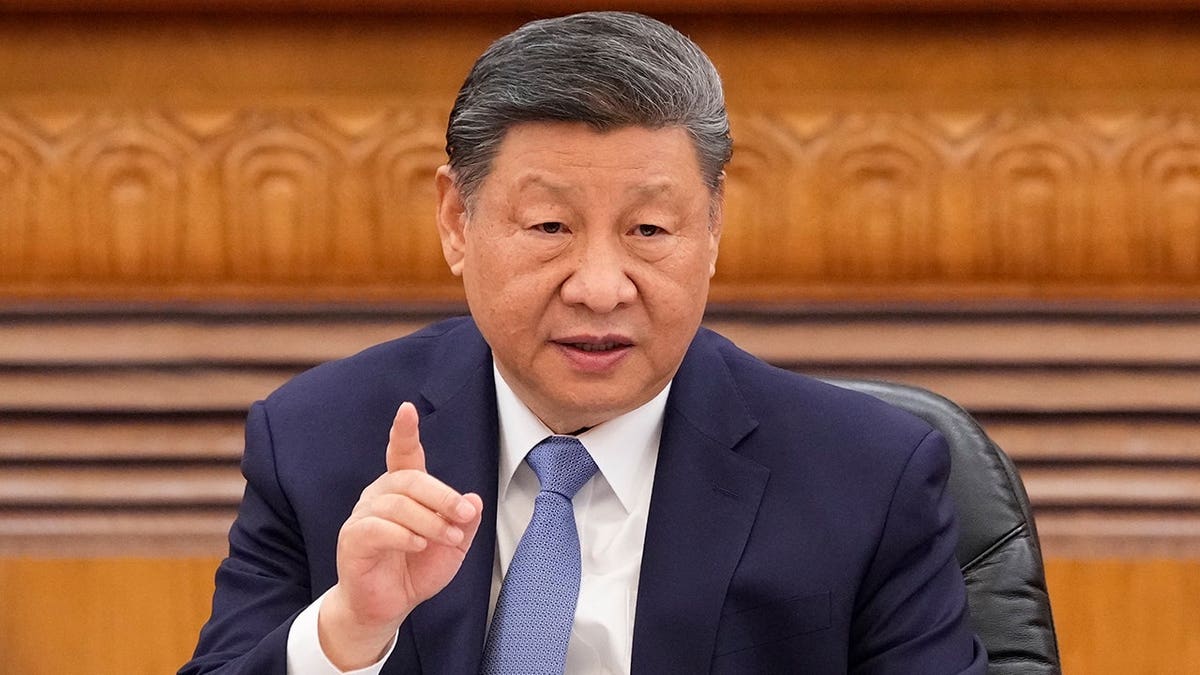
Chinese President Xi Jinping dismissed Trump’s accusations of election interference as baseless and indicated potential countermeasures.
Not all Chinese influence operations are publicly recorded. Campus groups tied to the Chinese government, like the Chinese Students and Scholars Association, do not file disclosures, keeping their activities hidden from Americans. Additionally, groups connected to China’s United Front Work Department, a network fostering Beijing’s global interests, remain undisclosed due to their secretive nature. Some argue that certain U.S. nonprofits also have notable connections to the CCP.
A spokesperson for the Chinese embassy emphasized China’s dedication to improving mutual understanding and cooperation between China and the U.S., describing international exchanges as transparent and mutually beneficial. They critiqued portrayals of China’s actions as influence operations, arguing such views misrepresent legitimate engagement.
‘Propaganda’ Activities
China’s state-run media is a prominent influence tool, often termed ‘propaganda’ by academics and the federal government. The State Department estimated that China spent billions annually on foreign information manipulation efforts globally by 2023.
Several Chinese media entities, including CCTV, Xinhua News, and China Daily, have affiliations with the CCP and are registered as foreign agents in the U.S. For instance, CCTV funds CGTN America, a significant Chinese English-language media platform, with DOJ records showing it received $66.8 million from CCTV in 2025.
CGTN’s coverage frequently aligns with Democratic rhetoric, discussing climate change, racial tensions, immigration, and the war in Gaza. It criticizes Trump’s policies while praising figures like California Governor Gavin Newsom. Researchers at King’s College in London published a 2022 paper suggesting CGTN aims to portray America unfavorably instead of directly swaying voter behavior.
The DOJ requires Chinese media to register under FARA due to their intent to influence U.S. policy or public opinion. Despite criticism, the Chinese embassy maintains these outlets operate legally, arguing claims of ‘propaganda’ reflect ideological bias.
The China Lobby
Representing Chinese corporate interests is lucrative for American lobbyists. Records show many lobbyists have signed contracts with Chinese firms since 2025. FARA registrations reveal that companies like Huawei and Hikvision act as foreign agents in the U.S.
Hikvision, under partial state ownership, has faced U.S. sanctions for allegedly aiding Uyghur Muslim repression. It has enlisted American lobbyists to challenge these sanctions. Under FARA, such efforts must be publicly disclosed, revealing interactions with U.S. policymakers.
Most lobbying by Chinese firms occurs under the LDA, which demands only basic disclosure about spending and lobbying topics. Entities like Tencent, labeled a ‘Chinese military company’ by the Pentagon, have spent heavily on lobbying since 2025. Tencent disputes its inclusion on this list and is pursuing formal reconsideration.
Some accuse Chinese entities of using the LDA to avoid more stringent FARA disclosures, thus limiting public insight into their U.S. activities.
Trade, Tourism, and Development
China invests in drawing American trade, tourism, and investment. The China Council for the Promotion of International Trade travels the U.S. promoting economic cooperation. Despite seemingly benign activities, some suggest organizations like CCPIT support geopolitical aims, citing historical CIA findings.
In response, the Chinese embassy discredits these claims, promoting cooperation as CCPIT’s goal. Various offices also work to attract American travel and investment to China.
Despite accusations against China, Trump has invited President Xi Jinping to the U.S. to discuss artificial intelligence and bilateral relations in September.