
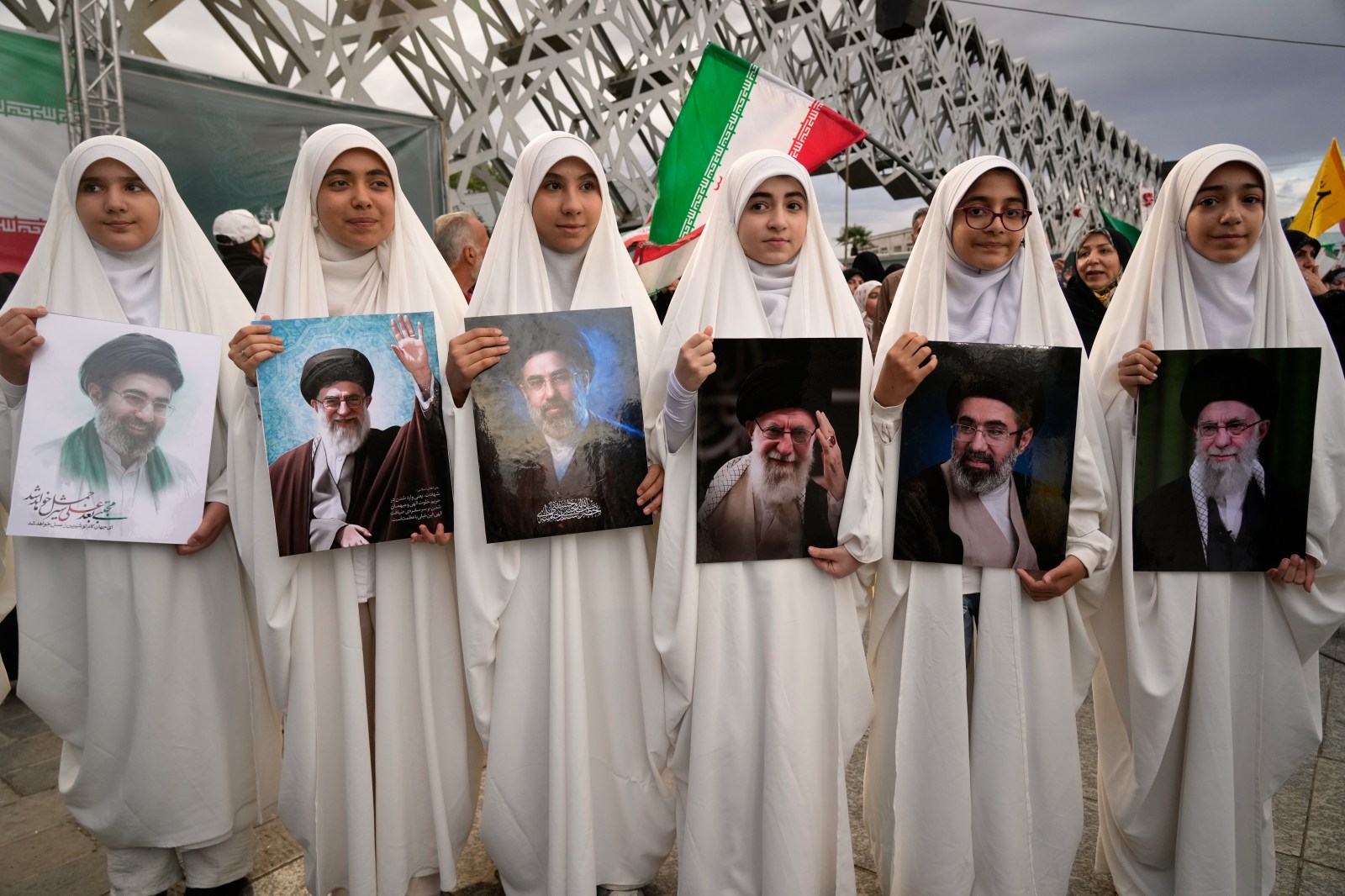
Mojtaba Khamenei, the current supreme leader of Iran, remains elusive. His disappearance followed the assassination of his father and predecessor, Ali Khamenei, in a joint U.S.-Israeli operation. Despite significant events, like his father’s state funeral, Mojtaba has not been visible.
Reports about Mojtaba describe him in contradictory terms. Some say he is severely injured yet still able to influence the country from behind the scenes. His absence complicates Tehran’s governance and efforts to negotiate with the U.S.
Understanding the Impact
Newsweek spoke with experts to understand the significance of Mojtaba’s disappearance. Their opinions varied, reflecting the uncertainties surrounding his role. Some view him as a near-mythical figure; others describe him as ineffective.
“Shia Islam holds that the Twelfth Imam—absent for over 1,200 years—guides through spiritual means,” noted Peiman Salehi, an Iranian political analyst.
Mojtaba may serve as a symbolic leader rather than an active decision-maker. His sporadic communications could reinforce a sense of national unity.
A Power Struggle
Mojtaba faces challenges in filling his father’s shoes. Ali Khamenei’s decades-long influence shaped Iran deeply. Mojtaba lacks the same authority and knowledge, igniting a power struggle within Tehran.
Middle East expert Andreas Kreig observes that the IRGC benefits from this vacuum. It controls vital military and intelligence resources, influencing Iran’s political landscape.
Complex Negotiations
Iran is engaged in delicate negotiations with the U.S., complicated by Mojtaba’s absence. Tehran uses its control over the Strait of Hormuz to pressure the West. However, Iran’s internal power dynamics impact these negotiations.
“The IRGC wants recognition that no agreement can hold without its involvement,” Kreig emphasized.
Public Sentiment
Despite efforts from outside, a regime change has not occurred. The Iranian public, facing external threats, tends to rally around the regime, delaying any potential revolution.
The idea that a supreme leader is necessary persists among Iran’s powerbrokers. Isfahani states, “Popularity doesn’t drive governance in the Islamic Republic.”
Will Mojtaba Return?
Experts doubt that Mojtaba has left Iran, seeing his absence as a security measure against potential threats. While rumors suggest he has sustained injuries, his ultimate role remains uncertain.
Whether or not Mojtaba regains his position actively, he currently relies heavily on Iran’s IRGC and intelligence for security and influence. He may become a figurehead with limited power, which suits the interests of those currently managing the Islamic Republic.