
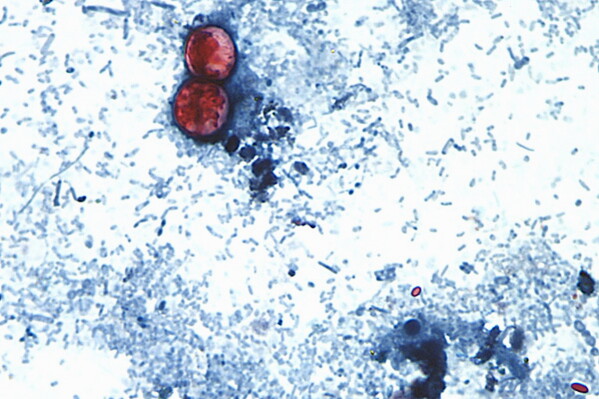
Federal health officials have expanded the investigation into an outbreak of cyclospora, a diarrhea-causing parasite, linked to shredded lettuce. The outbreak, initially associated with Taco Bell restaurants, now includes cases in Illinois, Kansas, Oklahoma, and Pennsylvania. The Centers for Disease Control and Prevention (CDC) had previously identified cases in Indiana, Kentucky, Michigan, Ohio, and West Virginia.
Officials from the CDC, the Food and Drug Administration (FDA), and state health departments are tracing the lettuce supply chain. Interviews are being conducted with affected individuals about their food intake two weeks prior to illness. The outbreak related to Taco Bell’s lettuce has resulted in 1,947 cases, with at least 98 hospitalizations. No deaths have been reported, but the actual number of cases may be higher since not all are documented.
The FDA is focusing on Taylor Farms, which has recalled iceberg lettuce grown in central Mexico. This recall follows an investigation into another cyclospora outbreak affecting 72 people, although the specific products involved remain unidentified.
Records indicate that cyclospora cases are at a historic high in the U.S. since May 1. The CDC has reported over 4,100 laboratory-confirmed cases and is examining more than 7,400 suspected cases across 41 states. The investigation may link other brands, restaurants, or distribution channels to the outbreak.
Cyclospora is a microscopic parasite that contaminates food through human feces. Contamination often occurs when produce is washed or irrigated with tainted water. Ingestion causes intestinal illness characterized by frequent, sometimes severe, bowel movements.
México’s health authorities reported, after inspecting the Taylor Farms plant in Guanajuato, that no parasites were found in lettuce or water samples. This inspection included 10 samples of iceberg lettuce and four water samples collected between July 18 and 20.
The Associated Press Health and Science Department is supported by Howard Hughes Medical Institute and the Robert Wood Johnson Foundation. However, AP is solely responsible for the content.