
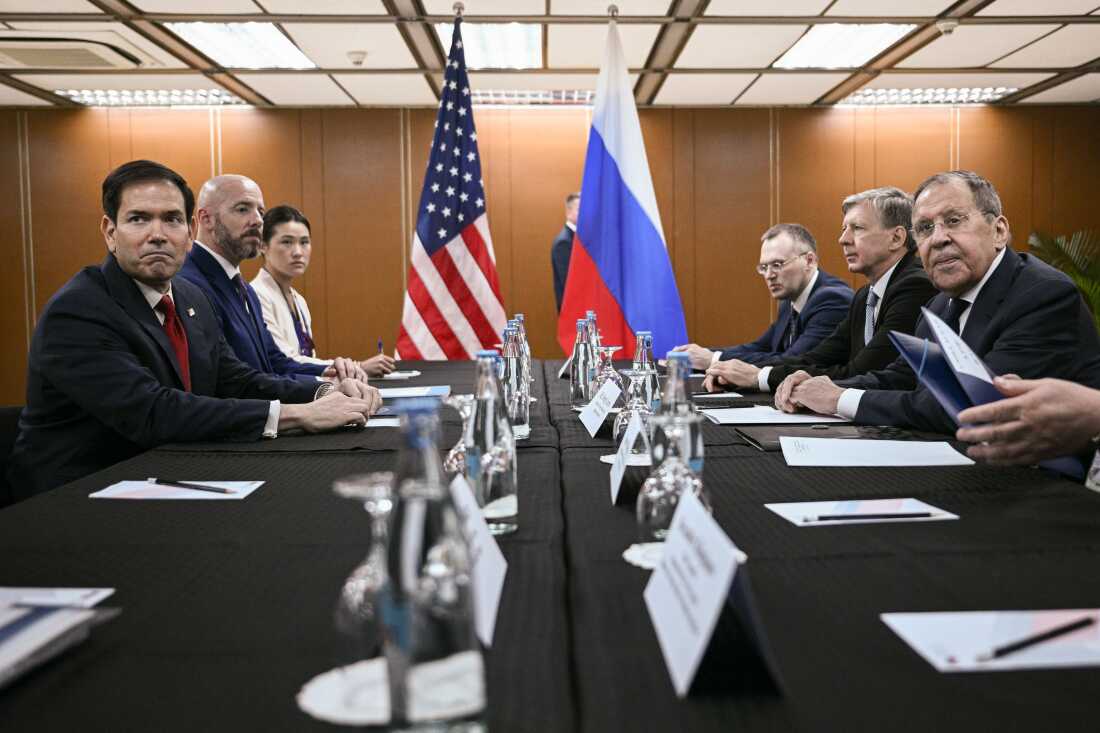
U.S. Secretary of State Marco Rubio attended a meeting with Russia’s Foreign Minister Sergey Lavrov during the Association of Southeast Asian Nations (ASEAN) Foreign Ministers Meeting in Pasay, Metro Manila on Thursday, July 23, 2026. The meeting focused on the ongoing conflict in Ukraine and other international tensions.
Rubio stated the Trump administration’s readiness to assist in ending the conflict in Ukraine, acknowledging the challenges in achieving a diplomatic solution. He described past U.S.-mediated talks as unfruitful but expressed President Donald Trump’s commitment to diplomacy if conditions allow.
Rubio remarked, “We’ve tried and will continue to try to find a middle ground that both sides can accept. We’re prepared to play that role if the opportunity presents itself.” He met Lavrov and other leaders, including China’s foreign minister, during the ASEAN gathering.
Focus on Global Conflicts
ASEAN talks, spanning three days, addressed escalating conflicts in the Middle East and tensions in the South China Sea, where a new clash occurred on Thursday. Rubio emphasized America’s commitment to Asia despite other global focuses. He highlighted America’s strong partnerships and economic ties in the region.
Lavrov, after discussions with Rubio, refrained from answering media questions. The Russian Foreign Ministry stressed Russia’s concerns about arming Ukraine and reiterated Moscow’s readiness for a political resolution based on agreements from a summit between President Vladimir Putin and Trump.
Rubio maintained that Washington’s military support for Ukraine remains unchanged, with NATO allies purchasing and transferring weapons. Ukrainian President Volodymyr Zelenskyy’s priority remains resuming negotiations.
Response to Middle East Tensions
U.S. mediation efforts in the Russia-Ukraine conflict face complications due to ongoing conflict with Iran. Strikes between Washington and Tehran have intensified following the failure of an interim ceasefire deal. Rubio indicated that Tehran is seeking talks, but Trump remains skeptical of their intentions.
Trump warned Iran, suggesting that the U.S. would target Iranian infrastructure in retaliation for attacks on ships in the Strait of Hormuz. Iranian Foreign Minister Abbas Araghchi described the situation as retaliatory.
China’s Maritime Military Actions
Australian Foreign Minister Penny Wong expressed concerns over the Chinese navy’s recent missile test from a nuclear-powered submarine. Wong criticized the lack of transparency in China’s military actions and called them destabilizing.
Rubio’s meeting with Chinese Foreign Minister Wang Yi included discussions about tensions in the South China Sea. Both acknowledged the potential global impact of U.S.-China conflicts.
Incidents in the South China Sea remain contentious. The Philippine coast guard reported harassment by the Chinese coast guard during a fuel delivery to Filipino fishermen. China defended its actions as lawful, urging de-escalation of provocative measures.
The Trump administration continues to criticize China’s aggressive stances in the region. ASEAN is working towards a non-aggression pact with China to prevent major conflict in these waters, a significant global trade route.