
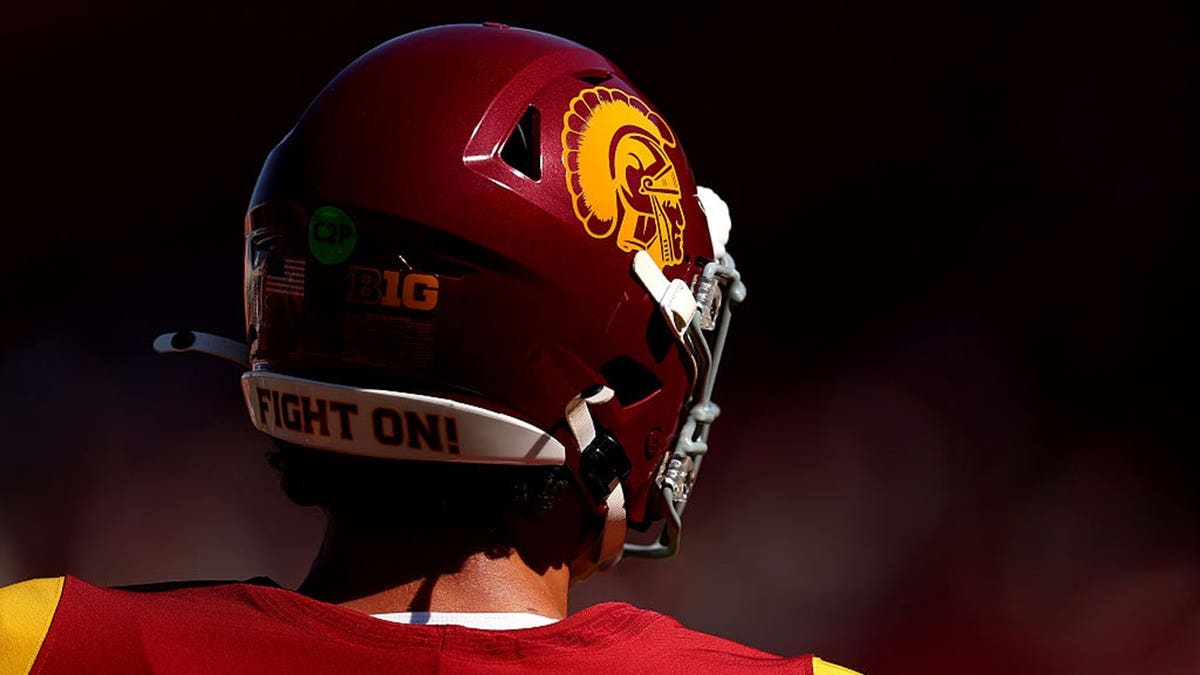
The University of Southern California (USC) has again attempted to create excitement around its football program by using Greek literature as a theme. Unfortunately, the execution leaves much to be desired.
This season, USC decided to promote its football team using imagery inspired by The Odyssey. The program released a movie poster depicting a Trojan helmet alongside the phrase, “Our Odyssey begins August 29.” While the concept is visually appealing, it overlooks a crucial detail.
The Odyssey, by Homer, narrates the arduous 10-year journey of the Greek hero Odysseus following the fall of Troy. The Trojans are not the focal point of the epic. Instead, it chronicles their defeat and the Greeks’ victory, making the branding choice questionable for a team represented by the Trojan mascot.
Previously, USC had already stumbled in its literary branding attempt. Prior to the 2024 season, the team released a video displaying players emerging from a Trojan Horse to charge into battle. The problem is that the Trojan Horse was a Greek deception used to infiltrate and conquer Troy. The Trojans suffered a devastating loss at the hands of the Greeks who were hidden inside the horse.
Such missteps indicate a lack of awareness regarding these literary tales among those promoting the USC Trojans. A simple search could have clarified the historical outcomes and potentially avoided such blunders.
Adding irony to the situation, USC plans to start its 2026 football season by facing San Jose State, whose mascot is the Spartan. This means the Trojans are promoting their season using a story about their downfall, preceding a match against yet another reference to ancient Greece.
Clearly, these branding efforts did not consider historical context. The hope is that the Trojans will avoid any ancient Greek-themed pitfalls this upcoming season.