
Australia is in a continuous geopolitical contest with China over influence in the Pacific Ocean. Recent treaties and alliances signify Canberra’s strategic efforts to deter Beijing from gaining a military presence in this vital region.
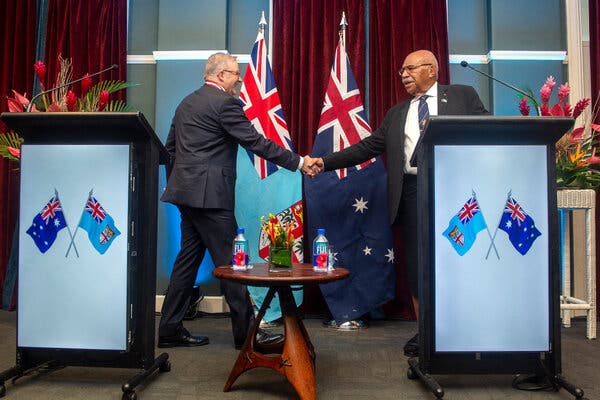
On the same day China showcased its military prowess by successfully launching a submarine-fired ballistic missile into the Pacific, Australian Prime Minister Anthony Albanese was in Fiji’s capital, Suva. Here, he signed two crucial security agreements with Fiji’s Prime Minister, Sitiveni Rabuka. This event marked a significant step in strengthening regional ties.
A week earlier, Albanese celebrated the completion of a treaty with Vanuatu’s leader. Subsequently, he visited the Solomon Islands, offering aid for education and policing, standing with the new leader of the nation.
Australia’s diplomatic outreach to Pacific island nations involves not only development assistance and public engagements but also involves forming binding defense treaties. Such actions are driven by Foreign Minister Penny Wong’s characterization of a “permanent contest” for regional influence.
The Pacific region comprises 14 independent countries. Although many of these nations are small in size and population, they possess extensive exclusive economic zones. Their geostrategic location has been crucial, historically serving as key spots for military conflict during World War II and weapon testing grounds. Currently, these islands are surrounded by vital shipping routes and offer the potential for valuable deep-sea mining activities.
Australia’s Renewed Commitment to Pacific Alliances
Australia has historically maintained close relationships with South Pacific island nations. In the past, it acted as a colonial administrator for several islands and played a foundational role in establishing the Pacific Islands Forum, a critical multilateral organization in the region.
The strategic significance of the Pacific and its nations has attracted intense global interest. The competition for influence is not solely about military positioning; it encompasses trade routes, economic interests, and the exploitation of natural resources. The situation continues to unfold as both Australia and China engage in diplomatic maneuvers to secure their interests in the Pacific.