
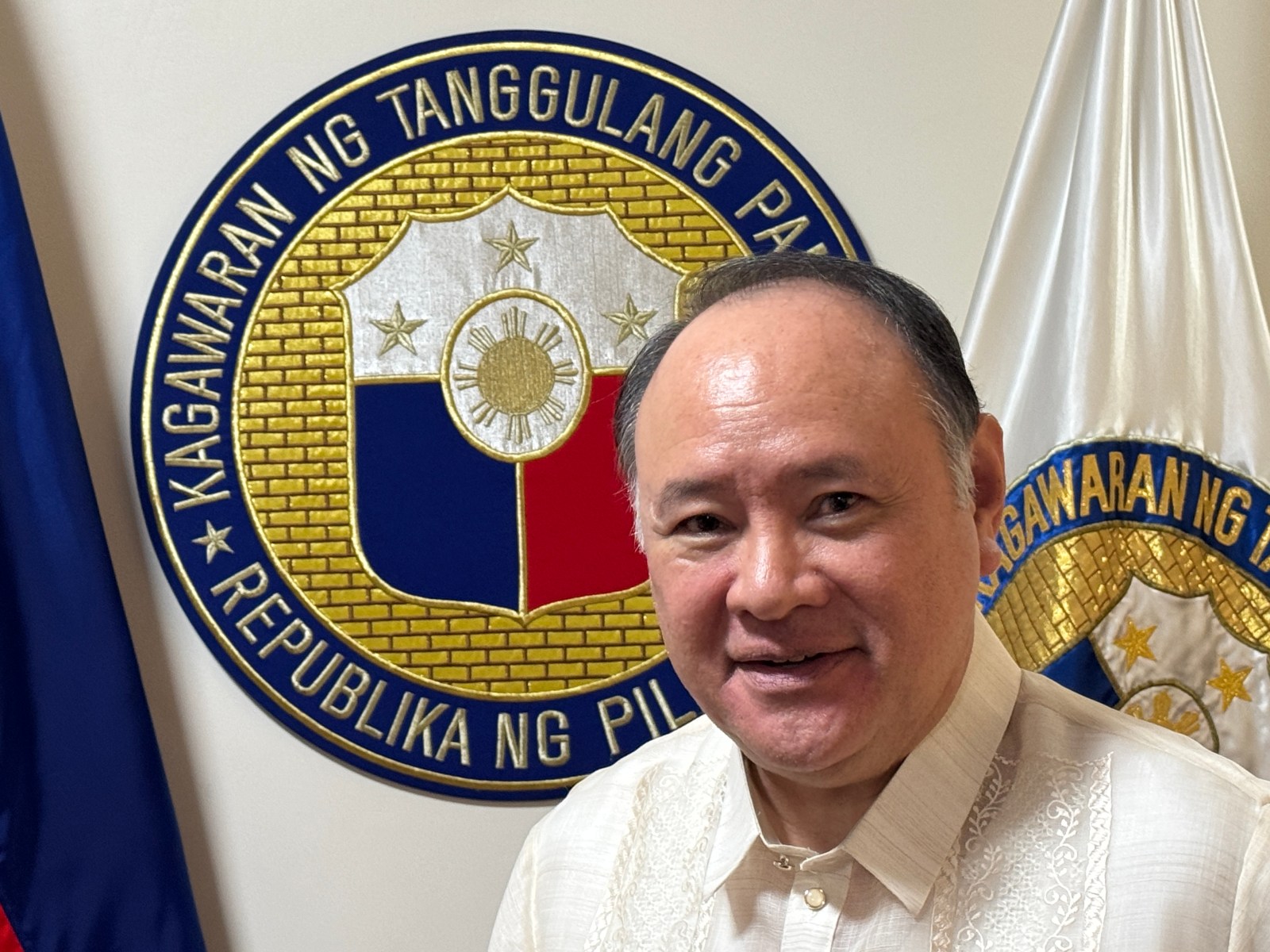
A decade following the Philippines’ victory in an international legal ruling against China over maritime territory, the country is enhancing its defense capabilities and alliances. Philippine Defense Secretary Gilberto Teodoro, during an interview in Manila, emphasized the nation’s efforts against China’s ongoing encroachment of its waters.
The Significant 2016 Ruling
On July 12, 2016, an international tribunal dismissed China’s extensive claims in the South China Sea. Despite this ruling, clashes between Chinese forces and the United States’ ally, the Philippines, continue over the tiny atolls and sandbanks. There are concerns that China may convert these areas into military bases as it has done in other locations.
Philippines’ Strategic Response
Secretary Teodoro outlined plans to bolster the Philippine presence in these disputed regions. “We see that there is an attempt to occupy areas within our exclusive economic zone, and we have to resist that,” he stated at Camp General Emilio Aguinaldo in Manila. Teodoro’s focus is stopping China’s gradual territorial advances, not only in Philippine waters but throughout the South China Sea.
Building a coalition to enforce the 2016 ruling is part of this strategy. Japan is cited as another nation taking similar steps in the area.
China’s Position and Diplomatic Dynamics
The Chinese embassy in the Philippines has consistently denied aggressive actions, accusing the Philippines of provocations, encouraged by the U.S. China advocates for dialogue over sensationalism. Despite rejecting the 2016 ruling, China has not seized more features in the area since.
Focus on Scarborough Shoal
An area of particular interest recently has been the Scarborough Shoal, located 140 miles from the Philippines’ largest island. This location is 540 miles from mainland China and has been under Chinese control since 2012.
Teodoro, under Chinese sanctions for his remarks, remains undeterred. He stresses addressing the continued presence and activities of Chinese forces where they are not permitted.
Strengthening International Alliances
Confident in defense ties with the United States, Teodoro highlights increased bilateral and multilateral military exercises. The relationship is crucial with the ongoing strategic interest in the Indo-Pacific region.
Collaborations are growing not only with the U.S. but also with Japan, Canada, Australia, and New Zealand. These “convergence partners” share common security and supply chain interests, as illustrated by the Pax Silica initiative, aimed at securing technology supply chains globally.
The Need for Increased Defense Spending
Teodoro calls for higher defense spending. With current expenditures at 1.6% of GDP, he argues for an increase to 2% to protect the nation’s 7,600 islands and modernize its 160,000-strong military force. Modernization includes adopting technologies like drones.
Economical Dependencies and Intricacies
The relationship with China is complex, marked by economic dependencies and security challenges. China supplies basic goods and elements for defense, yet is also accused of engaging in “wolf warrior” diplomacy and other subversive activities.
Teodoro underscores the need for national resolve, citing Deng Xiaoping’s strategy of patience and strategic planning. He calls for a patient approach, mirroring the long-term strategies employed by China.