
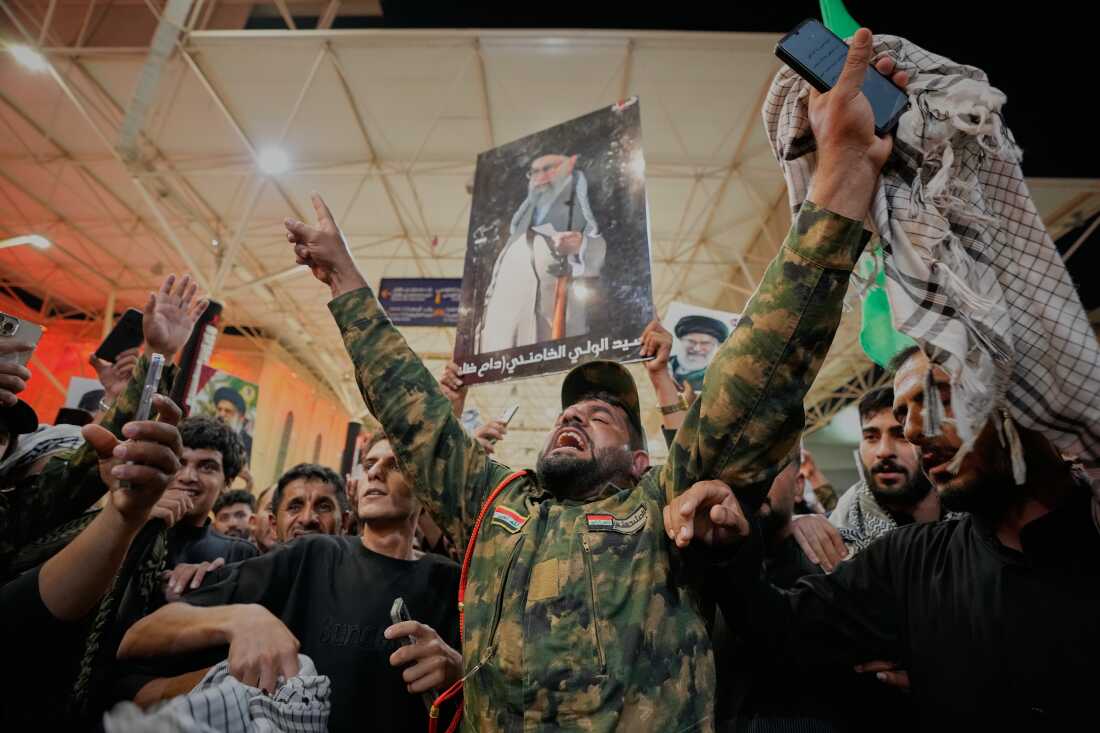
On Tuesday, a Shiite soldier in Iraq was chanting outside the Imam Ali Shrine in Najaf ahead of funeral ceremonies for the late Iranian Supreme Leader Ayatollah Ali Khamenei. These events took place amidst rising tensions in the Middle East.
Early Wednesday, the United States military attacked Iran following claims that Iran had struck three ships in the Strait of Hormuz. This conflict is part of a broader strategy by the US to restrict Iran from openly selling crude oil on the world market. In retaliation, Iran targeted Bahrain and Kuwait with attacks. The regional exchanges have heightened the risk of breaking an interim agreement meant to pause the conflict. This situation could potentially lead to a wider conflict in the Middle East.
The attacks on shipping coincided with the funeral of Iran’s Supreme Leader Ayatollah Ali Khamenei, who was killed on February 28 at the start of hostilities. His funeral, ending on Thursday, was expected to be a period of reduced tensions. However, many mourners expressed hostility towards US President Donald Trump and Israeli Prime Minister Benjamin Netanyahu.
Negotiations for a final peace agreement had been slated to start after Khamenei’s burial. Discussions were expected to address reopening the strait and reducing Tehran’s nuclear activities, but the recent events have cast doubt on this process.
“The era of bullying and extortion is over,” stated Iran’s Parliament Speaker Mohammad Bagher Qalibaf on X. “It leads nowhere. We don’t fold.”
US Strikes Target Iran
The US Central Command announced that American forces conducted the strikes to punish Iran for targeting commercial shipping manned by civilians in an international channel. The US targeted Iranian sites including air defense systems, radars, and over 60 small boats used by the paramilitary Revolutionary Guard, which have been used to harass ships in the strait. The US military proclaimed readiness to hold Iran accountable if agreements are breached.
Although Iran acknowledged the strikes, it did not provide details on any losses. Iranian state media reported explosions in Bandar Abbas, Qeshm, and Sirik.
Bahrain and Kuwait, home to significant US military forces, sounded missile alerts on Wednesday morning following the incident. The Revolutionary Guard confirmed targeting US military facilities in both nations. Iran accused the US of violating ceasefire agreements by attacking coastal bases and civilian sites.
US Blocks Iranian Oil Sales
The US withdrew a license that allowed Iran to openly sell oil on the global market, previously part of the interim peace deal. Iran is suspected of having sold oil, circumventing sanctions by offering discounted prices, primarily to China. This policy shift occurred after the attacks.
A UK Maritime Trade Operations center reported that one tanker off the Omani coast was hit and set ablaze. Iranian state TV mentioned that the LNG tanker was attacked post warnings, although it didn’t take responsibility. The other two ships faced minor damage but continued their journey in the Strait of Hormuz.
Iran has historically maintained control over the Strait of Hormuz, a critical channel where a significant fraction of oil and natural gas passes. The US and Gulf Arab states resist Iran’s proposed charges for passage through the strait, challenging the decades-old practices in the waterway.
Qatari Foreign Ministry spokesperson Majed al-Ansari condemned the attacks on the Qatari tanker Al Rekayyat, criticizing Iran for endangering international navigation and energy security.
As per the interim deal, Iran and the US agreed on free vessel passages for 60 days. However, disagreements persist over route control and potential charges imposed by Iran, risking further escalation in the region.