
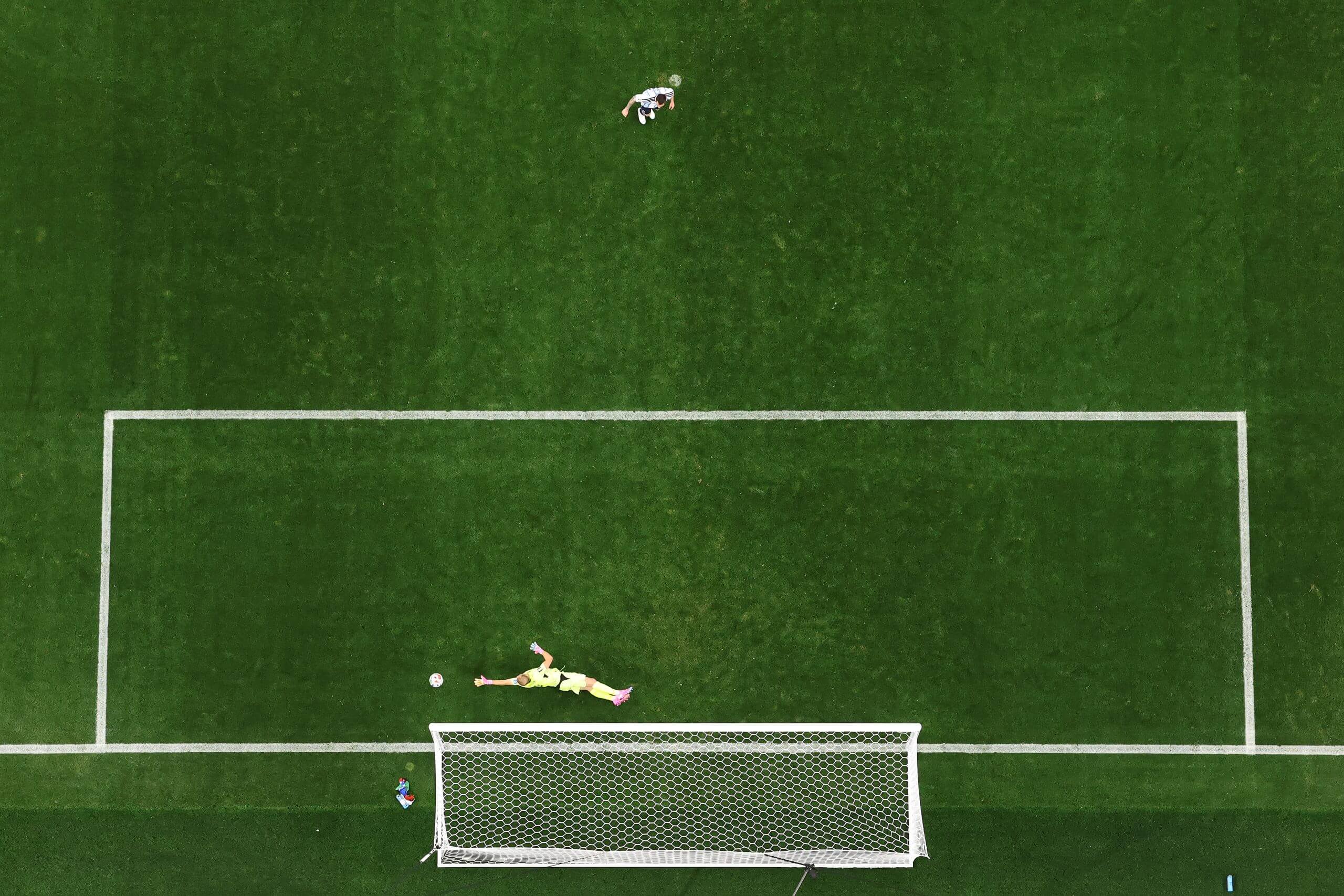
When it comes to describing Lionel Messi, ‘average’ is not a term often used. However, in the realm of penalty-taking, this term fits. The Argentine forward has a surprising track record of missed penalty attempts, including three misses from seven World Cup penalties during regular game time. Most recently, against Egypt, Messi became the first player to fail two non-shootout penalties in the same World Cup.
Messi’s international career penalty record stands at 25 goals from 32 attempts. Adding club matches, his total is 116 goals from 150 penalties, yielding a 77 percent success rate. This rate is somewhat below average among elite players. Messi’s achievements in football are unparalleled, including eight Ballon d’Or titles and four Champions League victories, yet his penalty performance stands out as a curious anomaly.
It seems incongruous that Messi, widely regarded as the greatest player ever, struggles with statistically easy chances. In basketball, this could be compared to Stephen Curry’s three-point prowess overshadowed by subpar free-throw stats.
A common misconception is that left-footed players are less reliable penalty takers. Right-footers are perceived as superior, but statistics reveal no significant difference. Left-footed players are less common, making their penalty attempts rarer and potentially harder for goalkeepers to predict.
Over his career, Messi has successfully taken penalties, such as in the 2005 Under-20 World Cup where he scored two against Nigeria. However, pressure scenarios have seen him falter, as evident in his Copa America shootout record.
Messi’s penalty miss against Austria highlighted problems with his strategy. During a match in Texas, when VAR intervened, Messi had ample time to prepare his shot after a foul. His approach involved a short run-up coupled with a deceleration attempt, aimed at gauging the goalkeeper’s intention. But Schlager, the Austrian keeper, remained firm, causing Messi to mishit the ball painfully wide.
The penalty expert Geir Jordet explains that Messi’s technique of watching the goalkeeper instead of focusing solely on the ball reduces precision. Messi’s decision-making under pressure can lead to positioning errors when the goalkeeper anticipates his shot direction.
Throughout the World Cup, Messi varied his penalty approach. Against Egypt, after another slow run-up, he targeted the opposite side, but Shobeir, the goalkeeper, read his actions correctly.
Messi’s inventiveness, a hallmark in open play, arguably hinders his penalty consistency. He lacks a defined penalty ‘type’ or technique, unlike players such as Harry Kane, who employs a reliable whip to the mid-height side. Messi alternates between power and placement, thereby introducing unpredictability which sometimes results in failure.
At previous World Cups, Messi successfully converted most penalties, including crucial shootout goals against France and the Netherlands. His approach involves patience, observing goalkeeper movements, and confident execution.
Messi’s career shows varied penalty attempts, ranging from roof-bound shots that overpower even experienced keepers to ill-timed efforts resulting in missed opportunities. While Messi’s quick execution after the referee’s signal indicates nerves—linked in research with lower scoring rates—his adaptability remains a peculiar aspect of his game.
Despite Messi’s unmatched skill, every prolific athlete experiences moments of vulnerability. Penalties remain Messi’s Achilles’ heel. Yet, his ability to score prolific goals in open play compensates for these weaknesses. In the same match against Austria, his contributions surpassed Miroslav Klose’s record, securing his status as the all-time leading men’s World Cup scorer.