
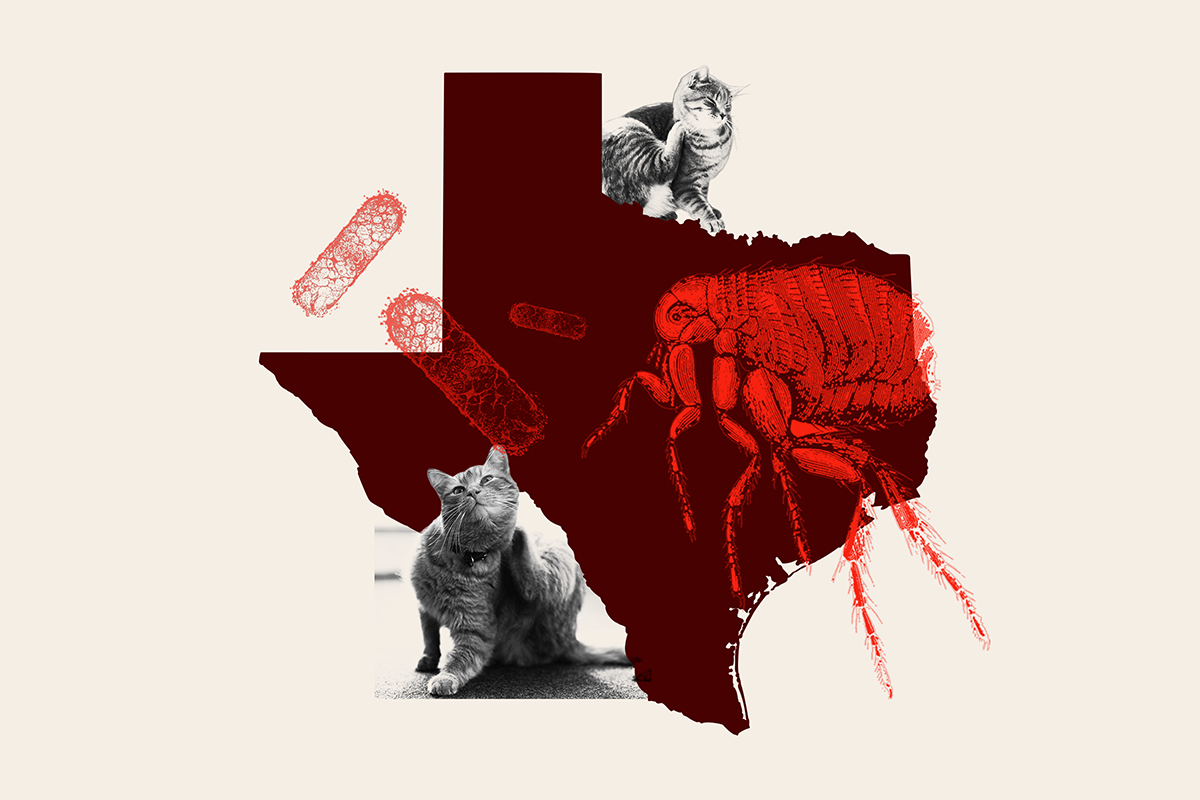
Reports indicate a rise in a flea-borne disease in certain areas of Texas, with domestic pets potentially bringing it into homes. Recent research indicates a connection between fleas on domestic cats and the bacterium responsible for murine typhus. This disease had previously been considered nearly eradicated but has re-emerged, with over a hundred cases alone in Galveston. Researchers from Texas A&M College of Veterinary Medicine and Biomedical Sciences provide insights into why this disease is returning to households through pets.
Murine Typhus: A Returning Threat
Flea-borne typhus, also known as murine typhus, results from the bacterium Rickettsia typhi. It spreads to humans via infected fleas. Symptoms surface within six to 14 days after exposure, often including fever, headache, chills, rash, backache, joint pain, and nausea. Typically mild, the disease can lead to hospitalization if not treated. Between 2019 and 2023, two fatalities were recorded due to the disease, as per data from the University of Texas Medical Branch and the CDC. The CDC also highlights its resurgence in California.
Importantly, the disease does not transmit from person to person. Human infection occurs indirectly, usually when flea feces carrying the bacteria enter the skin through bites or come into contact with mucous membranes like the eyes or mouth. Typically, fleas that feed on infected rodents act as vectors, but cats and their fleas are also suspected of spreading the bacteria within homes.
Study Insights and Preventive Measures
“Our data dashboard shows rates above pre-pandemic levels in 2023 and 2024,” noted a San Antonio Metropolitan Health District spokesperson.
A study by Texas A&M, published in Parasites & Vectors, found DNA from R. typhi in cat fleas, scientifically termed Ctenocephalides felis, from domestic cats in the Rio Grande Valley. Out of 167 cats tested, six had fleas positive for the bacterium. Despite the small fraction, the region reported over 6,700 cases between 2008 and 2023, based on Texas Department of State Health Services information. These findings highlight the need for a “One Health” approach, viewing animal and human health as linked.
While cats rarely fall seriously ill from R. typhi, keeping fleas in check on pets through veterinary treatments remains vital for protecting people living with them. Preventative measures include using insect repellents, treating pets for fleas, and keeping rodents and wild animals away from homes. During rodent infestations, treat fleas first to prevent their migration to humans.
The Impact in Galveston and Beyond
The University of Texas conducted a separate investigation into the disease’s seriousness. Reviewing microbiology records from April 2019 to October 2023, researchers found 149 adult murine typhus cases. Of these, 119—about 80 percent—were hospitalized, and 33 required intensive care. Two patients died from multiorgan failure and a severe immune complication known as hemophagocytic lymphohistiocytosis. Older age emerged as a key risk factor for intensive care, with obesity, diabetes, and chronic kidney disease common among hospitalized patients.
Despite aggressive vector-control campaigns in the 1940s that nearly eradicated the disease, it is experiencing a concerning resurgence. A 2023 study of Galveston County residents showed antibody evidence of past R. typhi infection, surging from 1.2 percent in 2013 to 7.8 percent in 2021. This significant rise points to more common exposures.
“There are only a few places in the U.S. where murine typhus is recognized to be transmitted with some regularity and, unfortunately, that includes South Texas,” said Dr. Sarah Hamer, a professor at VMBS’ Department of Veterinary Integrative Biosciences.
The increase in pet and feral cats, insufficient access to flea protection due to economic barriers, and warming temperatures likely contribute to the flea infestation on cats and the bacterial transmission causing typhus.