
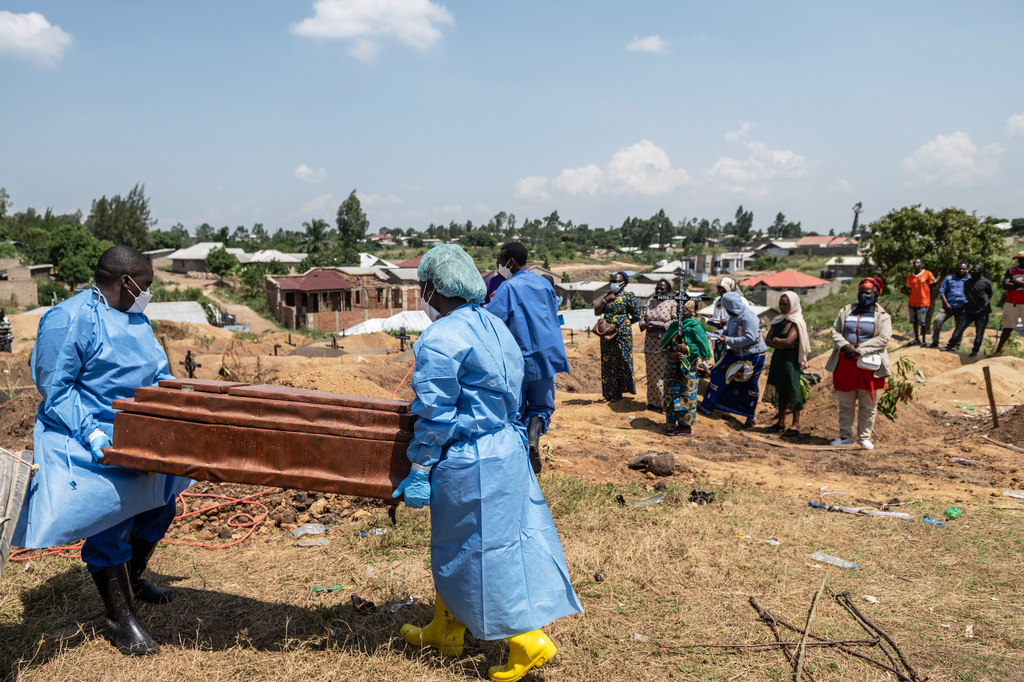
Red Cross workers in Bunia, Congo prepared to bury six-month-old Vanisa Anifa, an orphan who succumbed to Ebola. The Trump administration faced scrutiny in its response to the Central African Ebola outbreak, particularly due to the dismantling of U.S. foreign assistance institutions. The Department of Government Efficiency, led by Elon Musk and overseen by Secretary of State Marco Rubio, contributed to this situation.
Reports from The Hill indicate that the U.S. now operates without an international health response infrastructure for emergencies like these. A University of Chicago study further highlights issues, noting increased conflict in African countries reliant on U.S. aid. The study points to a 12.3% increase in conflict events, 7.3% rise in battles, and 6.8% more protests and riots. These figures do not convey the tragedies in areas like the eastern Democratic Republic of the Congo, where responders combat perhaps the worst Ebola outbreak in history amid ongoing conflict.
Decades of war devastated local health facilities and weakened civil society. These organizations usually act as early warning systems for conflicts and diseases. The significance of American investments in conflict mitigation and peacebuilding is clear. The U.S. Agency for International Development (USAID) played a vital role in these efforts but fell victim to the Department of Government Efficiency’s cuts, along with other key agencies like the U.S. Institute for Peace.
Peacebuilding has been crucial in saving lives and preventing threats. It strengthened local peacebuilders and supported USAID missions in conflict zones. Their work often deterred local disputes from escalating, safeguarding U.S. interests and resources. Lessons from countries including Iraq, Afghanistan, and Haiti informed these approaches.
Now, as Congress evaluates President Trump’s request for $1.5 trillion in military spending for 2027, peacebuilding funding remains scarce. The State Department’s limited capabilities face significant challenges without targeted support from local groups in regions such as Sub-Saharan Africa.
The most potent military cannot address these complex issues alone. Military and congressional support for peacebuilding underlined its importance. International threats persist, and Congress must prioritize development and humanitarian responses centered on conflict prevention and peacebuilding.
Notably, then-Senator Rubio previously supported this mission before overseeing its reduction. Reconsideration is possible to restore U.S. strength and leadership in global affairs.
Elisabeth Kvitashvili, Neil Levine, Ryan McCannell, and Don Chisholm served as directors of USAID’s conflict office from 2002-2024.