
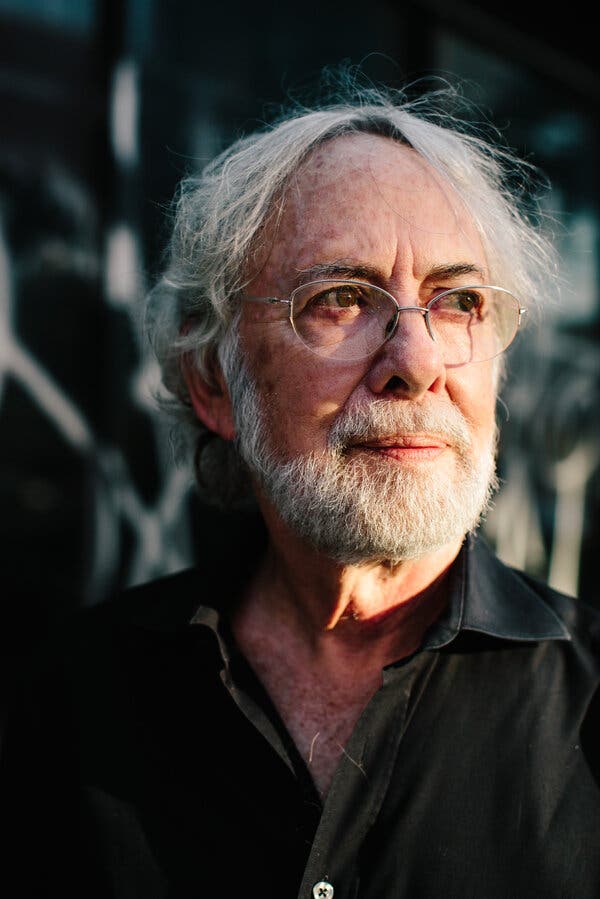
Mike Wallace, a radical historian known for his insightful portrayal of New York City’s history, passed away at 83 in Mexico City. He co-authored the acclaimed book “Gotham” with Edwin G. Burrows, which earned a Pulitzer Prize. This book explored the city’s history up to 1898, focusing on social and economic strife. It also led to two subsequent volumes about New York.
Born in Brooklyn, Wallace initially pursued a pre-med track at Columbia University to fulfill his mother’s wishes. However, his path changed when he nearly failed organic chemistry. He became politically active in the tumultuous 1960s, participating in the 1968 Vietnam War protests on campus. These events spurred his shift to studying history.
Wallace embraced a radical approach, emphasizing social history from the bottom up. He highlighted how capitalism and class conflicts shaped society. Conventional narratives often omitted diverse voices, but Wallace included perspectives from women, Black individuals, and the working class. He challenged dominant historical accounts, arguing they often reflected the interests of those in power.
“The dominant classes in the United States — wittingly or unwittingly — appropriated the past,” Wallace asserted, incorporating voices traditionally excluded.
In 1976, Wallace and Burrows received a $7,000 grant to embark on a sweeping project. Initially, they aimed to chronicle the global shift from feudalism to capitalism. Ultimately, they decided to focus on New York City over a span of 500 years. This scholarly effort spanned half a century, showcasing their dedication to capturing the city’s complex history.
Wallace’s passing was confirmed by his wife, Carmen Boullosa, who shared that he had been battling Lewy body dementia. His work leaves behind a profound legacy in the realm of historical scholarship.