
Officials report escalating flights of Russian nuclear-capable bombers and fighter jets near NATO’s northern border. Moscow is reacting to Ukraine’s long-range drone attacks on Russian targets and the increasing NATO focus on the Arctic region.
From January 1 to July 3, 2026, NATO scrambled fighter jets 62 times in response to Russian aircraft near NATO’s northeastern perimeter, according to a Norwegian military spokesperson. This represents a significant rise, with Norway identifying more Russian aircraft near its airspace in the first half of 2026 than any complete year since 2021.
The tactic of flying sophisticated bombers close to NATO territory is often viewed as intimidation, particularly in the strategic Arctic region. NATO’s concern is heightened by China’s growing presence and Russia’s stronghold in this area.
Norway shares a 120-mile border with Russia, close to major Russian military bases around Murmansk and Severomorsk. These bases house strategic nuclear submarines and play a pivotal role in Russia’s ‘second strike’ nuclear capabilities.
Norwegian officials think increased Russian flights are due to Moscow’s fear that Ukraine could target bases in the Kola Peninsula using long-range drones. Ukraine’s attacks on Russian military bases and oil facilities, often over 1,000 kilometers from the frontline, have pressured Russia’s economy and air defenses.
Recently, Ukraine attacked four Russian oil refineries, including a major one, prompting Moscow to retaliate massively against Kyiv.
In 2025, NATO jets were scrambled 41 times due to Russian activity, while only 32 incidents were recorded in 2023. The year Moscow launched its full-scale invasion, 2022, saw only six scrambles.
The Norwegian military spokesperson commented, “We’ve observed increased Russian activity in the north.” Russian planes are detected daily heading into the Norwegian Sea from the Barents Sea, often returning to Russian bases.
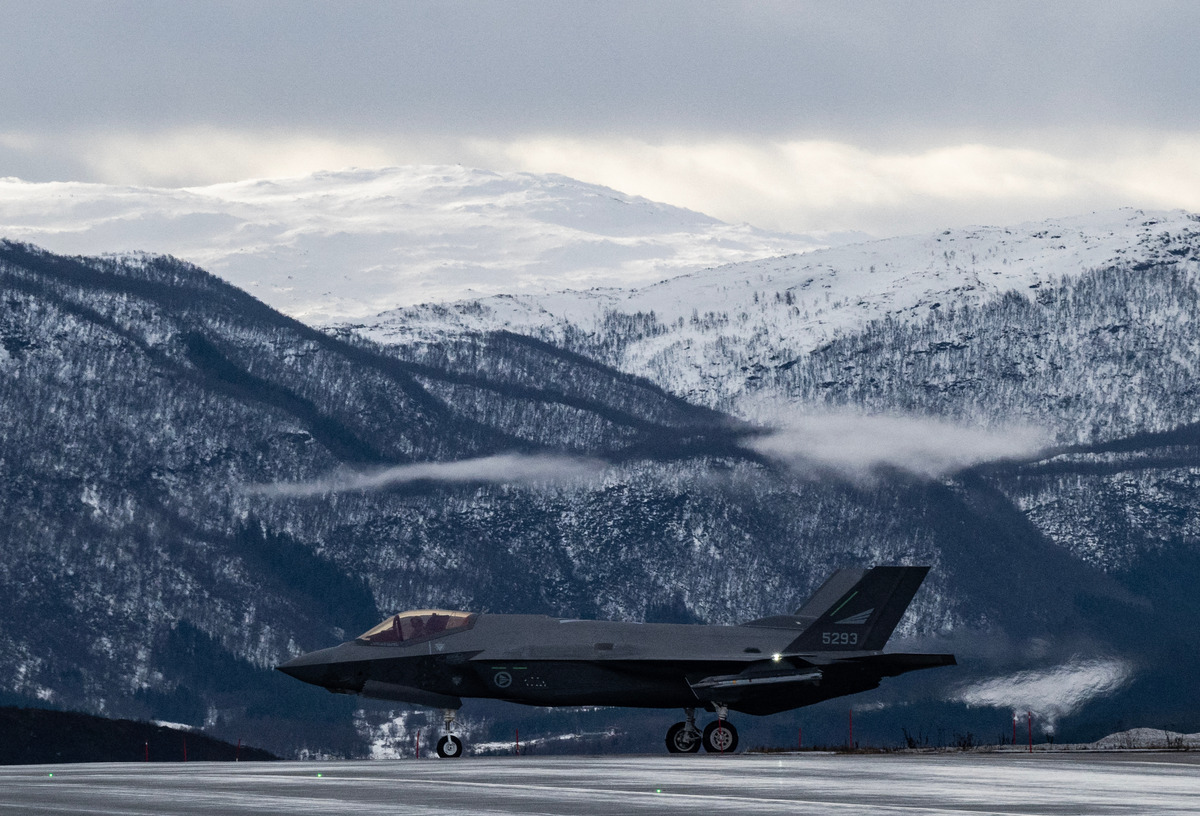
On June 22, 2026, Norway scrambled F-35 fighter jets from Evenes Air Station to intercept Russian Tu-160s and MiG-31s near its airspace. Russia acknowledged the incident, reporting foreign fighters escorted its bombers. Video evidence showed an F-35 alongside the Russian planes.
Norway maintains a ‘quick reaction alert’ system, keeping F-35s ready to scramble within 15 minutes, executing around 40 mission alerts yearly for NATO.
NATO anticipates continued high Russian flight levels near Norwegian airspace. With the Arctic initiative ‘Arctic Sentry,’ NATO allies aim to assure the U.S. that Europe and Canada can defend the northern edge against Russia.
The initiative follows concerns previously raised by Donald Trump, who expressed doubts about any nation’s ability, other than the U.S., to defend Greenland—a crucial territory for intercepting missiles aimed at the U.S.