
Controversy Over Birthright Citizenship
Republicans in Congress are split after the Supreme Court dismissed President Trump’s executive order to limit birthright citizenship. The court, led by Chief Justice John Roberts, asserted that the 14th Amendment grants automatic citizenship to almost all children born in the U.S., regardless of their parents’ legal status. This decision dealt a significant blow to Trump’s immigration policies.
Justice Brett Kavanaugh agreed with the decision but disagreed with the majority’s reasoning. Trump urged Congress to legislate against birthright citizenship, although many of his congressional allies, especially those with legal backgrounds, believe a constitutional amendment is required. House Speaker Mike Johnson and Sen. Mike Lee supported this approach, stating that amending the Constitution is necessary.
Some Republicans are ready to take action. Sen. Eric Schmitt announced plans for an amendment to redefine citizenship connections. Meanwhile, Sen. Rand Paul cited his previously proposed amendment targeting birthright citizenship’s criteria. Others acknowledged the difficult path for ratification, as it requires broad support across states and congressional chambers.
Alternative Proposals and Legislative Challenges
Some Republicans propose tackling the issue differently, focusing on legislation against ‘birth tourism.’ Sen. John Cornyn introduced a bill to stop this practice, arguing foreign nationals undermine U.S. laws. Sen. Lindsey Graham and Sen. Bernie Moreno expressed support for tougher stances and legislation reflecting older Democratic views on this issue.
Sen. Tom Cotton recommended practical solutions, advocating for increased deportations, border security, and prosecution of foreign criminals.
Supreme Court’s Additional Rulings
On the last decision day of its term, the Supreme Court upheld bans on transgender female athletes competing in women’s sports, ruling that states could determine eligibility based on biological sex. The court also supported Vice President Vance, ruling that spending limits by political parties in coordination with candidates violate First Amendment rights.
Political Developments and Future Events
Trump announced a GOP midterm convention in Dallas to boost candidate enthusiasm. He also met with former elections clerk Tina Peters after her release from prison. The Trump administration lifted restrictions on Anthropic’s AI models, with assurances of risk mitigation coordinated with the U.S. government.
Democratic Socialist Victory and Internal Party Dynamics
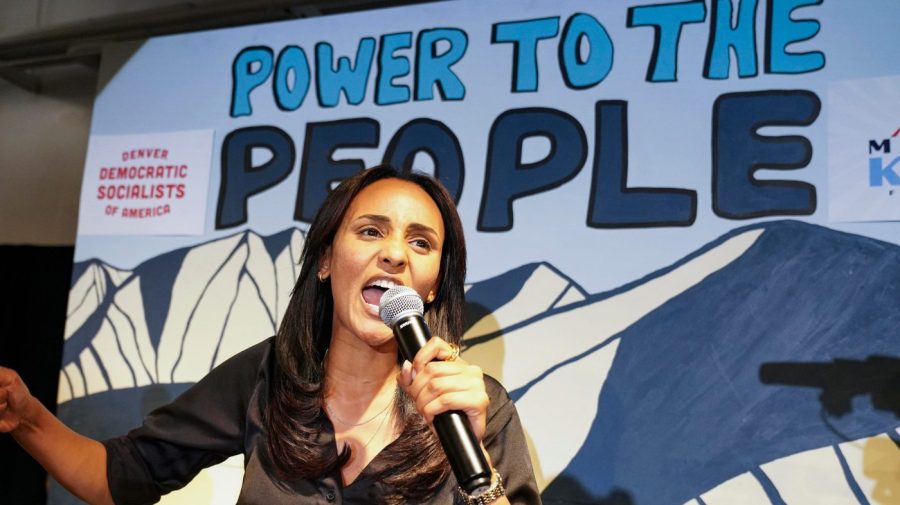
Democratic socialist Melat Kiros defeated Rep. Diana DeGette in a primary, illustrating the influence of progressive challengers. Kiros’ victory makes her the third House Democrat ousted by Democratic Socialists of America-backed candidates. Challenges within the party continue as Sen. Phil Weiser won the Democratic primary for governor in Colorado, defeating Sen. Michael Bennet.
Meanwhile, House Republicans faced setbacks as conservative hard-liners blocked a procedural move linking defense and voting bills. The failure led to the House’s early recess without clear legislative progress.
Personal and Procedural Announcements
Rep. Tom Kean Jr. disclosed a depression diagnosis following a long absence, emphasizing the need for detailed attention to health issues. His return comes as he prepares for a challenging reelection in a competitive district.
Amid election security concerns, Democrats are preparing for potential interference, especially regarding Trump’s SAVE America Act, which Democrats oppose. This political battle underscores the election process’s increasing politicization.
Contentious Issues on U.S. Funding for Israel
Rep. Thomas Massie’s amendment to cut U.S. funding to Israel has accentuated Democratic divisions on the issue. Discussion within the party reflects varied perspectives on Israel’s leadership and funding policies.
NPR’s Mistaken Announcement of Justice Alito’s Retirement
Brief speculation about Justice Samuel Alito’s retirement emerged from an incorrect NPR report, swiftly retracted. The scenario raised questions about the court’s future composition and potential decisions.