
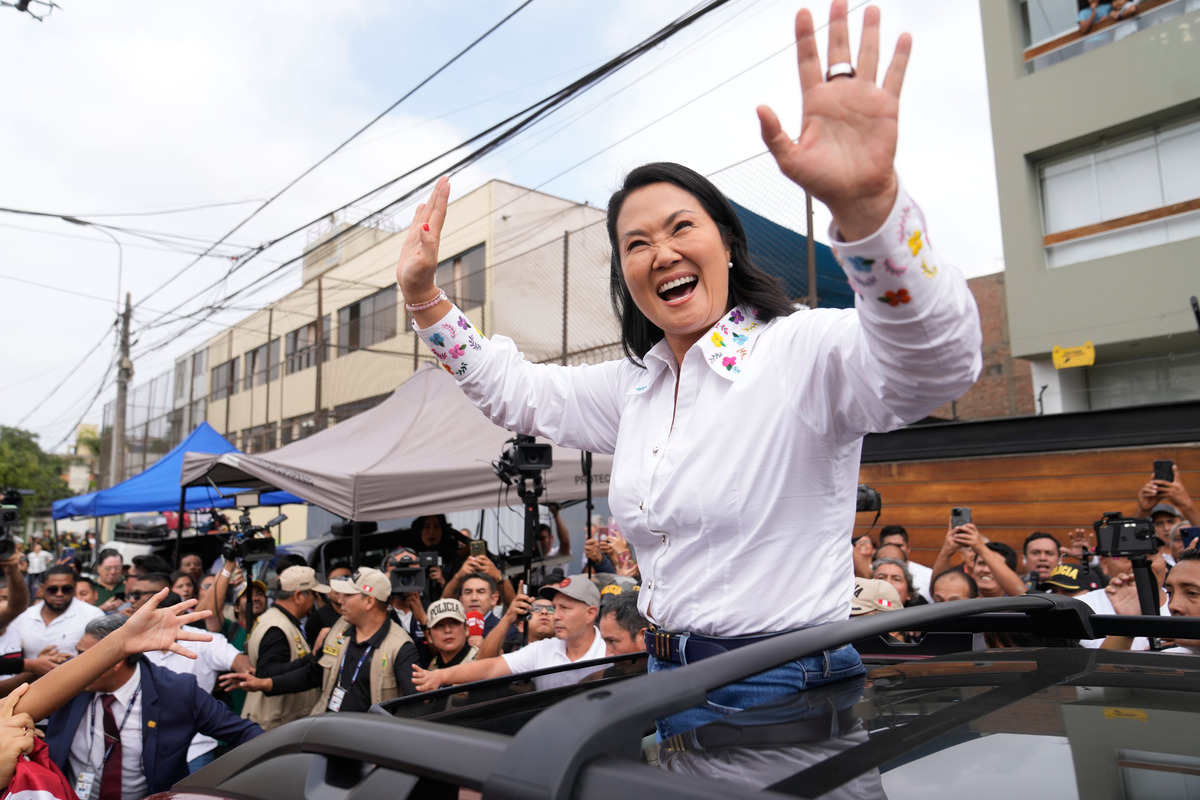
Conservative candidate Keiko Fujimori has narrowly won Peru’s presidential election after weeks of contentious vote counting. This marks a significant victory for right-wing candidates in Latin America, an area of growing interest for the U.S.
Peru’s top electoral body, the National Office for Electoral Processes (ONPE), announced that Fujimori, daughter of former President Alberto Fujimori, secured 50.135% of the vote in the June 7 run-off elections. Her rival, leftist candidate Roberto Sánchez, closely trailed with 49.865%, as per the official tally.
Sánchez hinted at potential challenges to the results, which Peru’s National Jury of Elections is expected to officially confirm on Friday.
“We are getting closer and closer to starting a path of order and hope for all Peruvians,” Fujimori stated late Monday.
This verdict in Peru follows closely behind other right-wing victories in the region. Colombia’s right-wing presidential contender, Abelardo de la Espriella, recently won after receiving an endorsement from President Donald Trump. Similarly, Honduran authorities declared Nasry Asfura, another Trump-backed candidate, as their new leader amid election fraud allegations.
However, major countries like Mexico and Brazil continue with left-leaning leadership. In recent years, Latin America has seen a shift towards conservatism, driven by discontent with sluggish economies and corruption scandals involving left-wing politicians. Crime crackdown promises have also played a role.
The Trump administration has attempted to strengthen U.S. influence in Latin America with initiatives like the “Donroe Doctrine,” modeled after the 19th-century Monroe Doctrine. The “Shield of the Americas” coalition, involving over a dozen center-right or hard-right leaders embracing Trump-like politics, is part of this effort.
Fujimori’s victory was determined by fewer than 50,000 votes, as per the ONPE. This tiny margin emerges after over 18 million ballots were cast. Sánchez had previously alleged election fraud favoring Fujimori but did not provide evidence. He renewed claims of “serious harm to the electoral process” and stated his party’s intention to appeal.
Keiko Fujimori’s father, Alberto Fujimori, governed Peru from 1990. His rule is viewed as both a stabilization period during economic turmoil and a period marred by corruption and human rights abuses. Released from prison on humanitarian grounds in December 2023, Alberto died in September 2024.