
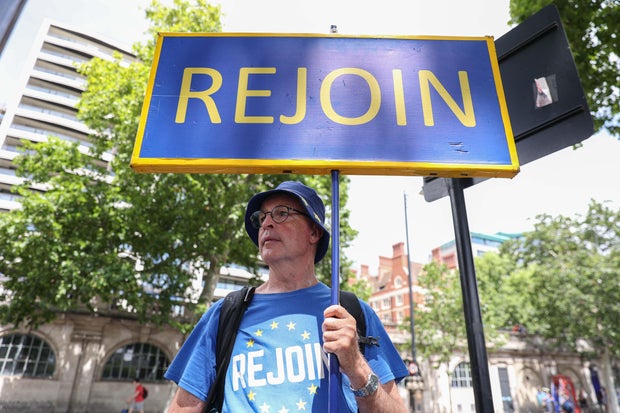
A decade has passed since the United Kingdom voted to leave the European Union. As the Brexit anniversary approaches, opinions on this historic decision are more divided than ever. Recent surveys suggest that a majority of Britons now view Brexit as a mistake.
Pro-European Union campaigners highlight the negative impacts of Brexit, citing economic challenges, loss of freedom of movement, and families being affected. One activist described Brexit as a ‘disaster,’ causing division in the nation.
The political landscape in the UK has been volatile since the Brexit vote, with seven prime ministers grappling with the consequences. The decision to leave the EU has coincided with economic trials, exacerbated by global events like the COVID-19 pandemic and conflicts in Ukraine and the Middle East.
The Office for Budgetary Responsibility notes declines in British productivity, imports, and exports. The economy reportedly suffered a 6% downturn due to Brexit.
London’s Mayor Sadiq Khan, who opposed Brexit, expressed that the years following the referendum have been more troubling than anticipated. Despite some regret among voters, two-thirds of Brexit supporters stand by their decision.
The enduring support for Brexit is seen by some as a critique of its execution rather than the concept itself. Nigel Farage, a key proponent of Brexit, maintains its correctness, asserting that the establishment hindered its implementation.
Despite promises from the ‘Vote Leave’ campaign to control borders and reduce EU migration, post-Brexit Britain faced labor shortages. This led to eased restrictions under former Prime Minister Boris Johnson, increasing non-EU migration.
Steel manufacturer Simon Boyd, a Brexit advocate, voiced his disappointment with Brexit management but encouraged embracing future opportunities. He equated rejoining the EU to a misguided venture analogous to returning to the Titanic.
Public opinion is shifting, highlighting demographic changes. The Leave vote narrowly won in 2016, with older voters predominating. Younger generations, increasingly pro-EU, are now eligible to vote.
Three-fifths of Gen Z favor another referendum, and over half of all respondents express interest in rejoining the EU. Still, Brexit remains contentious, with political leaders hesitant to pursue another referendum. Reform UK, a powerful anti-EU party led by Farage, gained recent electoral traction.
Andy Burnham, a potential future prime minister, dreams of rejoining the EU but advises against revisiting past debates at present.