
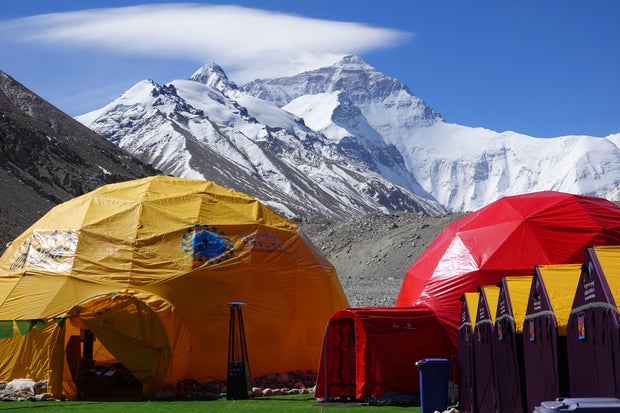
Indian authorities aim to undertake an operation to retrieve the frozen remains of a climber who perished on Mount Everest nearly three decades ago, during one of its deadliest events. The Indo-Tibetan Border Police (ITBP) is seeking proposals from high-altitude recovery firms to return the body known as ‘Green Boots’ from the mountain’s northern slope.
A document outlines that the team awarded the contract must deliver the remains to Delhi by October. Tshiring Jangbu Sherpa, founder of the Everest Sherpa Expedition based in Nepal, remarked on the operation’s challenges, highlighting that it entails double the usual climb’s danger.
Sherpa, who has reached Everest’s peak numerous times and led a 2024 mission to recover five bodies in the region, estimates a skilled 10-person crew would need up to a week to complete the task. Due to weather challenges, he expressed skepticism about the Indian authority’s June to October timeline for the mission. CBS News has received no comments from the ITBP regarding the plans.
Identity of Green Boots
Green Boots received the moniker from the vibrant green footwear found on the body, which has served as a reference point for climbers approaching from Tibet. Positioned at about 27,000 feet, Sherpa noted the remains are situated in the ‘death zone,’ where oxygen is insufficient for prolonged human endurance.
The climber is believed to be 28-year-old Tsewang Paljor, a member of the ITBP, who, along with his group, faced a sudden storm while attempting to summit the peak on May 10, 1996, an event detailed in Jon Krakauer’s ‘Into Thin Air.’ Only Paljor’s remains were located; however, tender documents have identified the body as Dorje Morup, a colleague of Paljor, based on DNA testing, as reported by The Guardian and AFP.
Challenges in Body Recovery
One of the notable recoveries from Everest involved climber Francys Arsentiev, the first American woman to summit without oxygen, who died in 1998. Her body was visible to climbers until Sherpas and others moved her remains out of sight in 2007.
Over 200 bodies remain on Everest, often left due to the risks or costs of recovery. This ongoing issue sparks debate, with some advocating for the retrieval of bodies, while others caution against the hazard it poses to climbers. Some climbers express a wish to remain on the mountain if they die.
Tshiring Sherpa stresses the importance of retrieval missions, stating, ‘We must bring them down,’ emphasizing the return of the deceased to their families. Arshad R. Zargar contributed to this report.