
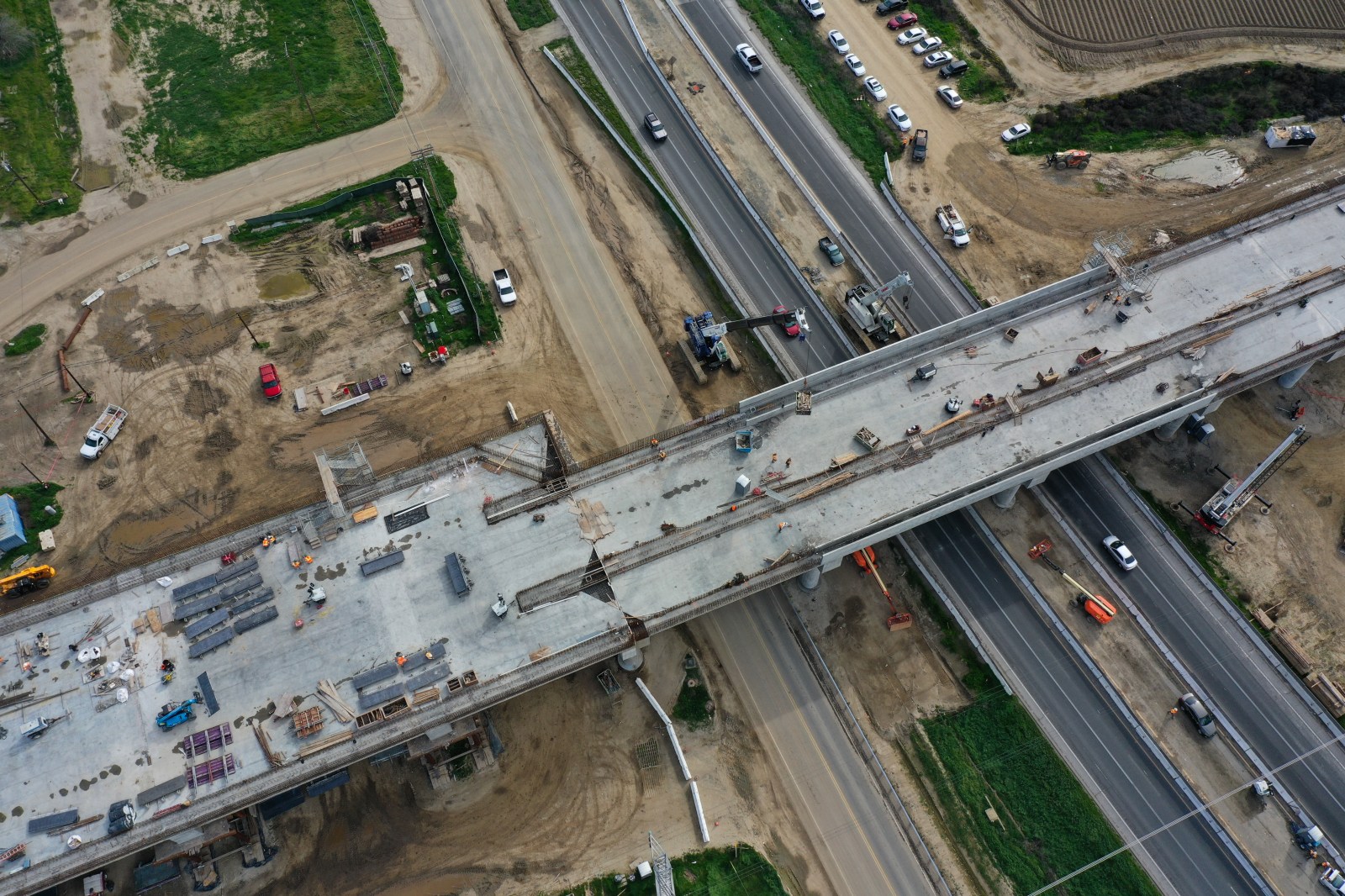
Repositioning the High-Speed Rail Project
California’s ambitious high-speed rail project, intended to connect Los Angeles and San Francisco, might be redefining its purpose. The project, initially approved in 2008 and expected to be completed by 2020, aims to link these major cities at speeds reaching 220 mph. However, it has encountered numerous hurdles, including delays and financial shortfalls.
“The Authority is advancing an asset commercialization strategy to develop energy and technology projects along the high-speed rail right-of-way and surplus land,” stated a revised 2026 business plan by the California High-Speed Rail Authority (CHSRA).
By utilizing state-owned land for ventures such as solar farms and data centers, the CHSRA hopes to generate revenue to bridge funding gaps. This strategic approach includes leveraging high voltage direct current transmission and technology corridors. Such commercialization efforts may bring additional investment returns and operational efficiency.
Community Concerns and Public Opinion
Despite the potential benefits of this strategy, public concerns have emerged. Some residents, including Visalia’s Joseph Mello, voiced apprehensions regarding the implications of passing through data center corridors. Issues such as water usage, pollution and impacts on farmland have been highlighted during public meetings.
Public dialogue on June 1 focused heavily on these commercial developments, mirroring opposition seen across various towns nationwide.
CEO’s Assurance on Project Transparency
In response to transparency concerns, Ian Choudri, CEO of California High-Speed Rail, emphasized the importance of openness regarding the project’s progress.
“We improve every day,” Choudri asserted. “We have enhanced the design concepts and the delivery approach. If information is found lacking, we encourage people to speak out. Our financial expenditures are publicly accessible on our website.”
Choudri highlighted the significance of maintaining public support by addressing past challenges like delays and rising costs.
His vision includes pioneering the first high-speed rail system in the Western Hemisphere, contrasting with China’s rapid progress due to less stringent regulations.
Political Stance and Future Plans
California’s gubernatorial candidates have weighed in on the project’s future. Democrat Xavier Becerra pledged to revamp the current plan to adhere to budget and schedule constraints.
“I’m going to scrap the current configuration, and I’m going to make sure we finish. But we’ve got to do it on budget and on time,” Becerra vowed.
A spokesperson from Becerra’s camp noted substantial progress in construction and infrastructure development. Becerra emphasizes overcoming bureaucratic hurdles to advance the project efficiently.
Conversely, Republican candidate Steve Hilton criticized the project for failing legal standards, suggesting alternative infrastructure investments instead.
Editors involved in this story include Ben Kelly and Gray R. Thomas.