
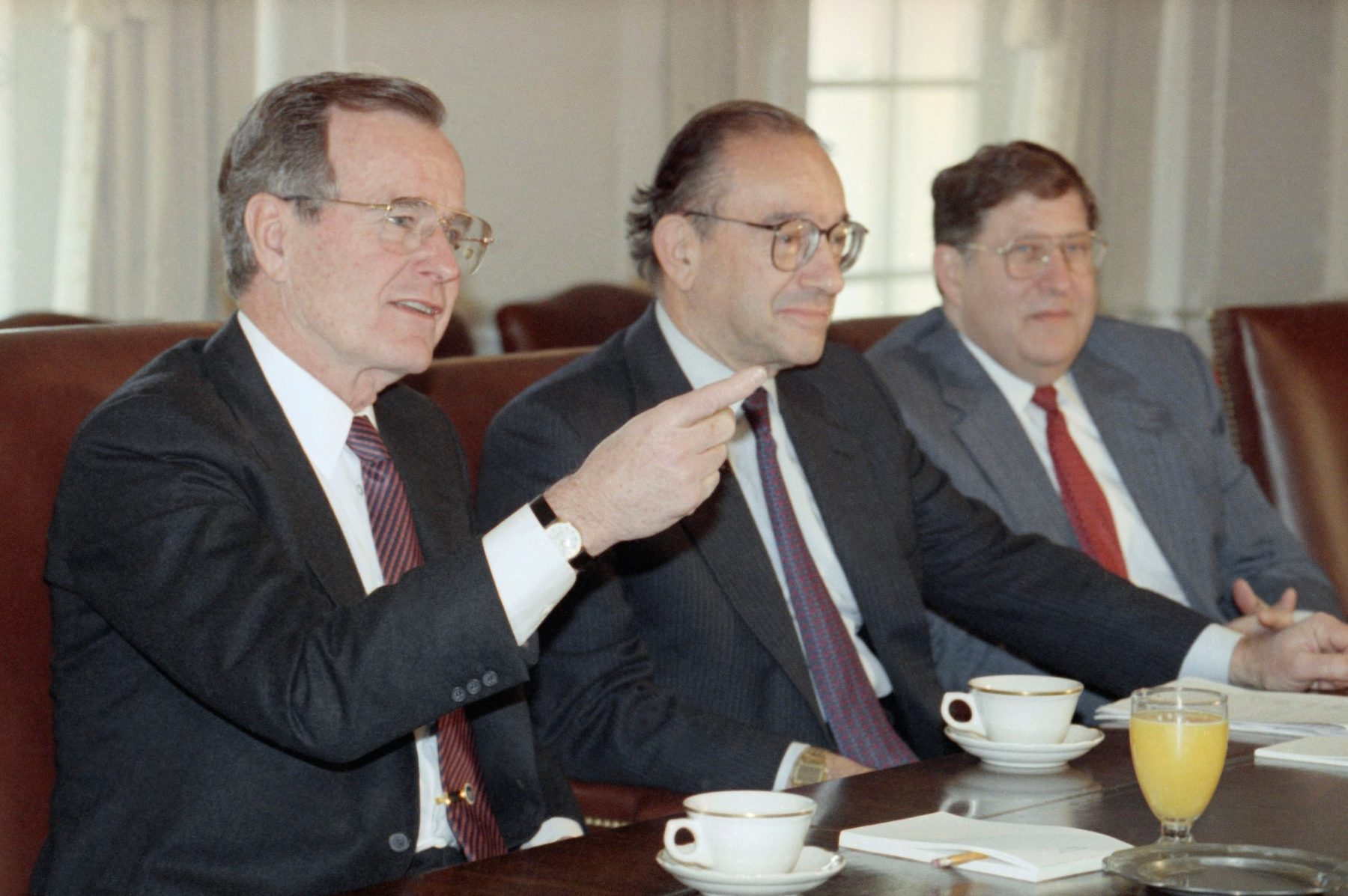
Alan Greenspan, former Fed Chair, passed away at 100 due to Parkinson’s complications. His widow, Andrea Mitchell, detailed his life’s impact during their marriage. Greenspan was known for his love of various interests, including jazz and sports.
Federal Reserve Tenure
Greenspan led the Fed for 18½ years fostering economic growth and stability in America, ending in 2006. His leadership earned him titles like ‘Oracle’ and ‘Maestro’. However, his tenure wasn’t without criticism, especially following the 2008 financial crisis. His policies, perceived leniency, and belief in self-regulated markets led to scrutiny.
Economics Era
He contributed to a prolonged period of stock market booms and economic prosperity starting in 1991. Yet, in 1996, his caution about ‘irrational exuberance’ hinted at inflated stock prices.
Impact of Housing Crisis
After Greenspan departed from the Fed, the housing market’s crash initiated a severe financial crisis impacting global economies. Critics claimed Greenspan’s policies, including low-interest rates, contributed to dangerous economic practices leading to the crisis.
Greenspan’s Philosophies and Challenges
He believed financial markets could self-regulate. While partnering with President Clinton’s administration, he opposed increased oversight on derivatives. This belief was later challenged when deregulation led to significant financial mishaps.
Financial Crisis Inquiry Findings
The investigation concluded that deregulation stripped key safeguards, contributing to the financial crisis. Notably, derivatives maintained risky bets, eventually causing substantial financial disruption.
Life Beyond the Fed
Post-Fed, Greenspan remained engrossed in economic analysis with his own consulting firm. He continued with publishing books and participating in political commentary. He stood against political pressures on the Fed, advocating for its independence.
Legacy Reflections
Greenspan’s tenure brought prosperity, yet his faith in unchecked markets faced criticism post-crisis. His theories addressed the unpredictability of economic bubbles but his leadership left a complex and debated legacy.
Authors Christopher Rugaber and Martin Crutsinger contributed to this report.