
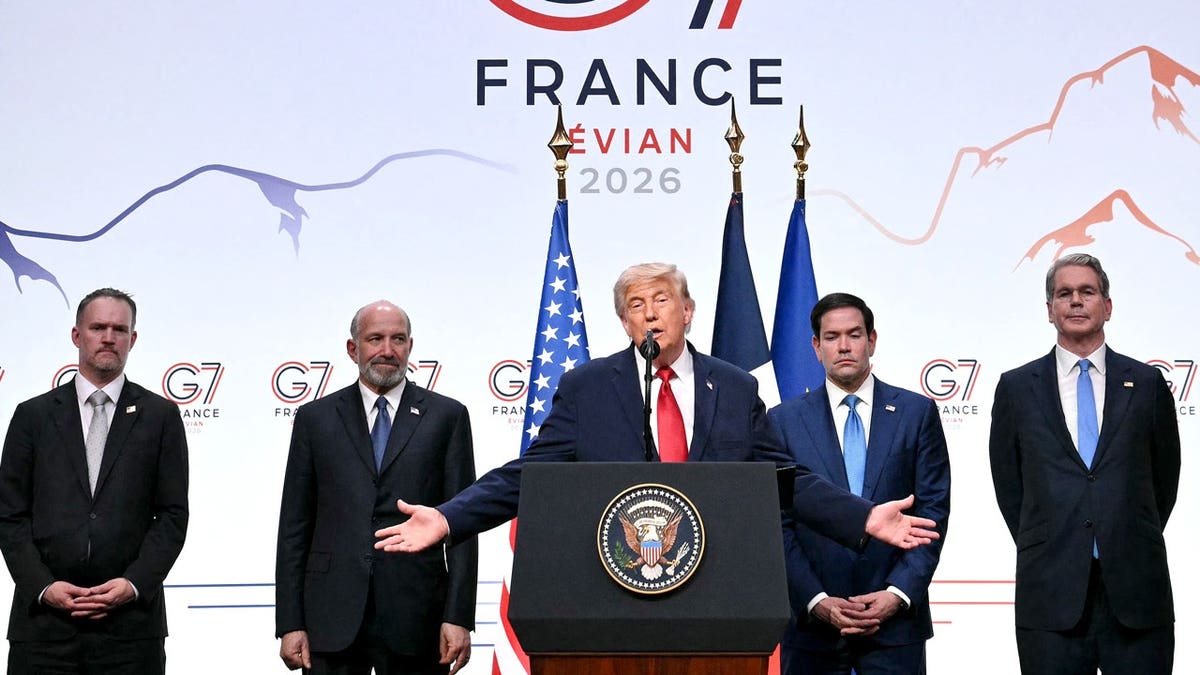
The Iran nuclear deal faces significant challenges as President Trump warns negotiators about the critical issues of Iran’s uranium enrichment. Lisa Daftari, editor-in-chief of ‘The Foreign Desk’, discussed these issues on ‘Fox News Live’. She expressed concerns about Iran’s past untrustworthy behavior and the need for added pressure to prevent retaliatory actions.
The Trump administration’s memorandum of understanding (MOU) with Iran serves as a framework rather than a final agreement. The key question remains whether the final deal will dismantle Iran’s nuclear program and remove its uranium stockpile or manage the path to a potential bomb as the Joint Comprehensive Plan of Action (JCPOA) did. Any outcome other than complete dismantlement resembles the 2015 deal, which critics argue was a mismanagement of leverage.
President Trump correctly identifies nonproliferation as a strategic priority. The Islamic Republic is weaker now than it has been since 1979, thanks to maximum pressure strategies. This internal pressure forced Iran to negotiate, creating leverage for the U.S.
A final agreement should ensure dismantlement, connect sanctions relief to compliance, and retain effective snapback measures. A repeat of the JCPOA, with upfront financial incentives and managed uranium enrichment, would be a diplomatic setback.
The JCPOA had two major flaws: the cash transfer and the sunset clauses.
Under the JCPOA, Iran received around $100 billion, which critics say funded regional militants rather than domestic needs. Additionally, the sunset clauses meant that by 2030, the restrictive measures would lift, allowing Iran to advance its nuclear and missile capabilities.
The final MOU must enforce permanent restrictions and rigorous verification processes. Enrichment capabilities should be eliminated. Furthermore, the cost of compliance violation must outweigh the benefits, with obvious consequences for noncompliance.
The overarching goal is to prevent Iran from developing a nuclear weapon. Stabilizing regional tensions, such as in the Strait of Hormuz, should be addressed separately. Mixing nonproliferation with regional politics led to an ineffective 2015 deal.
The Iranian population, living under a repressive regime responsible for executing thousands, should not be overlooked in these negotiations. Any deal should consider the strategic and moral implications of a regime that suppresses its citizens.
The administration stands at a crucial juncture to reject inadequate deals and focus on achieving verifiable dismantlement, permanent restrictions, and sanctions relief conditioned on strict compliance. Effective snapback measures and removing enriched uranium from Iran’s control are essential objectives.
The current pressures brought Iran to the table, and maintaining those pressures is key to achieving a beneficial agreement.
Lisa Daftari serves as a foreign policy analyst and editor-in-chief at The Foreign Desk.