
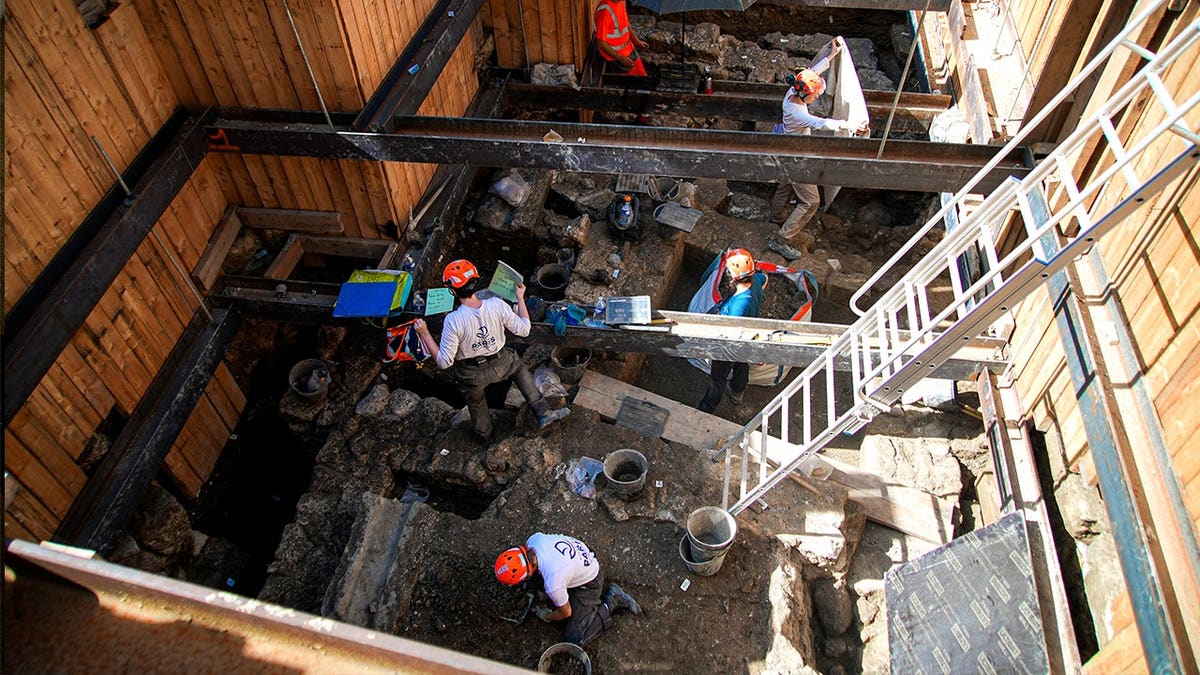
Archaeologists working at the Notre Dame Cathedral in Paris have made significant discoveries, uncovering artifacts buried for centuries. These include a Roman coin over 1,700 years old and mysterious markings that remain unexplained. This excavation follows the efforts to rebuild the cathedral after a fire in 2019, with recent updates from the Associated Press.
Digging in the cathedral’s forecourt, researchers explored approximately 13 feet below ground to uncover relics from the city’s historical timeline. Among the key finds is a coin from the 4th century depicting Emperor Constantine, alongside medieval pottery with undeciphered symbols.
“Rare to find complete ceramics,” said archaeologist Valentine Breloux.
The excavations, described by French media as significant, have also uncovered numerous items including intact jugs and cups from a latrine turned garbage pit. This pit yielded broken plates and animal bones, providing a glimpse into everyday life of the past.
Additional discoveries include medieval grain pits used for storing harvested grain from the 6th to 10th centuries. A Roman-era doorstep was also found, which had been repurposed as paving material.
According to Lucie Altenburg from the Paris archaeology unit, the current project is a unique chance to deepen our historical knowledge. The hope is to discover traces of the Gauls, the area’s pre-Roman inhabitants. This would add valuable insights into ancient Parisian life.
Yasmine Benali, an archaeology student, expressed the excitement about unearthing layers of history from different eras. This helps people see the city’s dynamic past rather than just a static picture.
The excavation is part of a larger renovation plan for Notre Dame square, which aims to introduce green spaces and enhance the area for visitors by 2028. Emily Carter, a tourist, reflected on how these discoveries breathe life back into Notre Dame, offering an emotional connection to the city’s layered history.