
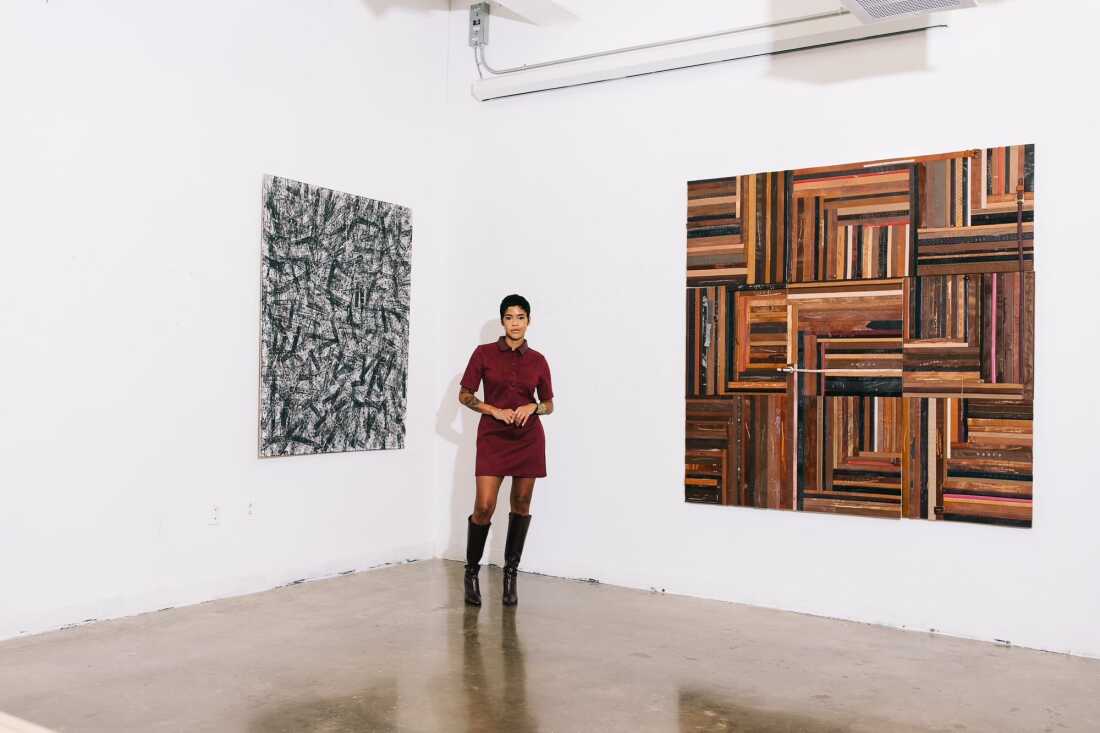
Lex Marie, a multidisciplinary artist, has gained significant attention on platforms like TikTok and Instagram. Her art, which explores the theme of discipline in Black households, has attracted widespread engagement. At her Washington, D.C., studio in the American University’s Katzen Arts Center, she employs belts not merely as instruments of discipline but as tools of expression. These belts, either stretched across canvases or dipped in paint to leave bold marks, are central to her work.
Marie describes her pieces as narratives of childhood experiences, discipline, and the complex articulation of love. Her artistic journey seeks to address a sensitive topic that remains largely unspoken but is familiar to many: corporal punishment within Black families.
The personal resonance of her work is evident. As a 33-year-old mother, her reflections on discipline are shaped by motherhood. The experiences from her own childhood juxtapose the evolving parenting methods of her generation. Her art reflects these introspections, delving into her own encounters with discipline.
Key Pieces in the Series
One notable work, “Watch Your Tone,” depicts a six-by-six-foot canvas adorned with belts in shades of brown, black, and pink—mimicking skin tones. This piece resonates with the phrase often heard in childhood, “Watch your tone when talking to me,” while also addressing deeper issues. It alludes to how historical discipline practices intersect with America’s history, particularly through slavery.
Yohuru Williams from the University of St. Thomas notes that the history of corporal punishment in Black households is intertwined with the legacy of slavery. The idea that discipline must be severe has deep roots, traced back to the enforcement methods during slavery.
Another significant piece, “Because I Love You,” involves a painted wooden panel with belt marks resembling scars. The title references common justifications given after punishments, like “This hurts me more than it hurts you.” The creation process was physically demanding for Marie, symbolizing the emotional weight such discipline carries.
Engaging Conversations
When Marie’s work started circulating online, the responses were immediate and varied. Many shared personal stories, reflecting both pain and gratitude for the dialogues her art incited. Marie insists her purpose is not to condemn but to foster open conversations about issues that are often suppressed.
Williams emphasizes the need for Black families to rethink discipline, suggesting that an honest dialogue about historical legacies is essential. He argues that communities need to approach discipline with a perspective that affirms human dignity.
For Marie, art becomes a medium to provoke discussions about childhood trauma, giving voice to those who might struggle with articulation. Her ongoing project, comprising around 20 pieces, will continue to expand, with an exhibition scheduled for the fall at The Bishop Gallery in Brooklyn, New York. Marie has also sold pieces to renowned filmmaker Spike Lee, further underscoring the cultural impact of her work.
Ultimately, Marie’s goal is not to seek unanimity but to achieve acknowledgment of these challenging yet essential conversations.