
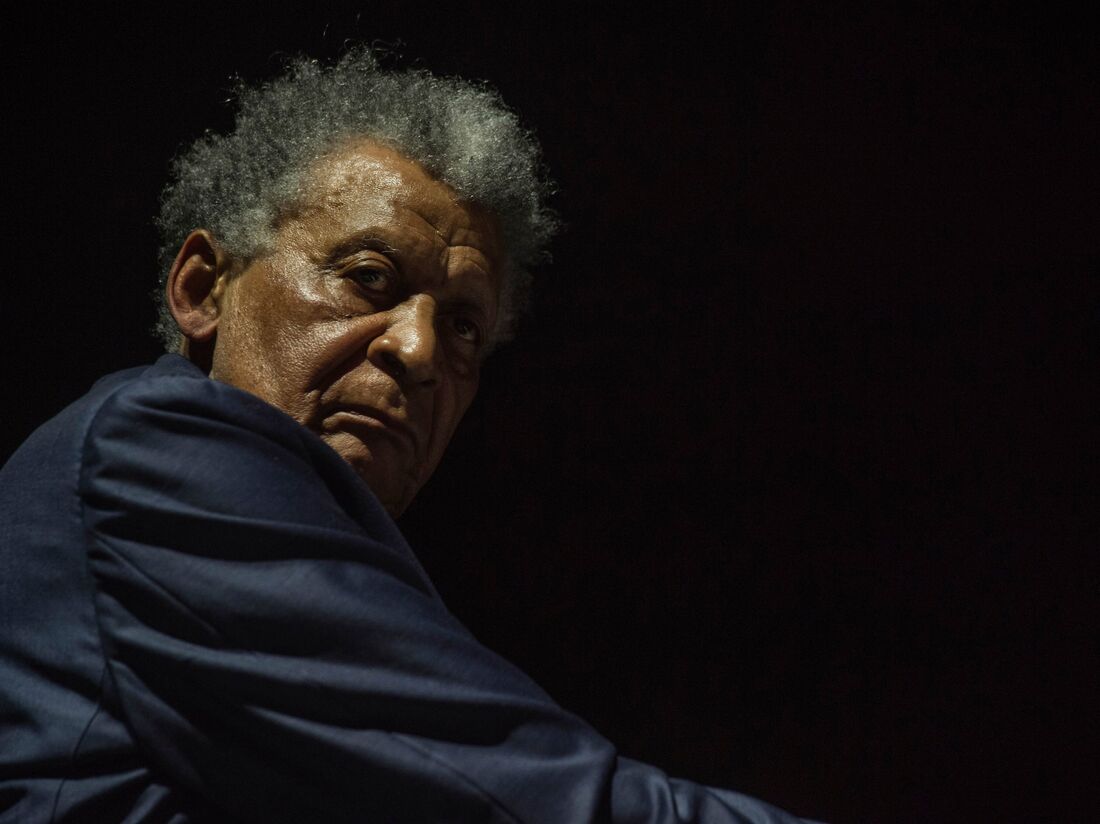
Abdullah Ibrahim, the renowned South African jazz pianist, passed away at the age of 91 in Germany after a brief illness. He was often compared to Mozart by Nelson Mandela, emphasizing his significance in the country’s cultural landscape. His partner, Marina Umari, noted that he maintained a deep connection to South Africa throughout his life.
Ibrahim’s career spanned eight decades, during which he brought bebop to South Africa. He forged a connection with Duke Ellington, who was instrumental in producing one of his early recordings. In his later years, Ibrahim became a mentor and icon to new generations of jazz pianists.
Born Adolph Johannes Brand in 1934, he began piano lessons at age 7. By 15, he played professionally, adopting the name Dollar Brand. In the late ’50s, he formed the Jazz Epistles with trumpeter Hugh Masekela, recording ‘Jazz Epistle Verse One,’ the first jazz album by an all-Black South African ensemble. The group faced harassment from the South African government after the Sharpeville massacre in 1960.
Ibrahim relocated to Europe, where his future wife, Sathima Bea Benjamin, introduced him to Ellington in 1963. Ellington produced ‘Duke Ellington Presents the Dollar Brand Trio,’ leading to Ibrahim’s tours across Europe. His concerts often featured his unique style, blending influences from Cape Town with jazz traditions.
Pianist Vijay Iyer admired Ibrahim’s incorporation of quiet and spiritual elements in his performances. South African pianist Nduduzo Makhathini reflected on the familiarity in Ibrahim’s sound, linking it to his own traditions before encountering jazz.
Married to Benjamin in 1965, Ibrahim moved to the United States, performed at the Newport Jazz Festival, and led the Duke Ellington Orchestra briefly in 1966. Supported by a Rockefeller Foundation grant, he studied at Juilliard. He changed his name upon converting to Islam in 1968. His music increasingly synthesized jazz with South African elements.
One of Ibrahim’s notable compositions, ‘Mannenberg,’ was reportedly played for Nelson Mandela during his imprisonment. Mandela later described Ibrahim as South Africa’s equivalent to Mozart. After the Soweto uprising in 1976, Ibrahim and Benjamin supported the banned African National Congress.
During the ’80s, Ibrahim established himself internationally, both solo and with his band, Ekaya. He performed frequently at Sweet Basil in New York, inspiring artist Kenny Barron to compose ‘Song for Abdullah’ after witnessing a concert.
Ibrahim’s influence extended to a new generation of pianists, inspiring Makhathini and others to focus on personal expression. Iyer valued Ibrahim’s unique musical structures and personal conception.
Ibrahim composed music for films such as ‘Chocolat’ and ‘No Fear No Die,’ and featured in documentaries like ‘A Brother with Perfect Timing’ and ‘A Struggle for Love.’ He continued to receive accolades, including the NEA Jazz Masters Fellowship in 2018.
In 2019, Ibrahim discussed Ellington’s impact on his career, emphasizing the balance between old and new musical material. He reflected on the lasting pursuit of creativity and the joy of ongoing artistic quests.