
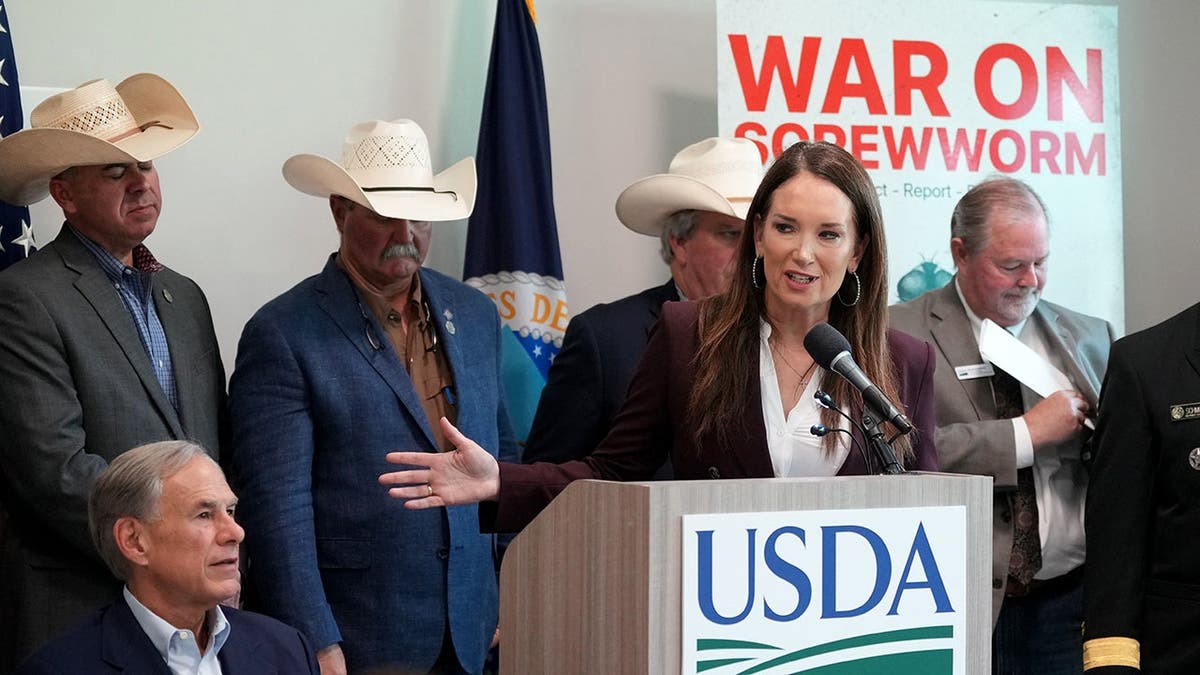
The New World Screwworm (NWS), a parasitic fly that preys on the flesh of livestock and other warm-blooded creatures, has been discovered in South Texas. The United States Department of Agriculture (USDA) Animal and Plant Health Inspection Service (APHIS) confirmed on June 3 that NWS larvae were detected in a three-week-old calf’s umbilical area in Zavala County, Texas. By June 11, federal officials had identified six cases in total, according to Fox7 Austin.
The USDA describes NWS as a critical pest that affects livestock, pets, wildlife, and occasionally humans and birds. NWS larvae, commonly known as maggots, penetrate the flesh of living animals, causing extensive damage and significant economic losses in livestock.
The presence of screwworms threatens to increase beef prices, which are already at record highs, although they do not render meat unsafe to consume. In a response to the NWS spread, on May 11, 2025, U.S. Secretary of Agriculture Brooke Rollins announced a suspension of live cattle, horse, and bison imports through U.S. ports along the southern border due to the rapid expansion of NWS in Mexico.
Models initially predicted the arrival of NWS in the U.S. in 2025. Dudley Hoskins, USDA Under Secretary for Marketing and Regulatory Programs, credited efforts across the Trump administration and industry partners for delaying this onset. Hoskins highlighted USDA’s extensive investments in eradicating NWS since observing increases in Central America and Mexico.
USDA has deployed an APHIS strike team to Texas, executing a quick, efficient response. This includes releasing sterile male flies and establishing a movement control zone to quarantine livestock.
The agency’s eradication efforts, dating back to the 1920s and 1930s, incorporated the Screwworm Adult Suppression System (SWASS), which lures flies to a bait mixture containing insecticides to kill them before they can reproduce. Female flies, mating only once, were countered by releasing sterile males, preventing reproduction. The Agricultural Research Magazine declared screwworm eradicated in the U.S. in 1966.
Despite efforts, Texas Agriculture Commissioner Sid Miller criticized the USDA’s slow response. Miller stated that the screwworm has rapidly traveled over 1,100 miles from southern Mexico to Texas, despite USDA dispersal of billions of sterile flies. He suggested that the USDA relied too heavily on partial solutions. Miller appealed to President Trump, urging a decisive action plan and deploying SWASS immediately.
In support, Texas Land Commissioner Dawn Buckingham emphasized the significant threat screwworms pose. Buckingham oversees over 13 million acres of state land, including grazing and hunting leases. Her office has offered these lands to facilitate the government’s response to the escalating threat.
Buckingham shared that the commission met with South Texas ranchers months prior when screwworm flies began migrating from Central America and Mexico. She noted that while insects travel easily with global mobility, the situation can be managed. Medications exist to treat infected animals, and USDA strategies to impede insect propagation are in place. As Buckingham stated, this isn’t reinventing the wheel; they’ve addressed similar threats before and plan to do so again.