
When the World Cup kicked off in Mexico City, many found themselves filled with anxiety rather than excitement. This tournament is returning to North America after more than thirty years. It now involves 48 teams, 104 matches, and takes place over 39 days in 16 cities across the U.S., Mexico, and Canada. Planning these arrangements took eight years.
However, the tournament began in a cloud of controversy. Mexico’s opening match against South Africa at Estadio Azteca is overshadowed by several issues. Jules Boykoff, a political science professor, has called it “the most politically combustible World Cup in recent history.”
Strained political relations between the host countries have also emerged. The Trump administration’s tariff policies and disagreements over border security have further complicated matters. Travel restrictions have affected potential visitors, support staff, and match officials, creating unease about immigration enforcement.
The U.S. is at odds with Iran, one of the tournament qualifiers, while Iran has targeted missile and drone attacks on regional nations like Jordan, Qatar, and Saudi Arabia, who are also World Cup participants. Moreover, the International Sports Press Assn. noted that Iranian and African journalists were denied U.S. visas, while Iran protested the rejection of several support staff members’ entry requests.
Iran’s team, initially planning to train in Tucson, had to relocate to Tijuana. They will participate in group matches in Inglewood and Seattle, spending minimal time in the U.S. Additionally, immigration officers have detained players and journalists from Senegal, Uzbekistan, and Iraq for hours.
Further controversies include high ticket prices and an opaque lottery process, prompting investigations by the attorneys general of New York and New Jersey. Other states like California are also inquiring into these practices. A Yougov.com poll showed that 54% of Americans have no interest in the tournament, and nearly 60% will not watch any matches.
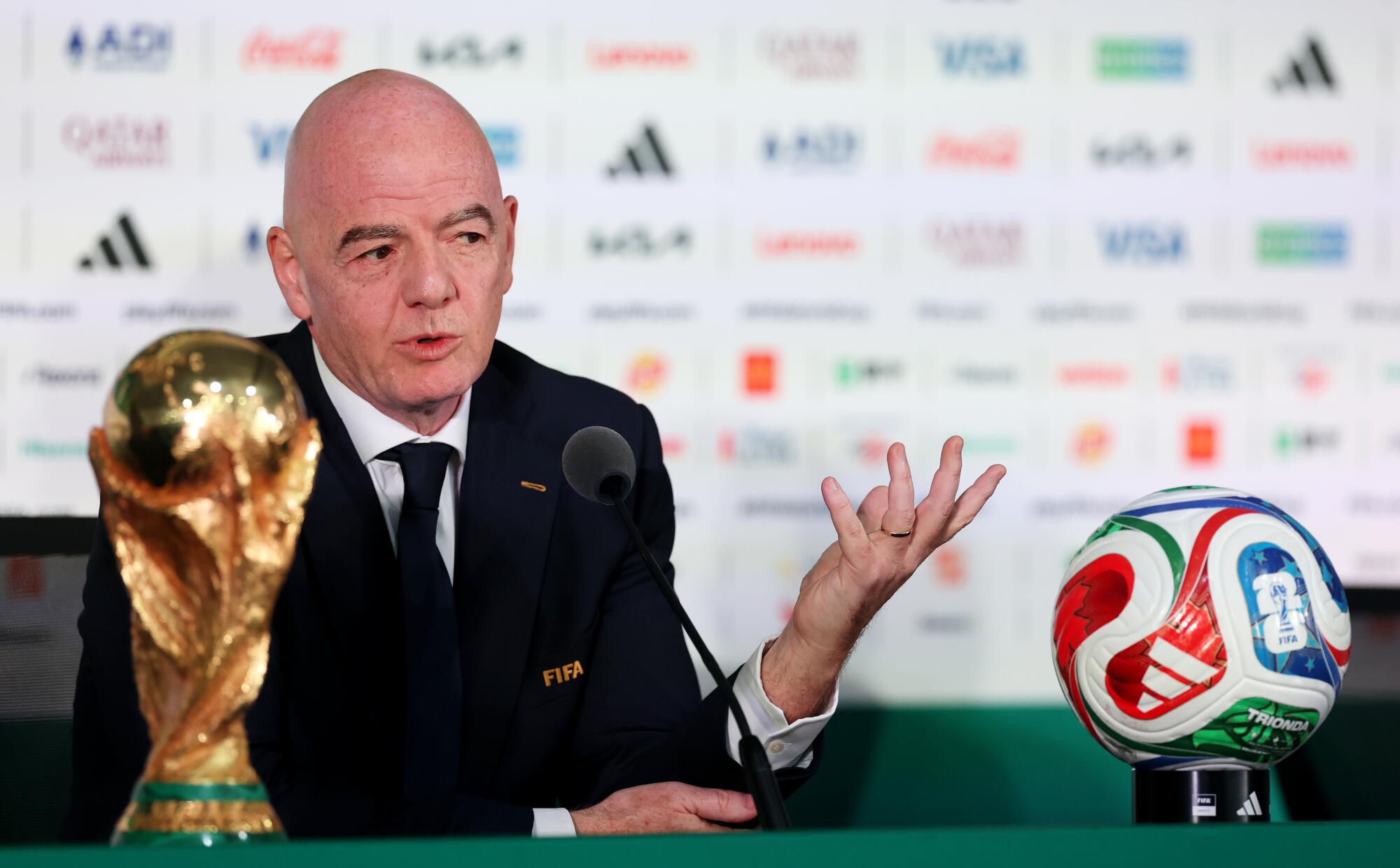
Despite the controversies, FIFA President Gianni Infantino maintains optimism. He promises that this World Cup will be “the biggest, the most inclusive, the greatest FIFA World Cup ever.” Steve Georgakis, a sports studies lecturer, views this event as a mix of global sporting celebration and commercial enterprise. FIFA hopes to add $9 billion to its funds and expects high TV ratings.
However, in this politically volatile period under Trump, Boykoff doubts it will focus solely on soccer. Historical World Cups have faced political and social issues too. The 1974 West Germany tournament was marred by the Yom Kippur War fallout and Argentina’s 1978 tournament was overshadowed by human rights abuses.
Jonathan Wilson, a columnist for the Guardian, suggests that soccer often becomes the main focus despite controversies. Iconic players like Lionel Messi and Cristiano Ronaldo will have their last runs. New stars like Kylian Mbappe, Erling Haaland, and Lamine Yamal will captivate audiences.
Yet, travel restrictions and visible ICE presence at venues such as SoFi Stadium in Inglewood also pose challenges. Fears of immigration sweeps persist. Lower-than-expected tourist bookings have surprised hotel operators in host cities, while travel warnings add to the concerns.
FIFA’s high ticket and parking prices, contentious weather plans, and initial restrictions on bringing water bottles have further troubled the event. FIFA argues that premium pricing is essential for revenue to support global soccer development. Allowing fans to bring a 20-ounce soft plastic water bottle inside stadiums reversed their initial ban.
Though climate scientists warn of dangerous heat conditions during one in four matches, FIFA plans to start 40 games at the warmest times of day to meet European TV demands. Georgakis emphasizes that the strength of soccer will impact the tournament’s reputation most. Compelling gameplay may eclipse off-field issues, but if play falters, controversies could shape the public’s perception.