
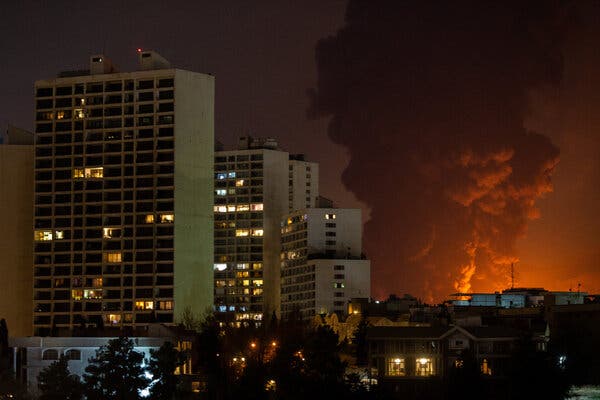
The global economy is experiencing a significant slowdown, primarily due to rising energy prices spurred by ongoing conflicts in the Middle East. According to a recent World Bank report, this situation is driving economic growth to its lowest level since the Covid-19 pandemic.
U.S.-Israeli attacks on Iran in February have led to long-standing disruptions in cargo traffic through the critical Strait of Hormuz. This has caused energy and fertilizer prices to fluctuate considerably for several months, worsening global supply chain issues.
The disruption has sparked another wave of inflation, resulting in increased expectations for higher interest rates and reduced global output. The World Bank has revised its growth forecast downwards for this year. It now predicts an economic growth rate of 2.5% in 2026, a decline from the 2.9% growth seen in 2025. If the conflict continues to intensify, growth could fall further to 1.3% due to prolonged supply chain disruptions.
On Thursday, tensions escalated as President Trump indicated the possibility of further military actions against Iran. He mentioned plans to potentially seize key oil infrastructures and influence Iran’s energy markets, akin to actions in Venezuela.
This ongoing conflict is exacerbating inflation, which has been persistent for over four years. The World Bank estimates global inflation will rise to 4% in 2026, up from 3.3% in the previous year. This surge is largely attributed to a 22% increase in commodity prices, contrary to earlier predictions of a decline.