
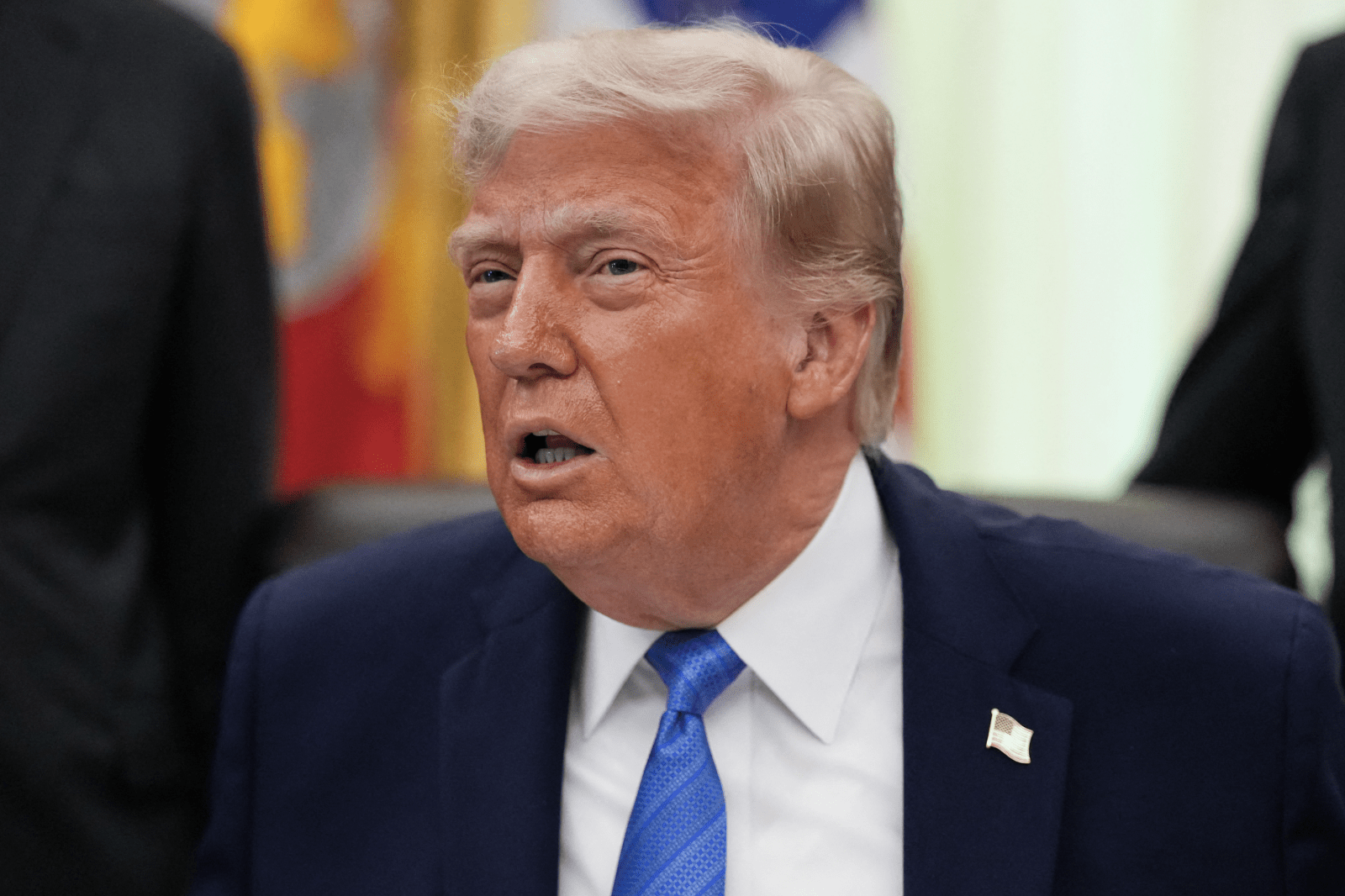
President Donald Trump questions the renewal of the United States-Mexico-Canada Agreement (USMCA) as Canada, Mexico, and the United States co-host the 2026 FIFA World Cup. This highlights tensions between economic rivalry and political cooperation. Trump’s remarks on June 10 signal uncertainty, as businesses and supply chains prepare for USMCA review talks later this month.
Why It Matters
North America’s trade relationship approaches a critical review phase. By 2026, the three nations must decide whether to extend the USMCA or let it drift towards expiration in 2036. Trump’s comments highlight ongoing concerns over trade deficits, tariffs, and industry policies. These issues could reshape North American trade during active negotiations.
What To Know
Trump’s comments came just before the start of the 2026 FIFA World Cup, a tournament symbolizing continental unity. Despite this, Trump is not looking to renew the USMCA, an agreement he crafted to replace NAFTA. The USMCA includes a six-year review mechanism, allowing the U.S., Canada, and Mexico to decide on extending its duration beyond the current 2036 sunset clause. Failure to approve an extension initiates annual reviews, leading to potential renegotiations.
Trump emphasizes addressing trade imbalances, stating the U.S. should have trade surpluses with Canada and Mexico. The U.S. reported a $46 billion goods deficit with Canada and a $197 billion deficit with Mexico. The USMCA supports around $1.6 trillion in trilateral trade annually. It allows tariff-free movement of goods and sustains integrated supply chains across various sectors.
The agreement demands each country signal by July 1 if they wish to extend the deal for another 16-year term. Without consensus, the agreement doesn’t end immediately. It enters a cycle of annual reviews lasting up to a decade. Trump argues the U.S. does not need imports from Canada or Mexico, emphasizing a desire for better treatment in trade negotiations.
While Canada has urged early renewal for long-term trade stability, both Canadian and Mexican officials have supported the framework despite tariff clashes during Trump’s second term.
Cooperation and Conflict Collide
The continent presents unity through a globally significant sporting event, but economic foundations are questioned. Trump’s approach involves collaboration on global events while adopting a tough stance on trade— a pattern observed with NATO partners as well.
Key Trade Artery Comes Into Focus
Infrastructure efforts aim to deepen economic ties even amid friction. The Gordie Howe International Bridge between Detroit and Windsor is nearing completion. This bridge will ease congestion in a major trade corridor and facilitate goods and people movement between the U.S. and Canada. However, Trump has indicated interest in renegotiating aspects of the bridge, mirroring his hard-line approach in trade talks.
Canadian Prime Minister Mark Carney noted potential delays. He stressed the bridge’s long-term importance for both countries. “Everyone’s working hard to ensure the bridge opens soon,” Carney said. “There is no big drama. If it takes longer, it will, but this will benefit Canadians, Americans, business, tourists, and residents for decades.”
What Happens Next
Whether the USMCA faces renegotiation, uncertainty, or a regional trade transformation remains open. Upcoming talks may define North America’s economic future for years. Negotiations in Washington are scheduled for June 16 and 17, focusing on key sectors like agriculture, with another round in Mexico City planned for July.