
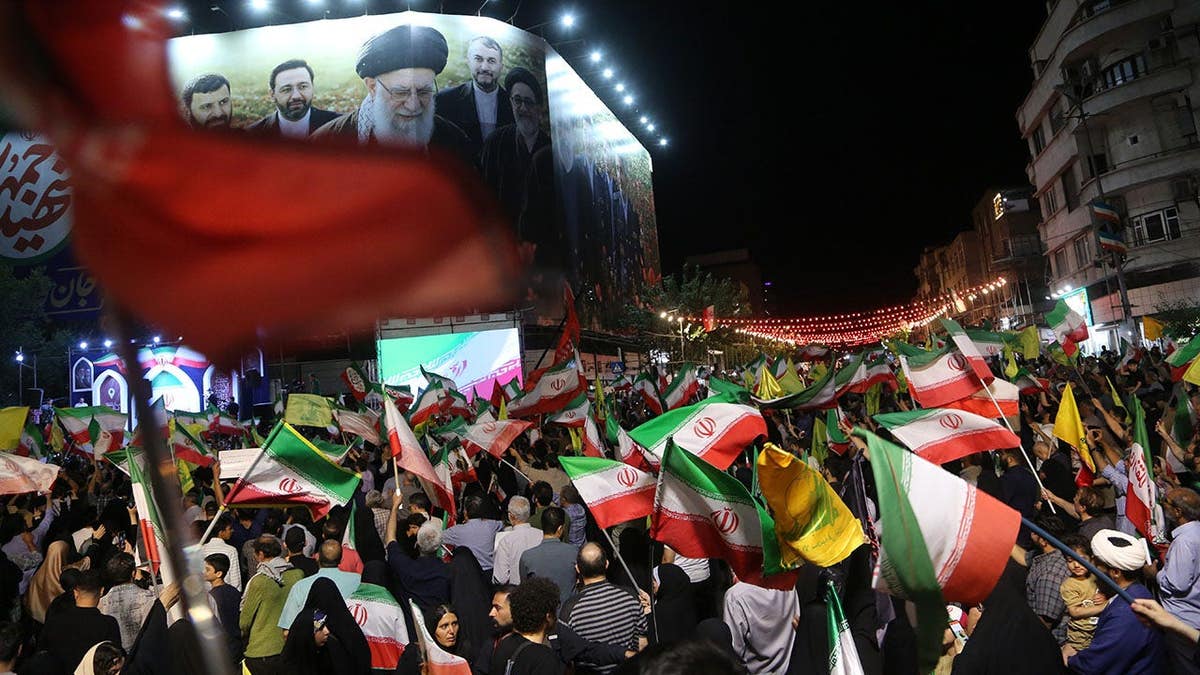
President Donald Trump experienced a legislative setback in the House of Representatives, as lawmakers voted to reduce his war powers concerning Iran. The vote concluded with a majority of 215-208, aimed at restricting military actions against Iran without congressional approval. All present Democrats supported the measure, alongside a few Republicans including Reps. Thomas Massie, R-Ky., Warren Davidson, R-Ohio, Brian Fitzpatrick, R-Pa., and Tom Barrett, R-Mich.
Massie and Davidson are notable critics of the president’s approach to Iran, and Fitzpatrick and Barrett are in challenging re-election positions. Large protests occurred in Tehran’s Revolution Square on May 30, 2026, as demonstrators marked opposition to the attacks from the U.S. and Israel.
Despite the successful passage of the resolution, it is expected to be vetoed by President Trump, and it lacks a veto-proof majority. This action poses mainly symbolic opposition as Trump consistently argues that the 1973 War Powers Resolution is unconstitutional.
A similar Senate resolution aiming to limit the president’s military power passed earlier this year, but bipartisan support for a unified approach between the chambers is still lacking. The resolution reflects growing disapproval among some Republicans regarding Trump’s strategies with Iran.
Fox News polling from May reveals that approximately 60% of voters disapprove of military engagement with Iran, though 72% believe the United States is prevailing in the conflict. Certain Republicans caution that restricting war powers might impede efforts to resolve tensions.
Republican leadership postponed the resolution vote initially due to attendance concerns within party ranks, yet House Foreign Affairs Committee Ranking Member Gregory Meeks affirmed that the votes for the measure were indeed secured.