
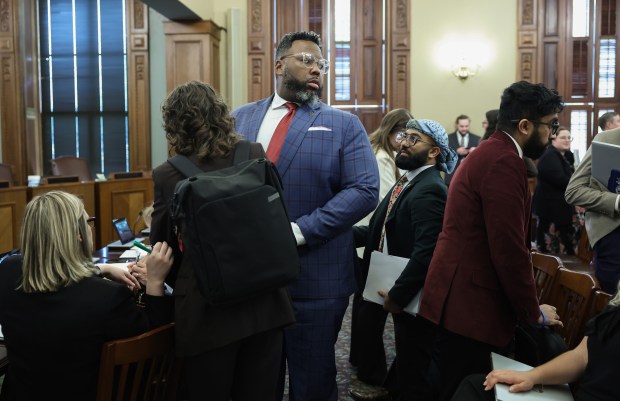
Faced with the collapse of a tax relief initiative aimed at encouraging the Chicago Bears to move to Arlington Heights, Illinois lawmakers spent Sunday trying to devise a plan that could convince the team to remain in the state. The stakes were high, with potential offers from Indiana, which proposed constructing a taxpayer-financed stadium in Hammond, 20 miles southeast of Chicago.
This legislative session exposed dysfunction as the Illinois House and Senate operated in separate silos, meeting on alternating weeks, which hindered efforts to pass bills efficiently. State Rep. Kam Buckner led the House in approving a measure to provide the Bears with tax certainty for the Arlington Heights property acquired in 2023 for $197.2 million. His bill aimed to freeze property tax assessments for up to 45 years, but it faced opposition in the Senate, notably from State Sen. Bill Cunningham.
Cunningham noted resistance among senators to granting tax breaks to a profitable sports franchise worth billions. Support for a stadium site within Chicago remained strong among local Democrats, further complicating negotiations. Cunningham stressed the importance of finding a solution that protects taxpayers, even if it lacks the Bears’ backing.
Governor JB Pritzker and the Bears have acknowledged two possible options for relocation: the Arlington Heights site or the Hammond location proposed by Indiana. However, Chicago Mayor Brandon Johnson recently backed a $4.7 billion lakefront stadium project south of Soldier Field, initially rejected in 2024. Despite public statements, Cunningham revealed ongoing talks between the Bears and Chicago for a potential city stadium deal.
The alternative plan under discussion involved municipalities creating stadium finance authorities, allowing public-private partnerships. The stadium would be built on public land, reducing property tax liabilities. This model resembles the arrangement at Soldier Field, which is exempt from property taxes due to its ownership by the Chicago Park District. Cunningham remarked that most NFL stadiums are publicly owned today.
While such a municipal stadium ownership model offers the Bears tax benefits, it also opens negotiations for revenue-sharing opportunities. The Illinois Sports Facilities Authority currently governs similar arrangements in the state, owning and financing renovations for stadiums like Rate Field and Soldier Field.
Though discussions continued late into Sunday, no formal legislation emerged, leaving significant uncertainty about whether the plan would gain approval. The proposal’s details were lacking, and questions loomed regarding revenue generation and infrastructure funding needs. A Bears’ spokesperson did not respond to queries about the negotiations.
State Rep. Kam Buckner admitted to uncertainty about the Senate’s alternative proposal specifics, emphasizing the importance of precise language in legislative decisions. The countdown was on, raising questions about potential outcomes from both legislative chambers before the session’s end.