
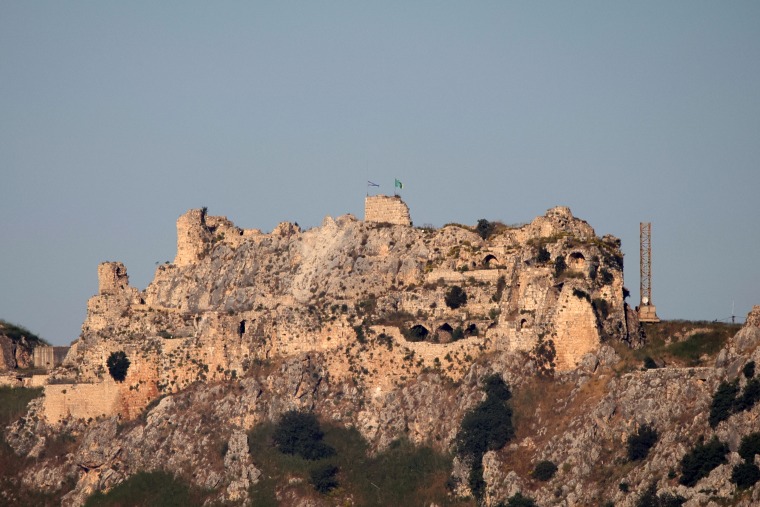
Deepest Israeli Incursion in Decades
The Israeli military has made its most significant advance into Lebanon in 26 years, according to Defense Minister Israel Katz. The forces have crossed the Litani River, securing a key location known as Beaufort Ridge. This site is historically significant, featuring a medieval castle. The capture follows intense conflicts in southern Lebanon.
Escalating Tensions Despite Ceasefire Talks
Prime Minister Benjamin Netanyahu has expressed a commitment to increasing military operations, highlighting a disregard for the current ceasefire agreement. Israeli and Lebanese leaders recently convened in Washington to deliberate on the ceasefire’s enforcement, yet mutual accusations of violations persist. Katz stated that Israeli forces plan to hold Beaufort Ridge as part of a security strategy within Lebanon.
UNESCO’s Concerns and Military Movements
Prior to Beaufort Ridge’s capture, UNESCO expressed concern over Israeli military activities near the castle, stressing that such historical sites require protection. The Israeli military released images showing troops at the site. This location previously came under Israeli control during their 1982 invasion but was later relinquished in 2000.
This incursion beyond the Litani River is noteworthy, as the river has acted as a boundary since Israel’s initial invasion. Israeli forces have targeted bridges over the Litani, citing Hezbollah’s use of these routes for weapon transport.
Calls for Occupation and International Reactions
Some Israeli officials, including Finance Minister Bezalel Smotrich, openly advocate for permanent occupation of Lebanese territories south of the Litani River. This notion echoes historical aspirations outlined by former Prime Minister David Ben-Gurion. However, experts like Fawaz Gerges warn of the potential for a perpetual conflict.
Gerges cautioned against the assumption that territorial control translates to guaranteed security for Israel, highlighting Hezbollah’s enduring resistance.
Regional and International Dynamics
Amid these developments, Netanyahu visited the northern border, emphasizing the success of military advances and asserting that operations span numerous Lebanese regions. Meanwhile, Israel continues to face backlash from Lebanese officials, including Prime Minister Nawaf Salam, who condemned the strikes as collective punishment against civilians.
The violence has significantly affected the Lebanese population, with substantial casualties and widespread displacement reported. Lebanese health sources cite over 3,350 fatalities due to the conflict.
Impact on U.S.-Iran Negotiations
Current hostilities also threaten diplomatic efforts between the U.S. and Iran. Both nations are negotiating a ceasefire in their broader conflict and have tied the Lebanese situation to these discussions.
While U.S. Defense Secretary Pete Hegseth emphasizes patience for a comprehensive deal, experts like Gerges view Israel’s actions as potentially derailing any agreement. The complexity of the situation mirrors ongoing delays in finalizing a ceasefire.