
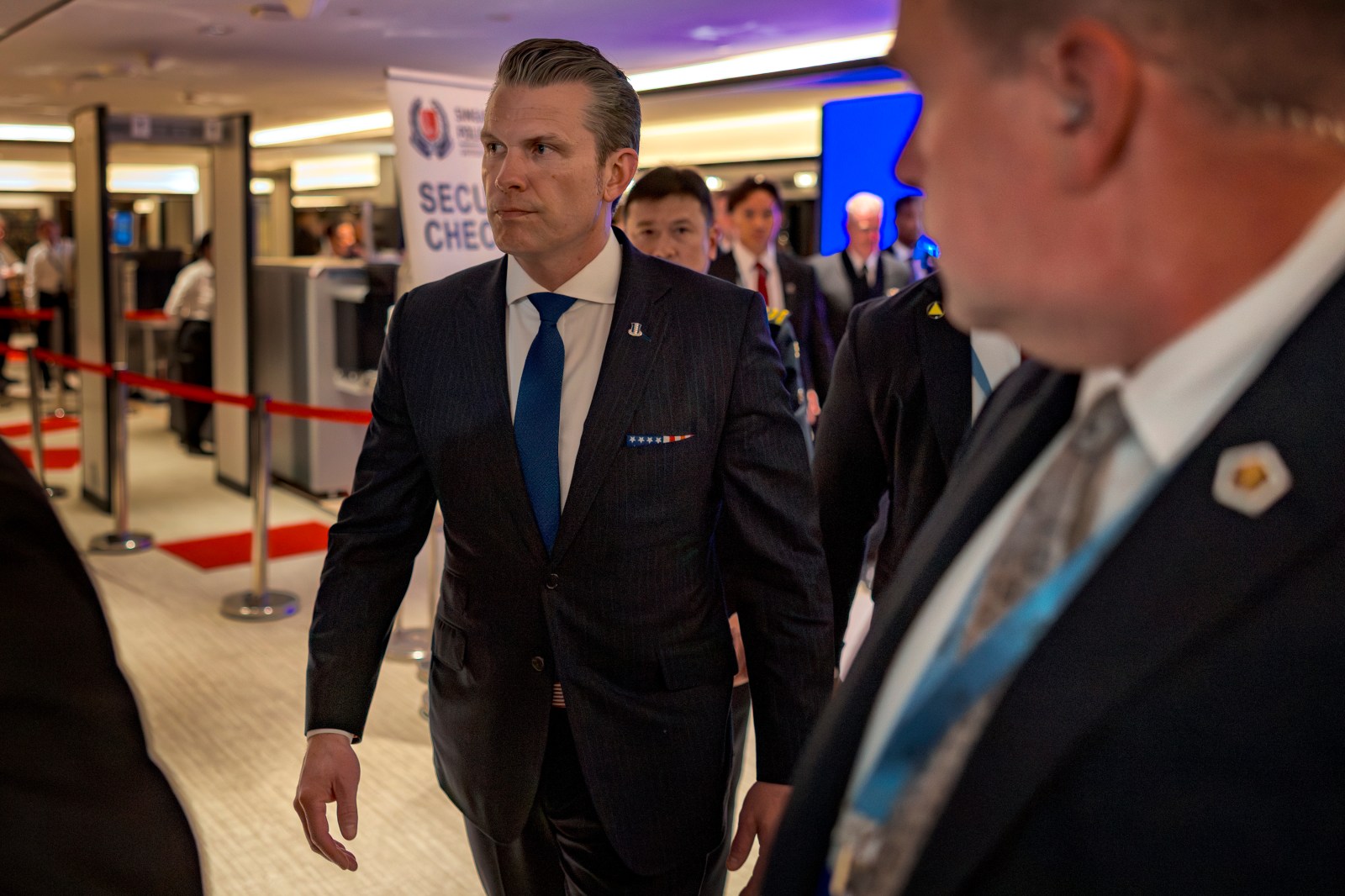
Remarks at Singapore Defense Summit
U.S. Secretary of Defense Pete Hegseth spoke at a key defense summit in Singapore, carefully addressing tensions surrounding Taiwan. This approach aligns with President Donald Trump’s efforts to improve relations with China. Hegseth’s comments came shortly after accompanying Trump on his state visit to China, aiming to reset relations impacted by trade and technology issues, and Taiwan.
President Xi’s Strong Message
China views Taiwan as a province destined for unification, not excluding forceful measures. Trump disclosed a strong warning from President Xi Jinping regarding Taiwan, indicating mishandling could lead to “a very dangerous situation.” Following their meeting, Trump paused a potential $14 billion arms deal, citing it as a “negotiating chip.” Newsweek sought comments from Taiwan’s foreign ministry on this matter.
Strategic Approach to Taiwan
Hegseth presented a strong yet cautious stance to allies at the summit. Unlike his previous year’s address, he adopted a more restrained tone. While emphasizing regional concerns, he praised the improved state of U.S.-China relations under Trump. He warned of potential Chinese aggression but avoided direct mention of Taiwan. His strategy focuses on deterrence along the First Island Chain, which extends from Japan to Borneo, aimed at making conflict less appealing.
Arms Sales: A Sensitive Topic
Hegseth’s recent visit to Beijing with Trump highlights his understanding of the Taiwan issue’s sensitivity. Da Wei, an expert at Tsinghua University, noted Trump’s indecision on the arms package. Approval could complicate Xi’s planned visit to the U.S. in September, given Xi’s significant political investment in Taiwan discussions.
“If you understand China’s positions…why should you do something your friend didn’t want?” Da asked.
Hegseth addressed concerns over the U.S. defense industry’s capacity to supply munitions after conflicts. He reassured that the U.S. stockpiles are adequate and that the Taiwan arms deal would not affect this capacity.
U.S. as Taiwan’s Main Arms Provider
The U.S. has historically been Taiwan’s primary arms supplier under the Taiwan Relations Act. Though Washington promised a gradual reduction in sales, it set no clear timetable, tying reductions to Taiwan’s threat level. Observers in Washington warn that conditional sales could embolden Beijing, increasing pressure on Taiwan and extracting concessions from the U.S. Previous administrations have timed arms announcements carefully to maintain diplomatic stability with China.