
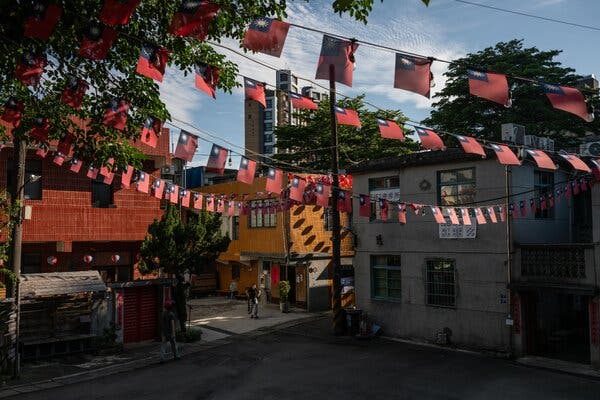
A Chinese-born woman accused of infiltration has sparked a debate in Taiwan about defending democracy without profiling Chinese migrants.
Among the many Chinese women who moved to Taiwan after marrying local men, Hsu Chun-ying gained attention for her political ambitions. She mobilized other Chinese migrants, associated with notable politicians, and was nearly a legislative candidate. Now, she is in custody, facing accusations of being recruited by the Chinese Communist Party to influence Taiwan, which China claims as its own.
Prosecutors allege she took directives from Chinese authorities to meddle in local elections and assisted a Chinese official to secretly visit Taiwan under a business pretense. Her case sits at the heart of Taiwan’s challenging security debate: countering reported Chinese infiltration in politics, media, and the internet without generalizing all Chinese migrants.
“Of course, we don’t want to stigmatize the entire mainland spouse community,” said Shen Yu-chung, a deputy minister of Taiwan’s Mainland Affairs Council. “But there is a small minority of mainland spouses who may come here with specific assignments, and that is extremely troublesome.”
Taiwan’s government agencies are particularly wary of Chinese-born women, referred to as “mainland spouses,” due to their potential ties to China through family or property. These connections could be exploited by Beijing through coercion or incentives.
This scrutiny has unsettled some of Taiwan’s community of 261,000 Chinese migrants, primarily women. In conversations, several expressed feeling unjustly portrayed as Beijing’s agents.