
In New Delhi, police forcibly subdued supporters of India’s youth-led “cockroach” movement during their attempted march on parliament. Authorities had denied permission for the event. This growing movement presents a significant public challenge to Prime Minister Narendra Modi’s third term, drawing millions of supporters on social media.
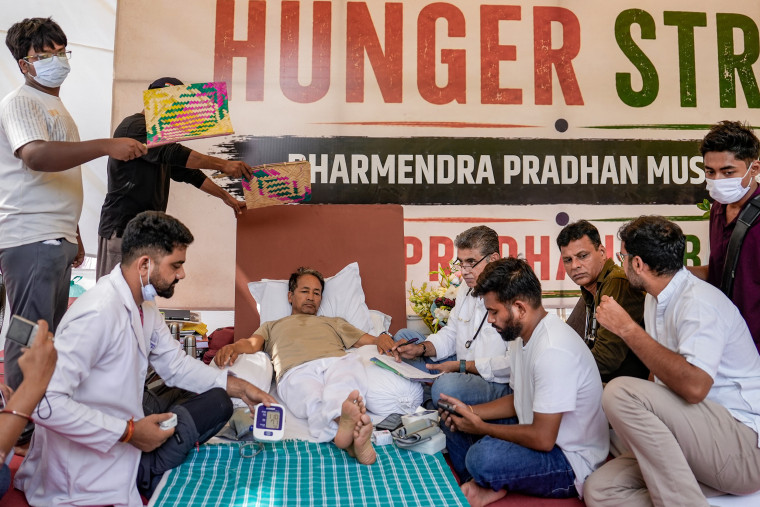
The arrest of hunger-striking activist Sonam Wangchuk and his subsequent hospitalization on Saturday intensified support for the movement. Thousands of protesters gathered at Jantar Mantar in the heart of New Delhi, aiming to march as parliament’s monsoon session began. Discussions between Delhi police and the Cockroach Janta Party (CJP) members have yet to yield consensus, according to Sachin Sharma, Delhi’s deputy commissioner of police.
“The protest site has already run out of space and this can lead to an untoward situation,” Sharma said. He noted that about 10,000 protesters were present on Monday morning.
A significant police and paramilitary presence was positioned at the site, risking a standoff near parliament if the march continued. Television footage depicted police using canes on protesters in barricaded areas. Despite this, Delhi Police claimed no force was used, describing their handling of the protest as professional.
Protesters, drenched by rain, arrived peacefully in central Delhi, chanting slogans demanding resignations of officials, including Education Minister Dharmendra Pradhan and Prime Minister Modi. Talks with the government are ongoing, as stated by Saurav Das, CJP’s chief spokesperson, to the ANI news agency.
The movement began after leaked national medical school entrance test papers impacted over 2 million students, forcing retakes. “All these leaders in power are illiterate,” said Adi Nathan, 21, a student from Meerut, voicing frustration over the leaks. Mohammed Tabrez, 22, traveled from Uttar Pradesh aiming “to end corruption and the fraud in paper leaks.”
CJP’s initial rise was largely online, gaining 22 million Instagram followers swiftly. Support now extends to some opposition parties. CJP founder Abhijeet Dipke seeks the resignation of Pradhan, beginning a sit-in last month. Wangchuk joined him, launching a hunger strike on June 28. From his hospital bed, Wangchuk indicated readiness to end his strike if the government assumes responsibility for recent failures or allows protesters to bring issues to parliament.
The CJP’s emergence highlights frustrations among India’s youth over unemployment and exam paper leaks. Government data shows the 2025 unemployment rate for those aged 15 and above was 3.1%, reaching 9.9% among youth aged 15 to 29, with higher rates in urban areas.