
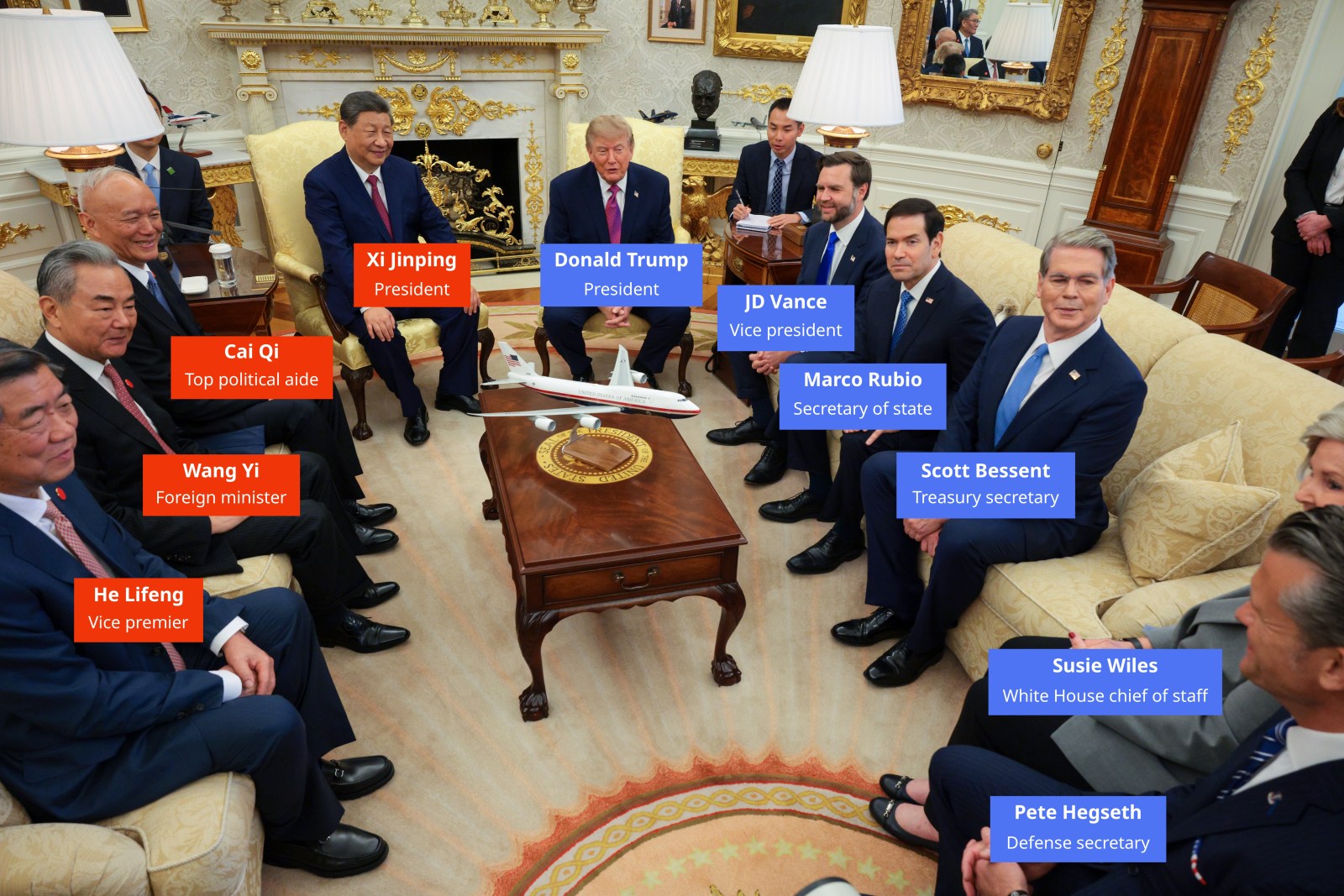
Xi Jinping has spent 14 years trying to replace U.S. leadership globally with his own vision based on the Communist Party of China’s principles. At 73, he may continue this effort for another 14 years. As the 21st Party Congress approaches, questions about succession emerge. Xi’s recent summit with President Donald Trump in Washington, D.C., sparked interest in potential successors based on political proximity and influence.
Chief of Staff Cai Qi is a key figure, serving as director of the CCP General Office and a member of the seven-man Politburo Standing Committee. Cai’s role encompasses overseeing Xi’s security. Premier Li Qiang, who has a history with Xi since his Zhejiang days, also features prominently. Li took the blame for Shanghai’s COVID-19 response and was promoted in 2022. He holds the No. 2 spot in the Politburo Standing Committee.
Other figures include Peng Liyuan, Xi’s politically savvy wife, and his daughter Xi Mingze, who maintains a low profile after her Harvard University education. Additionally, Li Xi, the CCP discipline chief, and Ding Xuexiang, the first-ranked vice premier, are potential successors. Notably, Zhou Hongxu, Cai’s deputy and director of the Central Guard Bureau, holds a crucial position.
There remains a wild card in succession, someone unknown outside China, who might rise to prominence later. Trump hosting Xi has enhanced Xi’s domestic standing, portraying him as controlling the global hegemon. For Trump, the summit underscored his strong stance on China before the midterms.
Xi’s continued purges, including the recent expulsion of generals Zhang Youxia and Liu Zhenli, raise fears of centralized power and potential destabilization post-Xi. China’s economic challenges and harsh political climate fuel concerns about Xi’s legacy.
Appointing a successor could mitigate these fears, but there’s a longstanding belief in China that close associates may pose threats. The situation complicates matters for figures like Cai and Li Qiang.
“It’s lonely at the top.” — Li Hengqing quoted a Sung dynasty poem highlighting the precariousness of power.
Rumors about Xi’s health often circulate. A former smoker and drinker, speculations about ill health have persisted since he took power in 2012. Despite these rumors, Xi’s future remains uncertain, but planners might consider he could remain in power for years to come.