
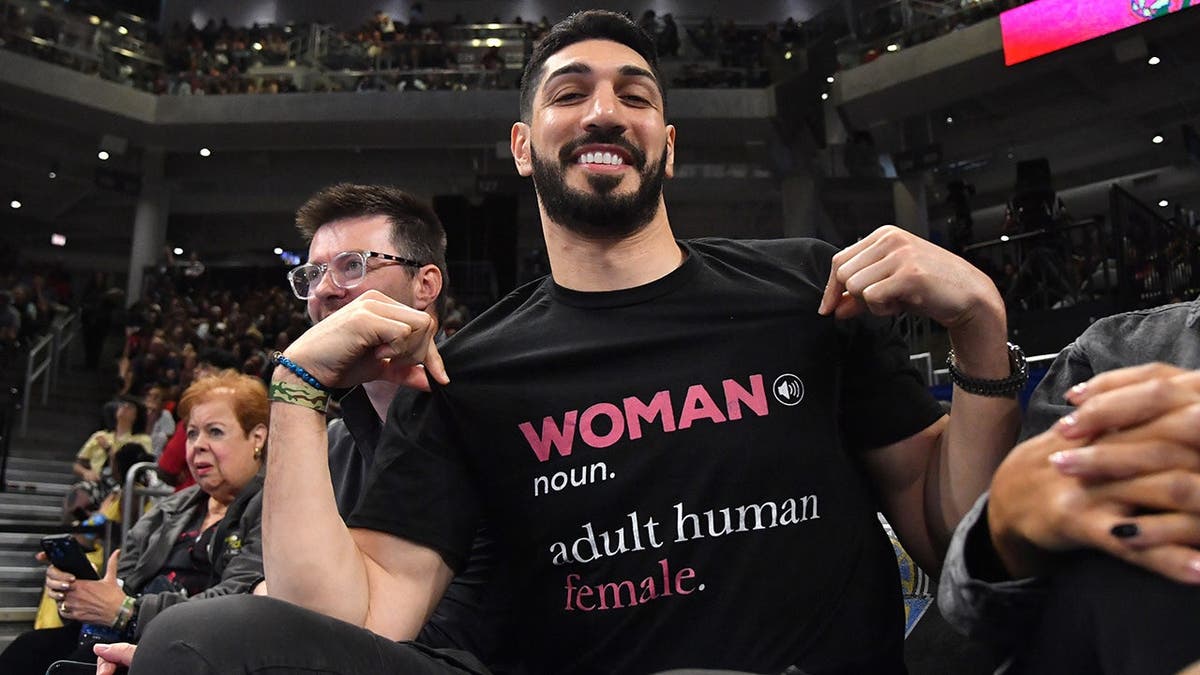
WNBA Commissioner Cathy Engelbert clarified to Republican lawmakers that former NBA players Enes Kanter Freedom and Royce White are ineligible to play in the WNBA because they are men. This response followed a congressional inquiry questioning the league’s definition of ‘women’ and eligibility criteria for players.
In a letter dated October 16, Engelbert stated, ‘Only women are eligible to play in the WNBA and the individuals you cite in your letter are both men.’ The letter was shared with OutKick by the America First Policy Institute representing Freedom. The inquiry originated from a September 17 letter by Representative Marlin Stutzman and four other House Republicans regarding eligibility, player safety, and fan interactions. Freedom and White expressed intentions to enter the 2027 WNBA Draft, identifying as women.
The lawmakers had requested an explanation under the WNBA’s broadcasting agreement’s Article XIII, Section 1(a), stating eligibility as exclusive to women but lacking a definition for the term. Stutzman welcomed Engelbert’s response, finding it a recognition of biological sex differences. He stated, ‘The WNBA has taken a step in defining what a woman is for the sports community.’
Freedom criticized Engelbert’s reply for not answering who decides eligibility: ‘Cathy Engelbert cannot clearly define what a woman is, but she’s certain that I’m a man.’ He questions the authority determining identity and eligibility and challenges the lack of explicit definition in the league’s policies.
Freedom aims to prompt the WNBA to formalize its requirements to limit participation to biological females. He said, ‘Determining someone’s identity and eligibility may involve different decisions.’ He emphasized the need for the WNBA to clarify its stance on where decisions about identity and eligibility intersect.
The issue garnered attention after Sophie Cunningham from Indiana Fever expressed support for excluding transgender athletes from women’s sports. The topic stirred debate and rallies both supporting and opposing transfeminine inclusion. A league task force addressed these issues alongside online abuse of players.
Freedom questioned the contradiction in Engelbert’s definitive statement given ongoing committee discussions. While the league condemned divisive uses of the eligibility topic, stakeholder discussions are ongoing.
The lawmakers also scrutinized the league’s response to on-court physicality, citing incidents with players like DiJonai Carrington and Natasha Cloud, and sought insight on the handling of player-spectator confrontations. Engelbert assured consistency in rule enforcement and discipline while reiterating the league’s conduct code for spectators.
Freedom’s confrontation with Sky guard Natasha Cloud was notably during a game on August 23, leading to his ejection and subsequent ban from Sky home games. Freedom filed a lawsuit asserting his First Amendment rights had been violated, while Sky owner Michael Alter stated the ejection was due to conduct.
Stutzman expressed broader concerns, especially regarding player conduct during national anthem performances during the WNBA Finals, calling for respect for fans and the anthem.
Engelbert concluded her letter affirming the league’s commitment to protecting players, addressing hate, and maintaining a positive environment. Engelbert plans to retire at the end of 2026, and Freedom hopes her successor defines participation clearly: ‘Adding the word biological next to female will resolve the issue.’
Freedom asserted he continues pursuing a WNBA position, urging the league to redefine its rules. ‘I’m asking for consistency. I’ve played 11 years in the NBA, understanding professional basketball well,’ he stated. Without rule changes, Freedom expects to be considered in the 2027 WNBA Draft.