
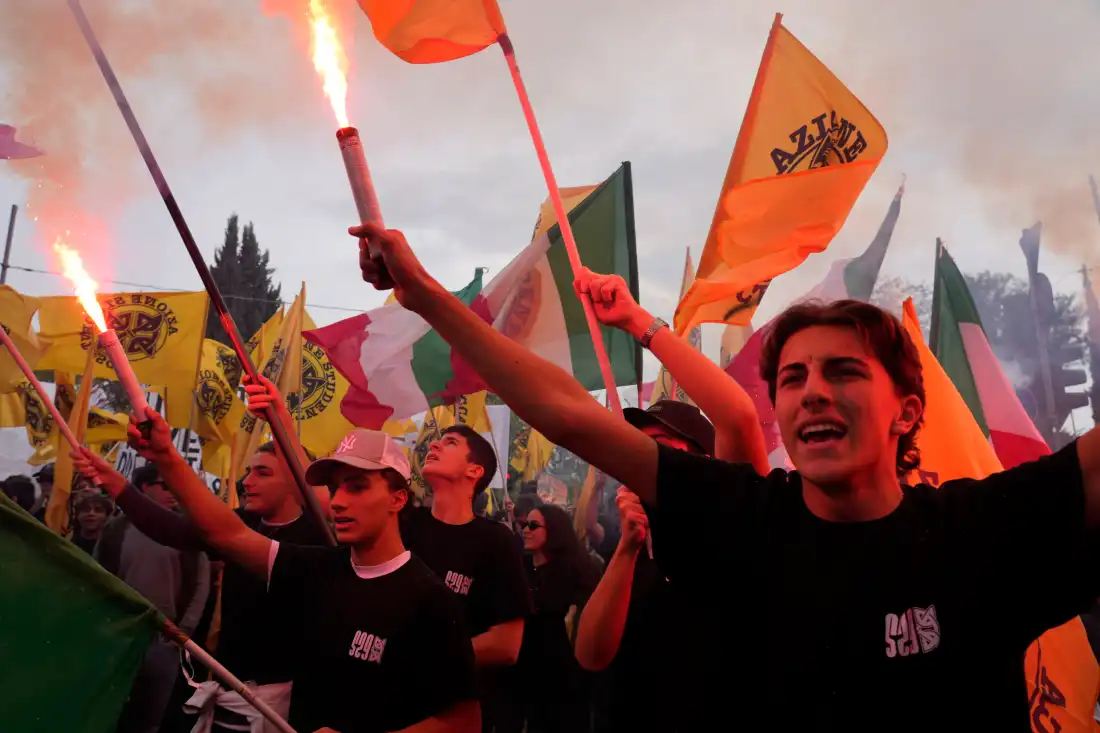
On Saturday, young people marched across various Italian cities, including Milan, Rome, and Turin. Authorities deployed significant police and military presence to prevent a repeat of past violent protests. Last week, similar events had witnessed clashes and looting. Milan’s demonstration stayed peaceful with brief altercations in Rome and Turin.
Milan saw thousands of participants while soldiers and police ensured order. By late afternoon, many shops reopened after initially boarding up in fear of violence. Premier Giorgia Meloni announced new measures, sending 500 more soldiers to Milan and imposing stricter penalties on minors involved in violence.
Throughout Europe, cities like Madrid, Lisbon, and Tirana also witnessed large demonstrations on various issues such as education, corruption, anti-war sentiments, and housing concerns. In Rome, right-wing students held a march called “Unlock Everything,” countering recent left-wing protests.
Army Presence and Security Measures in Milan
In Milan, protestors congregated at nightfall, targeting Premier Meloni with chants and banners. Demonstrators burned a symbolic electricity bill while soldiers supplemented police for crowd control. Drone surveillance and checks at railway stations were part of the security strategy.
Mayoral candidate Pierfrancesco Majorino joined the marches, identifying the day as peaceful. Milan’s Mayor Giuseppe Sala, not seeking reelection, observed heightened security around luxury shops, including Omega, Tiffany, and Gucci. Some protesters targeted high-end stores, looting them last week. Authorities detained numerous minors as a precautionary measure.
Tensions in Rome and Beyond
In Rome, security intensified with lockdowns of shopping districts. Protesters tried to enter the Colosseum but were turned away. Riccardo Ponzio, of a right-wing student group, criticized last week’s violence, claiming it misrepresented students seeking earnest change.
Separate anti-war protests occurred, clashing with police near Piazza della Repubblica. Organizers urged peaceful participation, warning potential unresters to show open faces and hands.
Turmoil in Other European Cities
In Tirana, Albania, tensions were high as demonstrators clashed with police. Protesters, including students, demanded lower tuition fees and protested government corruption. Some activists targeted government buildings, leading to arrests and the use of water cannons by riot police.
Social Issues Fuel Protests in Spain and Portugal
Spain’s capital saw retirees and citizens marching to protect public pensions from privatization amidst upcoming elections. Prime Minister Pedro Sánchez and his Socialist Party opposed changes to the system.
Madrid has also faced housing protests due to rising living costs. In Portugal, Lisbon’s demonstrators demanded more affordable housing. They opposed recent government measures easing rental caps and eviction processes, claiming they favor landlords over tenants.