
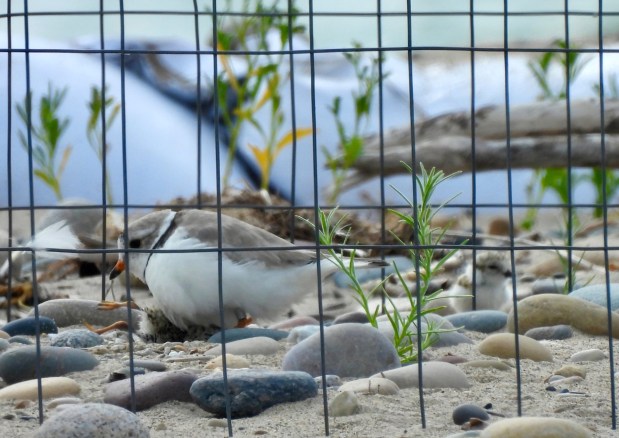
This week, Waukegan’s shoreline saw an increase in its piping plover population as three chicks joined the scene. According to the Lake County Audubon Society, these chicks were released on Tuesday, the same day three resident plovers received names and identification bands.
Carolyn Lueck, president of the Lake County Audubon Society, shared her excitement about the arrival of the new plovers. Lueck noted, “It was exciting to learn that three siblings were coming to us: two females and a male.” Coincidentally, the new arrivals came on the same day the local wild birds were banded.
The existing plovers, now banded, were named Dune, Pebbles, and Drifter. These names reflect the Great Lakes area, with Drifter being a shortened version of “driftwood.” Initially named “Drift,” Drifter’s tendency to explore led to the revised name. Lueck remarked on the adventurous nature of the bird, who began exploring soon after hatching.
The released chicks were raised by Pepper and Blaze, regulars of the Lake County beach. They were reared in captivity at the University of Michigan Biological Station. The two female chicks bear the names Amaura and Anorith, while the male is named Archen, all inspired by the Pokémon franchise. Lueck believes these unique names could engage those unfamiliar with piping plovers.
A playful mention included the potential for piping plover trading cards in the future. In a related note, a piping plover chick found comfort under Pepper in July 2026 in Waukegan, as captured by Carolyn Lueck.
The genders of the Waukegan-hatched chicks will remain a mystery until their return next year. At that time, distinct features such as black band variations will reveal their sexes. Lueck noted the presence of two other visitors, Frankie and Buddy, in Waukegan. These siblings, born at Montrose Beach this year, are related to Monty and Rose, notable for initiating a citywide conservation effort after hatching Chicago’s first successful piping plover chicks in over 70 years.
The Lake County Audubon Society, through efforts to highlight the piping plovers, also aims to protect various ecosystems. Lueck emphasized the broader environmental benefits, stating, “The more we can spread the word about these precious little birds, the better it is for a lot of different things.”