
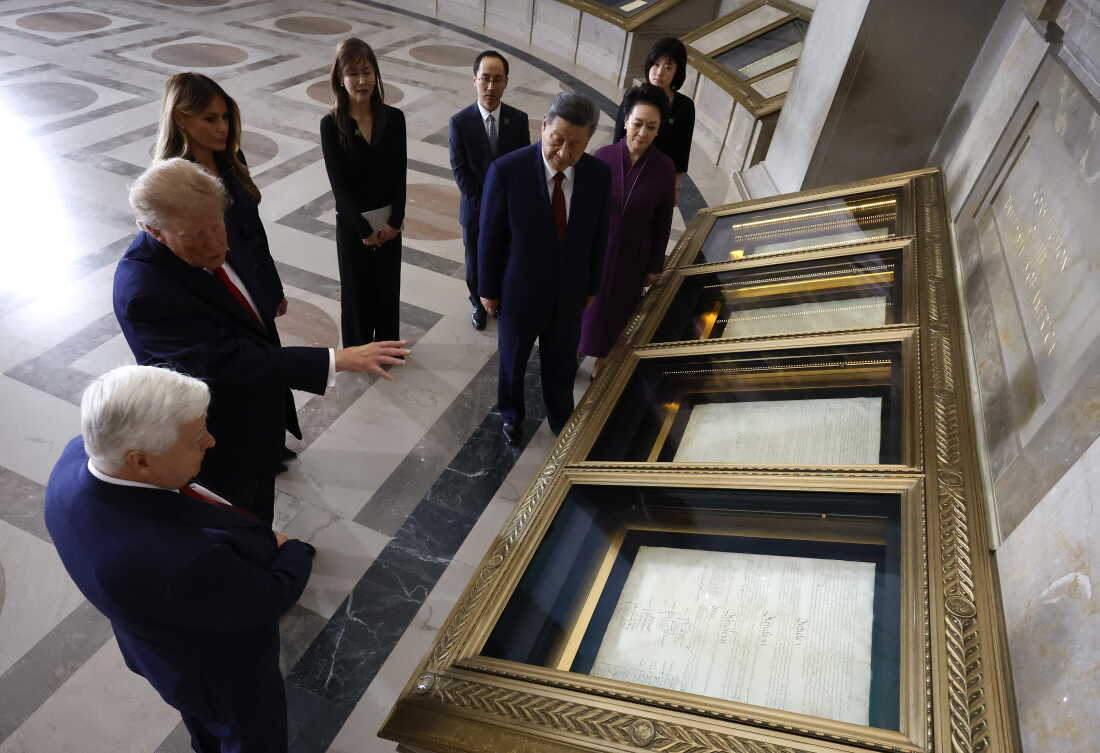
On September 25, 2026, President Donald Trump toured the National Archives Museum with First Lady Melania Trump, Chinese President Xi Jinping, and First Lady Peng Liyuan. The visit was marked by a diplomatic incident involving Taiwan-related documents.
Unexpected Display Change
The museum had initially planned a display featuring a brick from the Great Wall of China and a Qing dynasty scroll. However, the display was removed unexpectedly. This alteration stemmed from Chinese dissatisfaction with the planned inclusion of the Treaty of San Francisco, signed in 1951 by the US and Japan, but not by China.
Chinese diplomats expressed displeasure because the treaty did not determine Taiwan’s political status, a sensitive issue for Beijing. Ryan Hass from the Brookings Institution highlighted that China was not a signatory of this treaty and opposes the treaty’s implications for Taiwan.
Diplomatic Nuances and Relational Strains
The event highlighted ongoing sensitivities in US-China interactions regarding Taiwan. US officials considered displaying other documents like the Six Assurances and the Three Communiques, which are pivotal to US-Taiwan relations. However, these were ultimately excluded.
An administration official, who remained anonymous, stated that the visit allowed Presidents Trump and Xi to discuss both nations’ histories, marking a productive state visit. Meanwhile, the Chinese embassy in Washington did not offer any response to the incident.
Symbolism and Historical Tensions
The National Archives visit was seen as a reciprocal gesture for Xi Jinping’s hospitality during Trump’s visit to China. Experts like Ryan Hass noted the symbolic exchange of foundational documents between the US and China as a signal of diplomatic boundaries and possibilities.
The trip was complicated by China’s sensitivity regarding Taiwan, as articulated through a diplomatic push against the Treaty of San Francisco. China prefers to reference documents such as the Cairo Declaration and Potsdam Declaration, which support Chinese claims over Taiwanese sovereignty.
Focus on Historical Legacy
Despite the diplomatic ruffle, Presidents Trump and Xi continued their visit by observing foundational US documents like the Declaration of Independence, Constitution, and Bill of Rights. Xi acknowledged the enduring spirit of American history, while Trump compared the longevity of American and Chinese histories.