
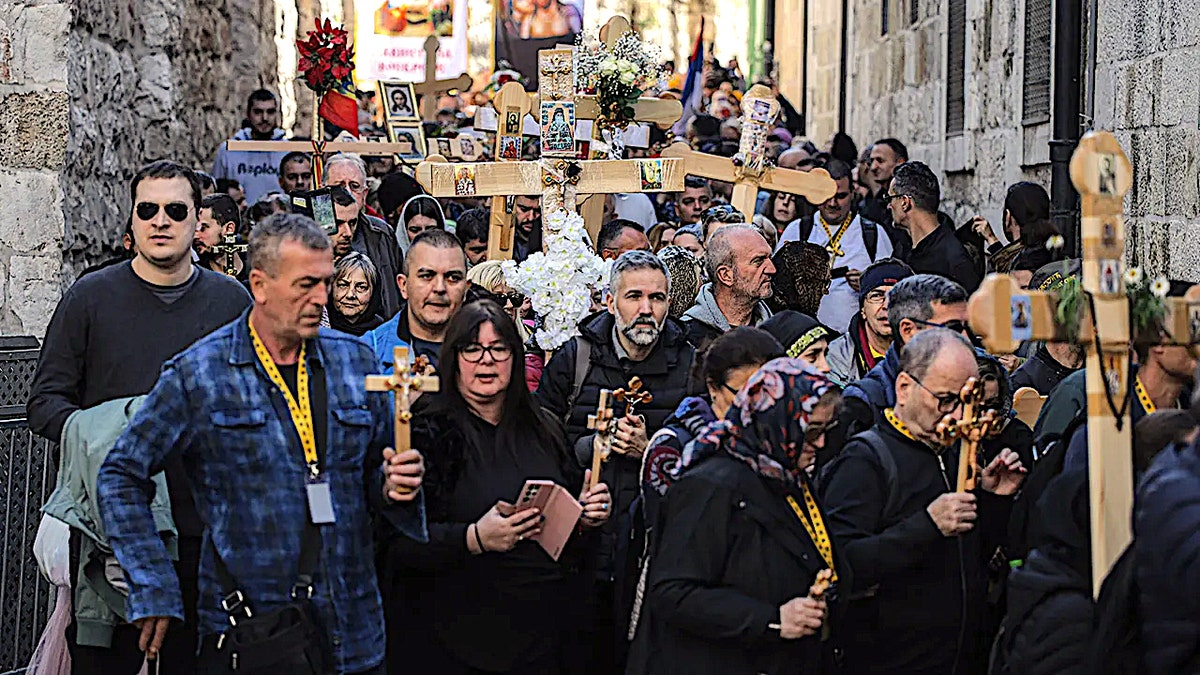
Growing up in Jaffa, attending church every Sunday, and participating in the Christian Scouts, I experienced the vibrancy of our Greek Orthodox community. We engaged in festive marches during Christmas and Easter, celebrated weddings, and acknowledged feast days. We were familiar with local families and their dynamics, living harmoniously with our Muslim and Jewish neighbors. As a Christian Arab Israeli, I felt secure and content.
Yet, portrayals of Israel as a place where Christians are under siege and Christianity is being marginalized are perplexing to those of us who live here. While incidents of religious intolerance do occur, driven by a minority of radicals, they do not define the collective experience of Christians in Israel. These extremists must face consequences through law enforcement, educational initiatives, and religious dialogues.
To contextualize, in 2025, the Anti-Defamation League documented over 6,200 antisemitic incidents in the United States, yet this doesn’t render America an antisemitic nation. Spain experienced a significant rise in hate crimes, including antisemitism, but this does not characterize the entire country as anti-Jewish.
Similarly, extremism exists in every democracy, including Israel. The presence of extremists doesn’t overshadow the broader Israeli society. Often, evaluations of Israel unfairly focus on its radical fringes, ignoring the substantial, prosperous lives Christians lead here.
Contrary to the narrative of decline, Christians in Israel are thriving. The population has grown from about 34,000 in 1950 to approximately 184,000 today. They serve as physicians, academics, business leaders, and government officials. Justice Salim Joubran, a Christian, served on Israel’s Supreme Court, highlighting the integration and acceptance found in Israeli society.
Israel fosters its Christian community by officially recognizing the Aramean nationality and investing in the preservation of Christian heritage sites. Collaborations with international archaeologists at sites like Bethsaida demonstrate Israel’s commitment to celebrating Christianity’s historical roots. Additionally, Israel is preparing for significant anniversaries that will draw Christian pilgrims worldwide.
Polling indicates that Lebanese Christians are increasingly supportive of peace with Israel, signaling potential shifts in inter-religious and inter-cultural relations across the region. This is crucial considering the struggles Christian communities face in neighboring Middle Eastern countries, where many have dwindled due to conflict and persecution.
The critical question for Christian life in the Middle East is where they will maintain a viable presence decades from now. We hope this includes regions like Jaffa, Jerusalem, and Nazareth, as well as Lebanon, Syria, Iraq, and Egypt.
In Israel, Christianity continues to thrive. Christians actively contribute to society by worshiping, raising families, and participating in civic life. Extremists do exist, but they do not represent the entirety of Israel, and they should not eclipse the positive realities experienced by Christians here.
Ambassador George Deek, a seasoned diplomat with extensive experience, serves as Israel’s first Special Envoy to the Christian World. As part of Jaffa’s Arab Christian community, Deek’s insights are grounded in personal and professional engagement.