
Four years into Russia’s invasion of Ukraine, NATO’s eastern flank officials increasingly believe the alliance’s future hinges on Ukraine’s military innovations. Ukraine’s battlefield success prompts NATO to rethink modern warfare’s landscape. Ukraine showcases new strategies, spanning from drone warfare and cyber defense to civilian resilience and large-scale military mobilization.
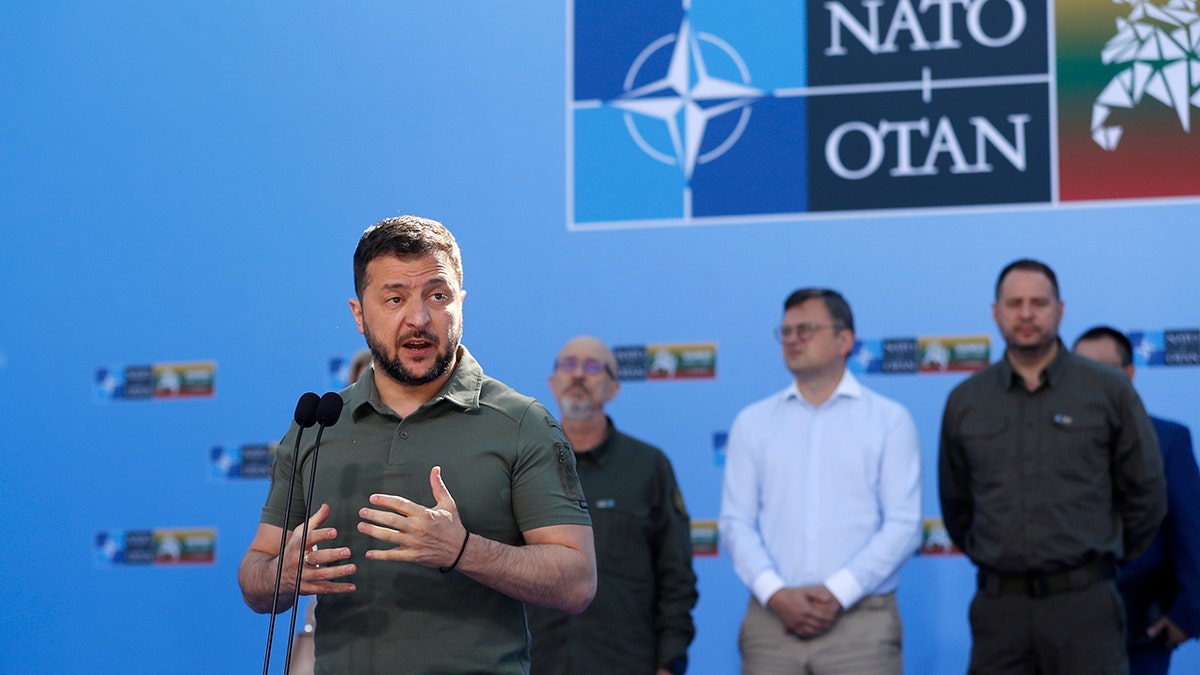
The alliance’s focus has shifted due to Ukraine becoming a pivotal force in rewriting NATO’s strategic approach. Eastern European officials emphasize Ukraine’s role in shaping military strategies for future wars. In a testament to Ukraine’s importance, NATO Secretary General Mark Rutte invited President Volodymyr Zelenskyy to the alliance’s annual summit in Ankara.
“I think today the Ukrainian army is the number one army in Europe,” said Andriy Sadovyi, Mayor of Lviv.
The debate over NATO’s future intensified as officials gathered in Sweden ahead of the July summit. Secretary of State Marco Rubio underscored the significance of the upcoming summit, highlighting concerns about insufficient munition production for potential conflicts.
Rubio warned NATO allies about the lack of munitions production, a concern echoed by Ret. Lt. Gen. Richard Newton. Newton stated the Pentagon is studying Ukraine’s rapid adaptation of its wartime industrial base. He noted the remarkable transformation in the quantity of arms being produced and delivered swiftly to frontlines.
“Ukraine’s transformation of its defense industrial base serves as a lesson for nations,” Newton observed.
Key NATO member Poland appreciates former President Trump’s announcement of maintaining U.S. troop deployment in the region. Polish Foreign Minister Radosław Sikorski expressed gratitude for the reassurance of continued American military presence.
“I think this makes Putin very uncomfortable,” Sikorski remarked.
NATO’s expansion is notably accelerated following Russia’s invasion. Finland joined the alliance in 2023, followed by Sweden’s accession in 2024. This expansion complicates Moscow’s ambitions and intensifies discussions on NATO’s future.
The war forced Ukraine to pivot its significant IT sector towards defense production. Mayor Sadovyi emphasized the transformation of Ukraine’s technological base from an IT cluster to a defense-driven ecosystem.
“We rebuilt the IT cluster to defend cluster,” Sadovyi stated.
NATO officials are closely studying Ukraine’s wartime innovation ecosystem, focused on drones, battlefield communications, and decentralized weapons production. The rapid rise of drone warfare signifies a shift in military tactics, driven by shortcomings in modern air capabilities.
Poland, advocating for the concept of “NATO 3.0,” calls for Europe assuming greater responsibility for conventional defense as the U.S. focuses more resources on the Indo-Pacific region.
“Conventionally, Europe would be defending itself,” said Polish Deputy Defense Minister Paweł Zalewski.
Poland’s increased military spending positions it as a leading power on NATO’s eastern flank. Polish officials emphasize their foresight in taking Russia’s threat seriously, contrasting this stance with some Western European countries.
The ongoing conflict reshapes NATO strategy and influences alliance dynamics. Despite Ukraine not presently holding NATO membership, officials argue that Ukraine’s military prowess is vital for the alliance’s future.