
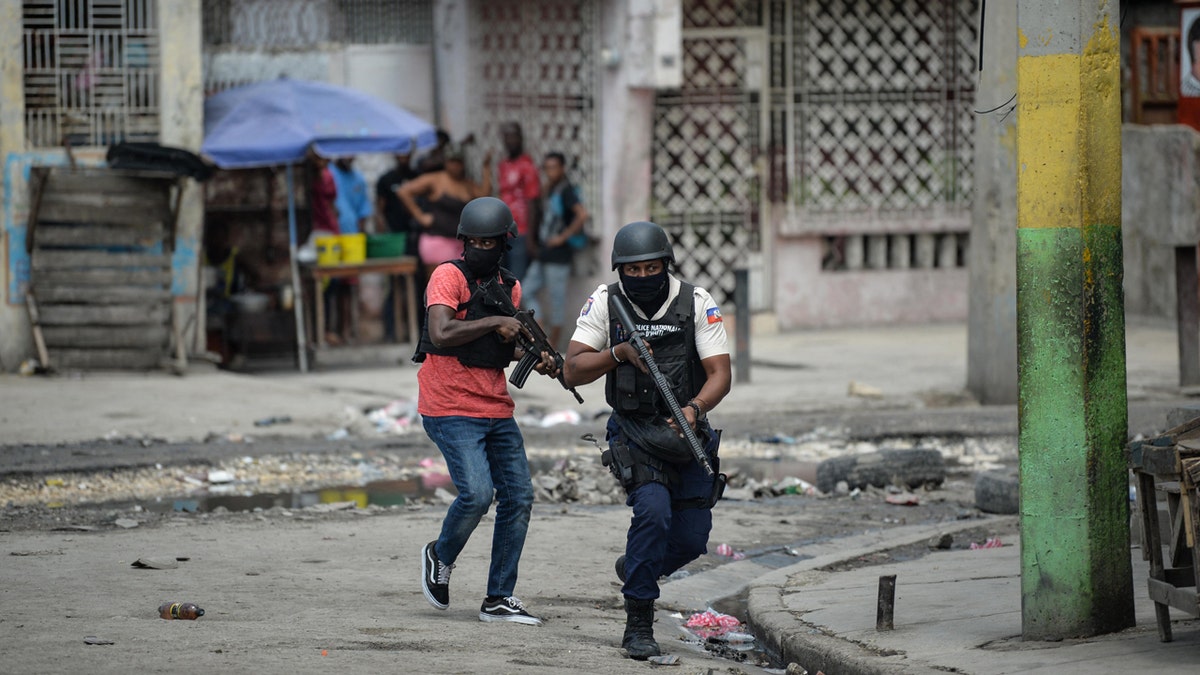
U.S. House lawmakers recently traveled to Port-au-Prince, Haiti, where they witnessed the dire impact of gang rule following the 2021 assassination of the former president. Representative Brian Mast from Florida described scenes of devastation with walls riddled with bullet holes and police in heavy armor.
Gang Control in Haiti
Gangs have effectively taken over the streets by blocking them with rubble and debris. This tactic prevents military and police units from accessing certain areas. Mast commented that some regions resembled conflict zones and expressed that it is one of the poorest areas he has encountered.
Mast led a bipartisan delegation to Venezuela and Haiti, marking the first congressional visit to these countries in a decade. In Haiti, they were hosted by the country’s prime minister, whose residence was recently a conflict zone. Efforts are underway to regain control over land in Port-au-Prince.
International Efforts and Harrowing Incidents
Despite some improvements due to international forces and U.S. paramilitary involvement, gang violence remains prevalent. Mast recounted a disturbing video showing Haitian gang members torturing a heavy machinery operator. They kidnapped his family to negotiate an exchange, ultimately leading to his brutal death.
“They cut off his ears, fed them to him, and attacked him with machetes. They targeted his limbs until he was killed. This is who these gangs are,” Mast said.
Kidnappings and Political Context
Mast also highlighted the kidnapping of a six-year-old U.S. citizen by gangs. There are indications of potential sexual crimes against her. The child was held hostage for at least 46 days before an agreement on ransom was reached, leading to her release.
A State Department spokesperson confirmed awareness of the kidnapping but withheld further details to respect the family’s privacy. Looking at the broader situation, Mast expressed skepticism about further U.S. intervention. He attributed the chaos to politicians initially forming gangs for personal gain, resulting in widespread lawlessness.
Temporary Protected Status and Return to Haiti
Thousands of Haitians in the U.S. with temporary protected status face potential deportation after the Trump administration’s decision to end this protection. Mast suggested that returning able-bodied males could strengthen Haiti’s depleted police and military forces, which suffered due to the loss of personnel under TPS.
By integrating these individuals into security forces, it might help address the existing power vacuum that allowed gangs to rise.
Elizabeth Elkind, a politics reporter for Fox News Digital, covers U.S. House of Representatives-related news. Her work has appeared in the Daily Mail and CBS News.