
The U.S. government recently confronted a proposal to auction more than 100 items salvaged from the Titanic wreck. These artifacts include personal belongings, currency, kitchen items, and decor.
RMS Titanic Inc., a Georgia-based company, holds exclusive rights to the salvage of the Titanic. The company intends to sell the artifacts for the first time despite prior agreements for museum and traveling exhibition display only.
The company proposed that the auction and a global tour in four cities should be conducted. The locations for this tour remain undisclosed. The company’s plan involves selling items such as a bronze cherub, a necklace of gold nuggets, and a heart-shaped pendant.
The National Oceanic and Atmospheric Administration (NOAA) speaks for U.S. interests and oversight concerning the wreck. It argues that the proposed sale breaches RMS Titanic’s legal obligations to the site, as per recently unsealed court documents.
The government stated that the company “does not seek the Court’s approval, does not believe that approval is required, and asserts that it is not restricted in its ability to sell” the artifacts.
The attorneys for RMS Titanic previously asserted in federal court that the auction plan does not violate existing orders and agreements.
Previous Efforts to Sell Titanic Artifacts
Since 1987, salvage operations have recovered numerous items from the Titanic, which the company has showcased for profit. In the past, attempts to sell artifacts to raise funds for future explorations have faced legal and preservationist opposition.
Certain items retrieved from survivors or collected by rescuers have sold for large sums. For instance, a life jacket from the Titanic was sold for $906,000, while a lifeboat seat cushion fetched $527,000.
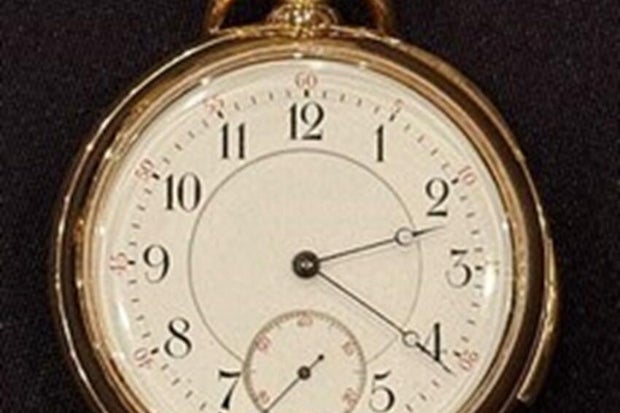
A collector paid over $2 million for a gold pocket watch associated with Isidor Straus, a first-class passenger, in 2025. The watch was a birthday gift from Straus’s wife. It exemplifies the ongoing interest in Titanic memorabilia.
Other items auctioned recently include a menu from a passenger’s first meal, and a soggy letter. A violin, believed to have played on the Titanic, sold for $1.45 million in 2013.
Debate Over Ownership
RMS Titanic intends to auction some of the initial artifacts salvaged from the wreck, initially claimed in France, where the salvager received ownership.
Other artifacts were retrieved later, with a salvage claim filed in a U.S. District Court in Norfolk, Virginia. NOAA maintains that the roughly 5,000-items collection must remain intact based on U.S. court conditions.
RMS Titanic argued that U.S. jurisdiction does not extend to items claimed in France, where conditions stipulate the collection remain unsold and together.
Value of Public Display
Some ocean explorers are opposed to the idea of auctioning Titanic artifacts. Greg Stone, a respected ocean explorer, advocates for public display using proper archaeological methods.
Richard Daynard, a Northeastern University law professor, emphasizes that rules exist to preserve the artifacts for public benefit, not for private wealth display.
Daynard expressed concern that wealthy individuals might acquire artifacts only to use them as status symbols, something he views negatively.